10 Modern Crochet Bags & Accessories to Make
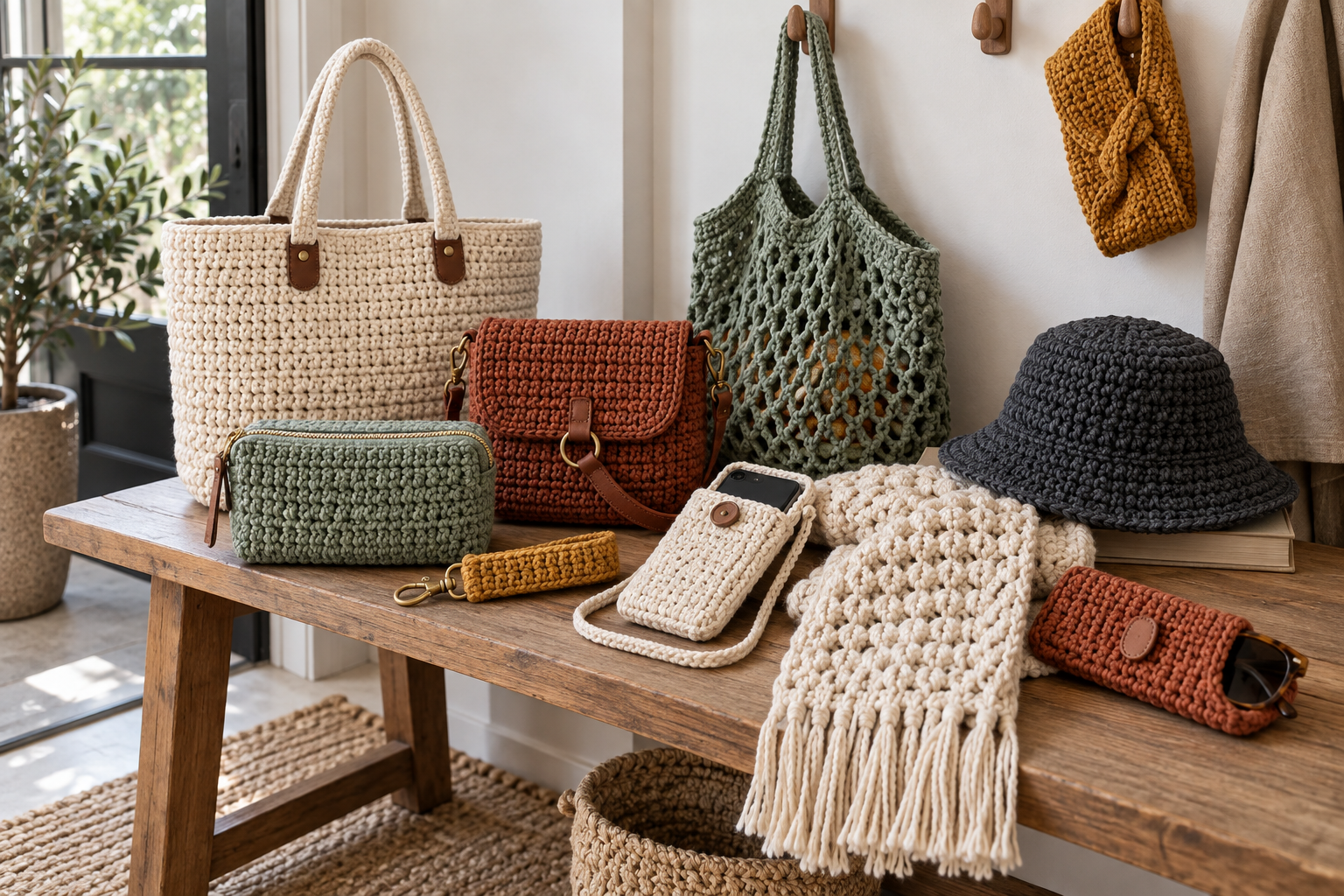
A modern crochet accessory succeeds when its fabric behavior matches its purpose. Bags need controlled stretch and reinforced load points; hats and scarves need measured drape; protective pouches need smooth linings. These ten projects each develop a different practical skill.
Choose a bag construction for the intended load
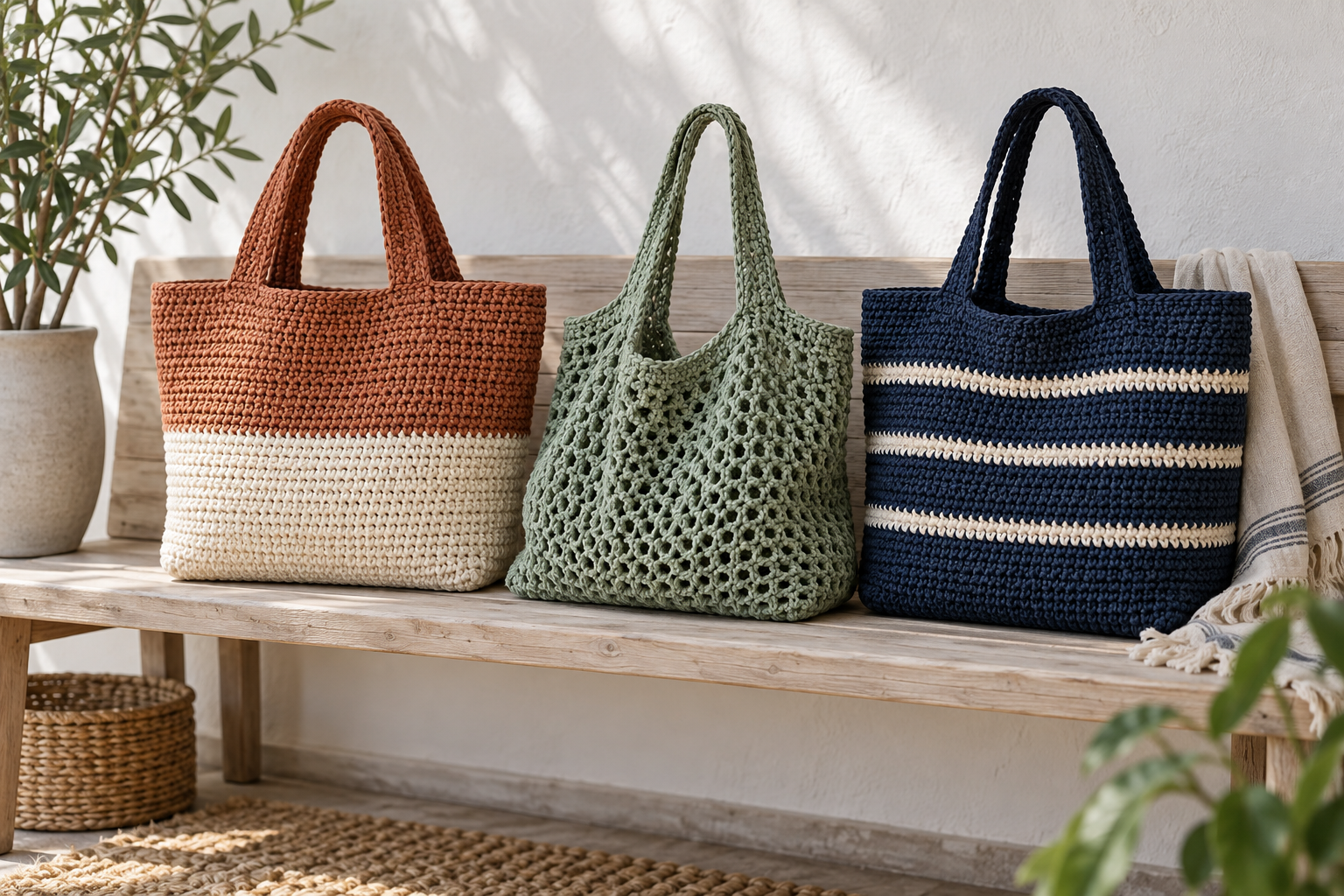
1. Structured tote
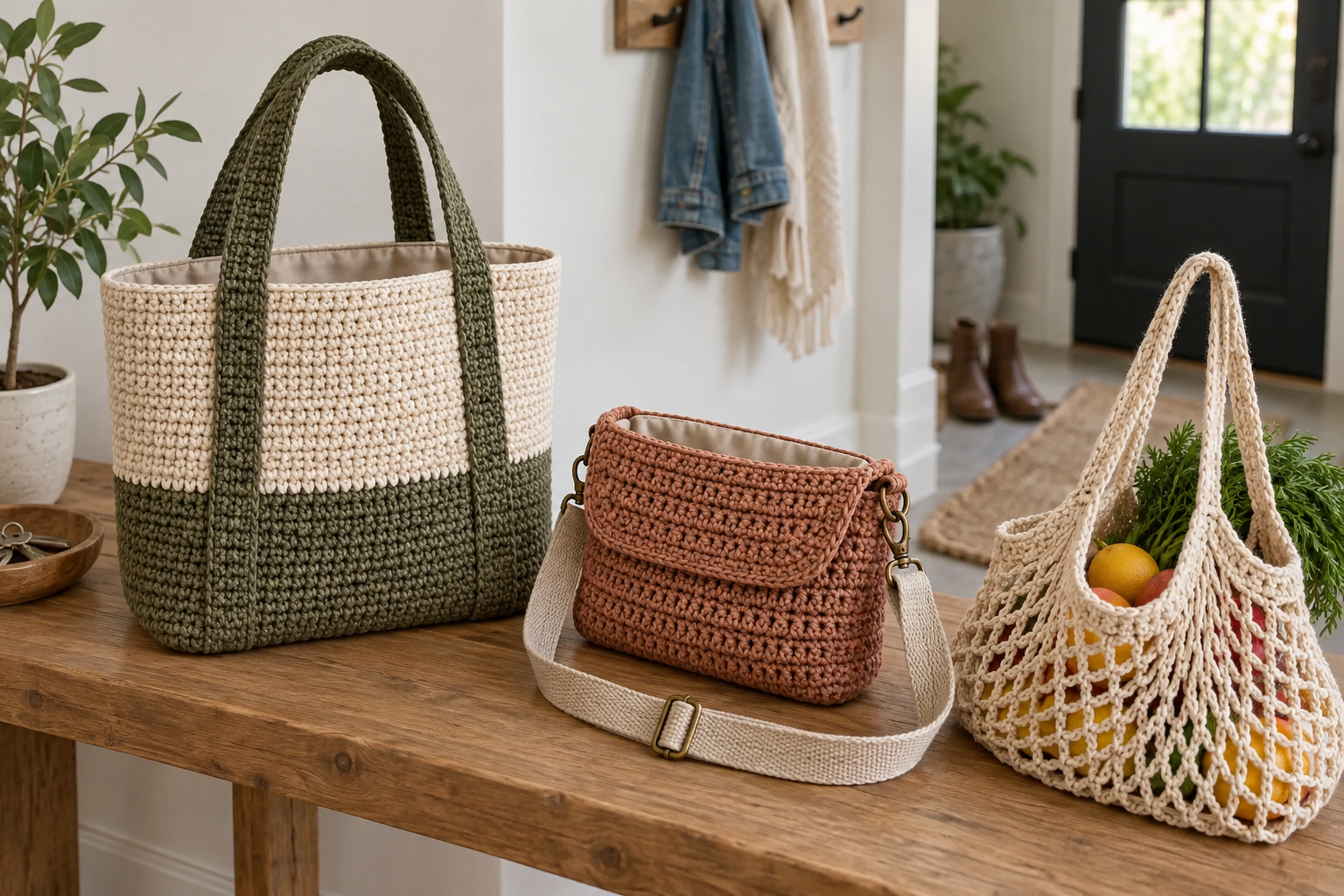
Start with a firm base, dense washed swatch and handles reinforced through several rows or backed with fabric tabs. Add a lining when small items or weight could distort the shell. Explore proportions in these modern tote bag ideas.
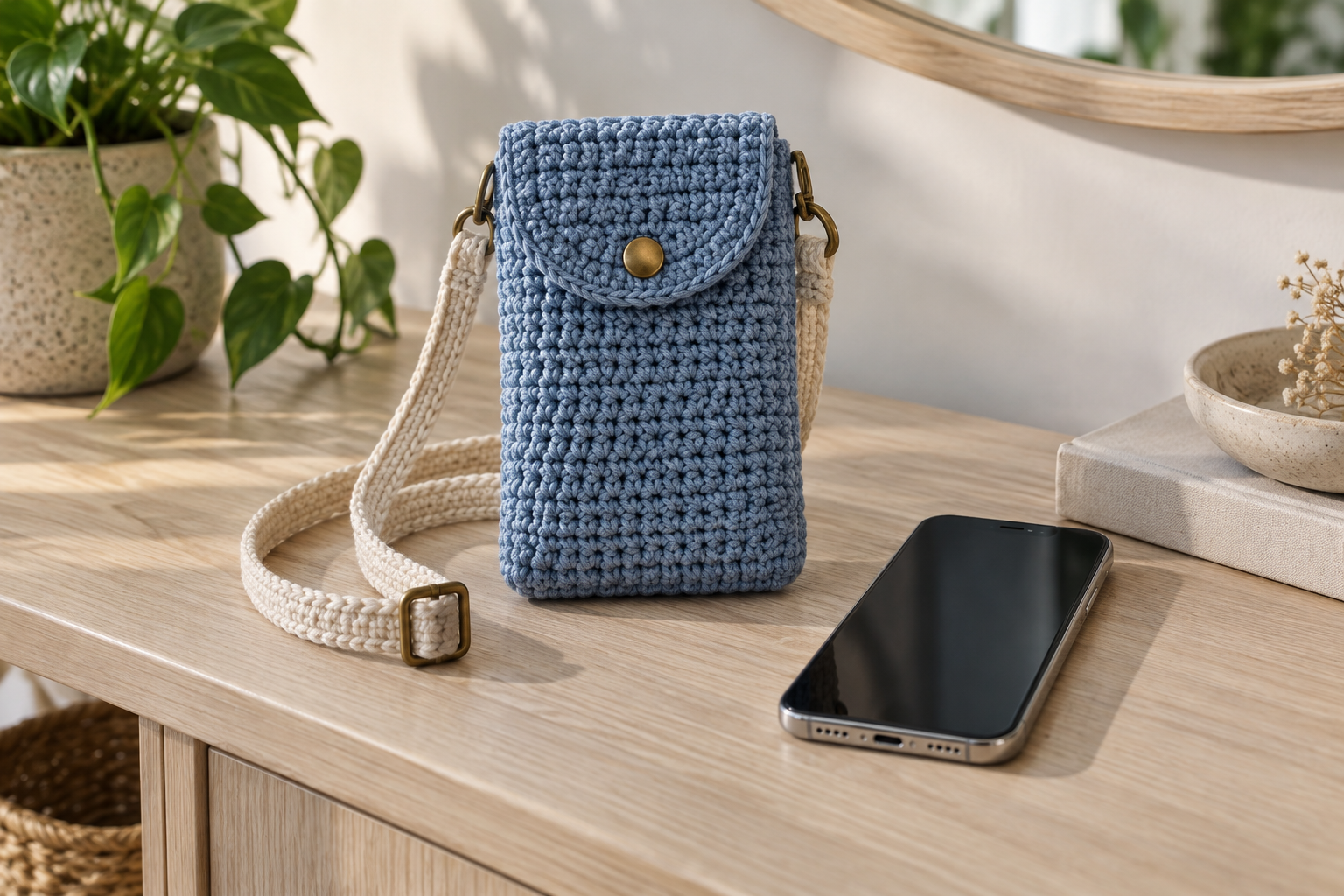
2. Crossbody bag
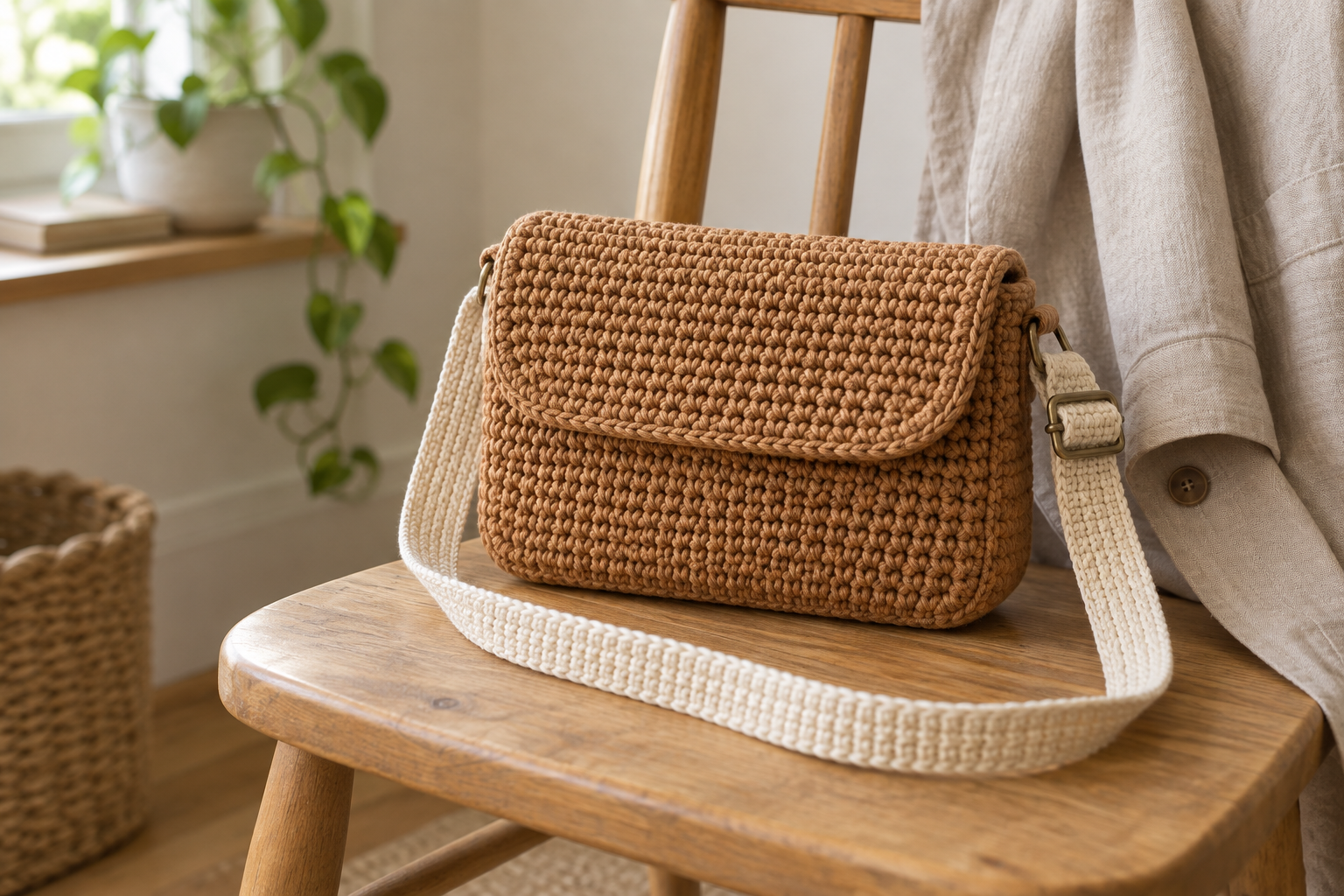
Measure strap drop on the intended wearer and use an adjustable slider when possible. A non-stretch backing prevents a crocheted strap from lengthening under load. The beginner crossbody guide explains attachment points and closures.
3. Market bag
An open mesh body should expand, but the base and handles need tighter fabric. Carry light groceries, inspect joins regularly and avoid sharp or very heavy contents. Follow the strong-base market bag guide.
Use linings and closures for small essentials
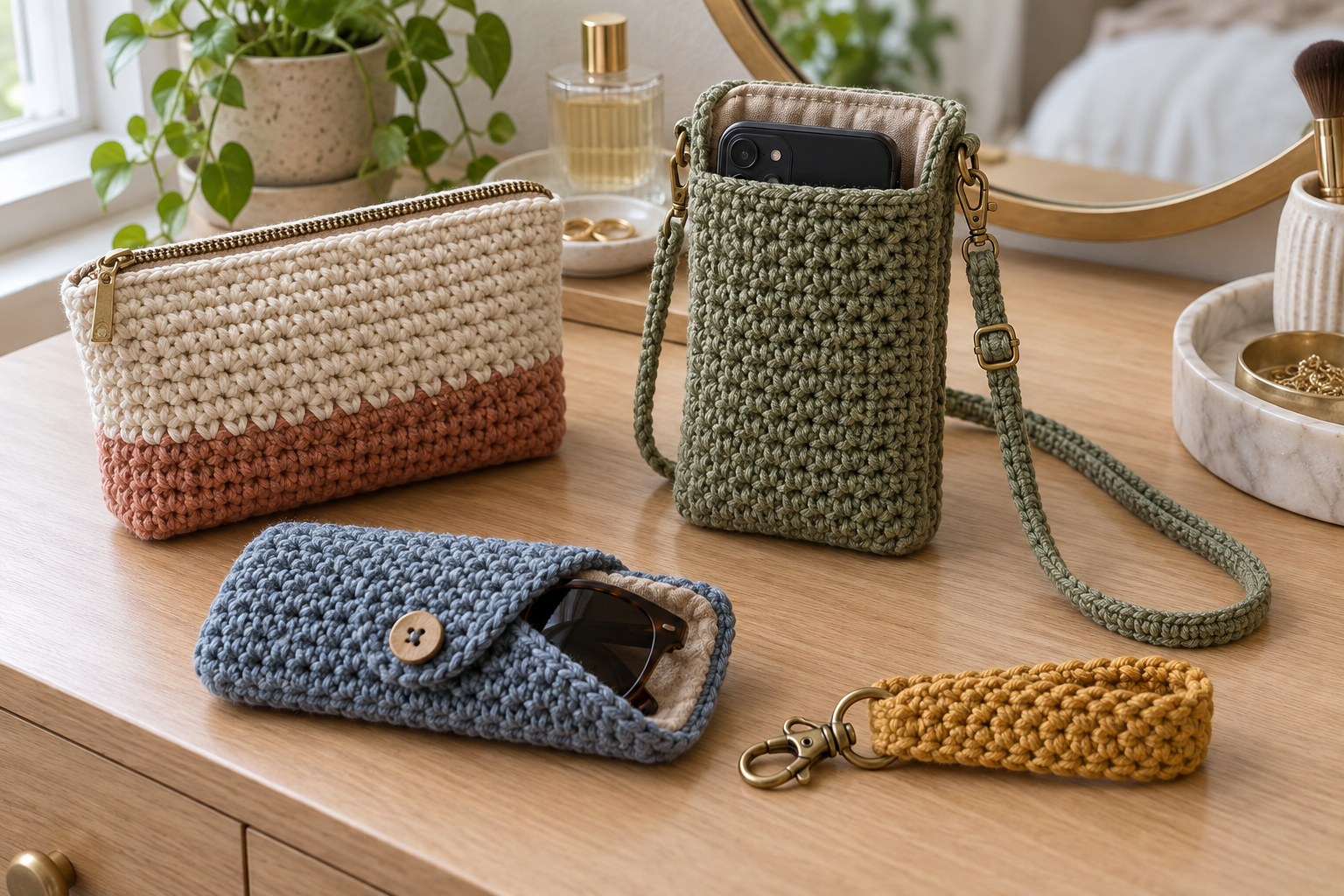
4. Zipper pouch
Block the shell before measuring the lining and zipper. Baste first, keep teeth clear of yarn and cover rough ends inside. Use the crochet zipper pouch guide for installation order.
5. Adjustable phone pouch
Measure the phone with its everyday case, add a soft lining and keep hard fittings away from the screen. A pouch reduces scuffs but is not certified impact protection; see the adjustable phone pouch guide.
6. Keychain wristlet
Use dense abrasion-resistant fabric, reinforce the fold around the clasp and reserve it for keys or light accessories—not climbing, pets or heavy loads. Turn short leftovers into the keychain ideas.
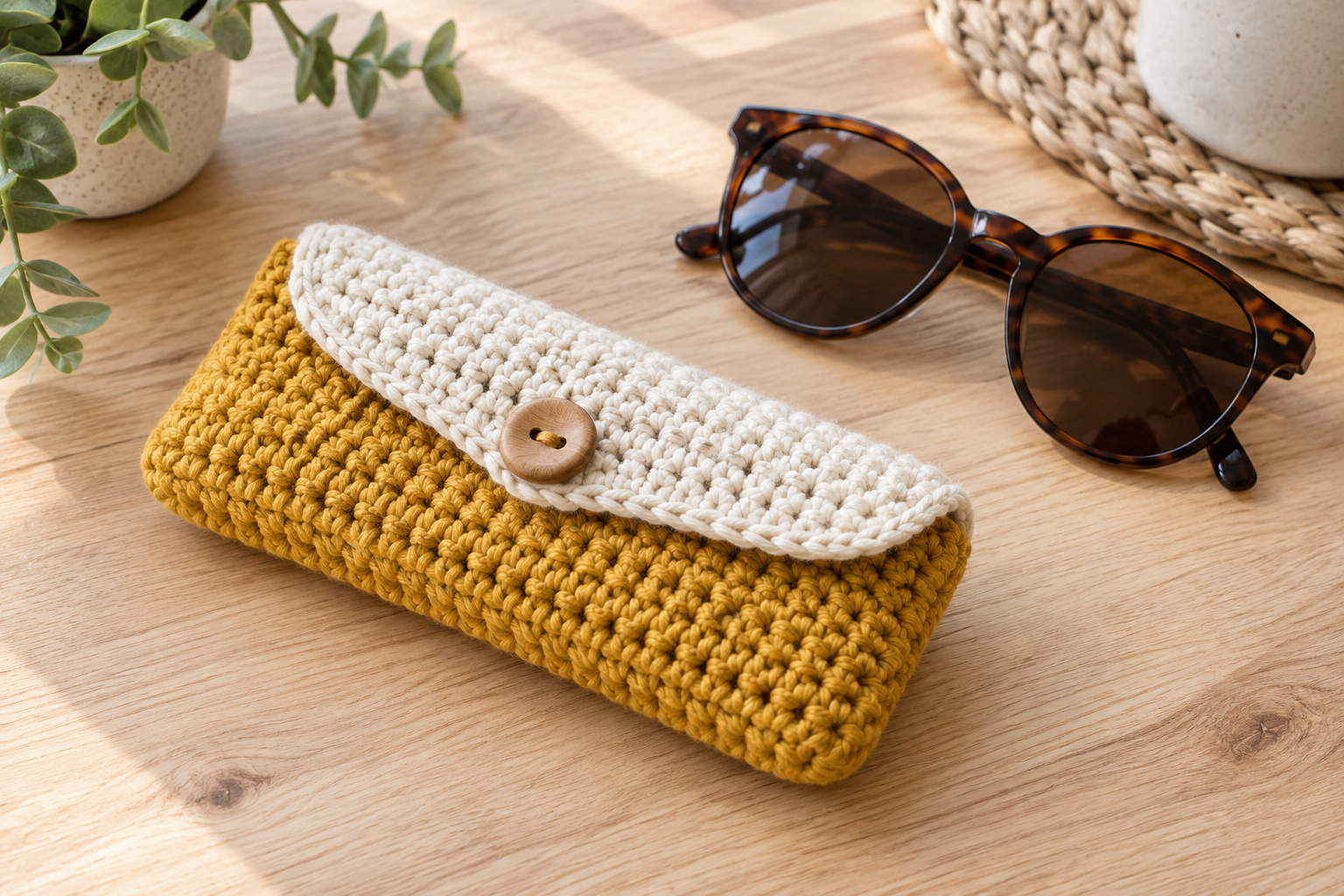
7. Sunglasses case
Size from folded frames and add microfiber lining plus optional thin felt. Ensure no knot, button shank or zipper end touches a lens. The beginner sunglasses-case guide compares closures.
Fit wearable accessories after washing the swatch
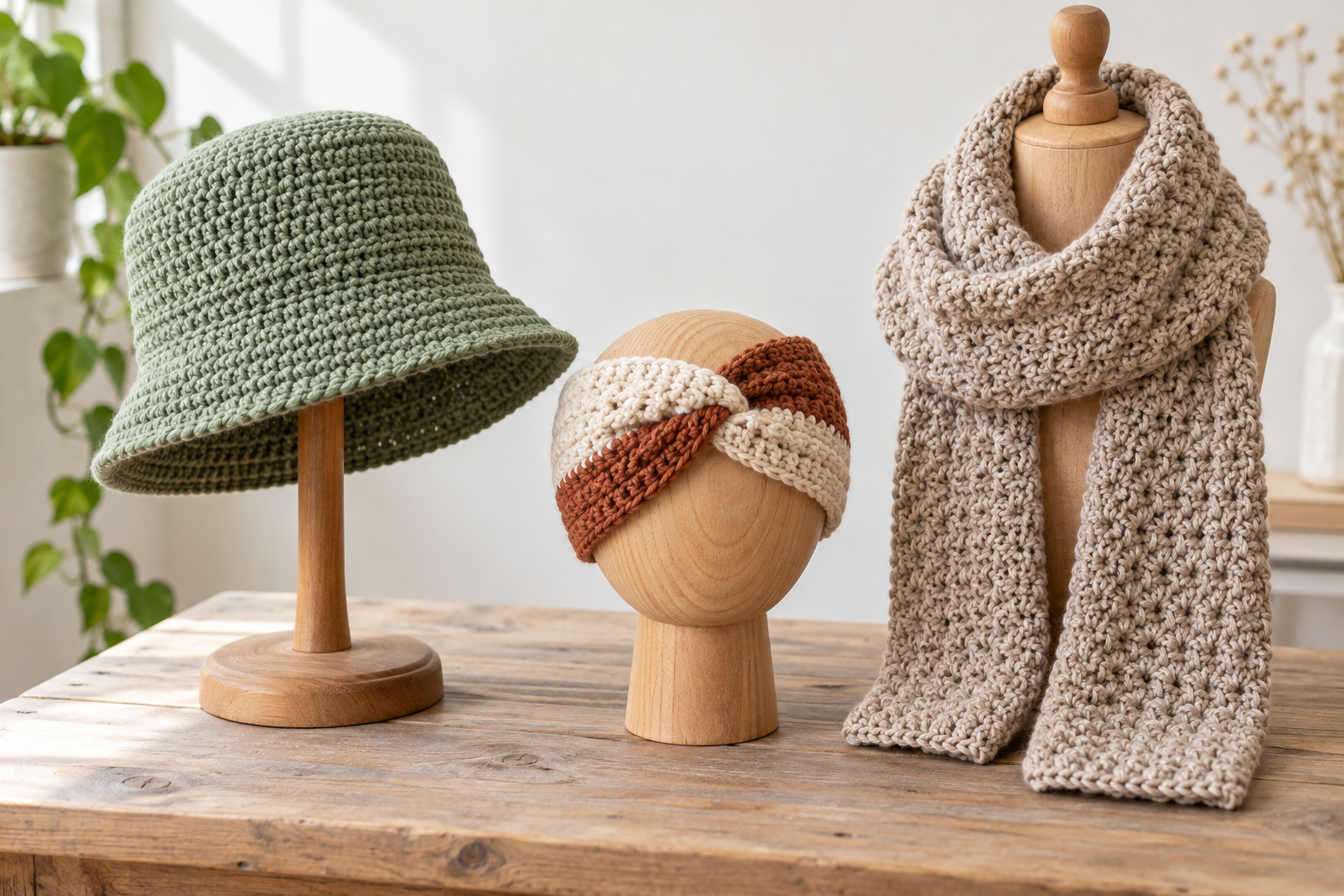
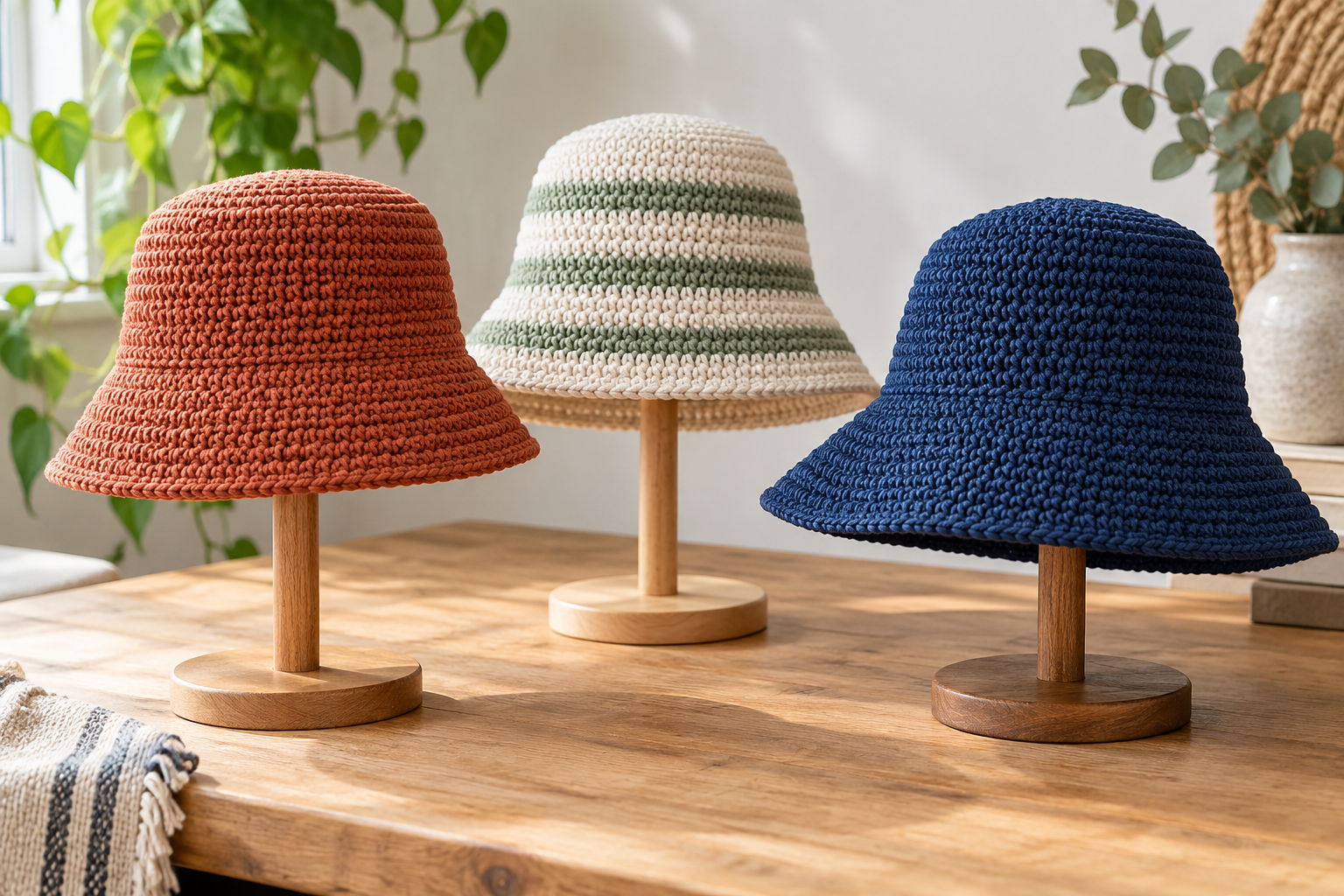
8. Bucket hat
Measure crown circumference, depth and brim width separately. Increase evenly, check fit during construction and choose a fiber that can hold the planned brim. Review the beginner bucket-hat ideas.
9. Seasonal headband
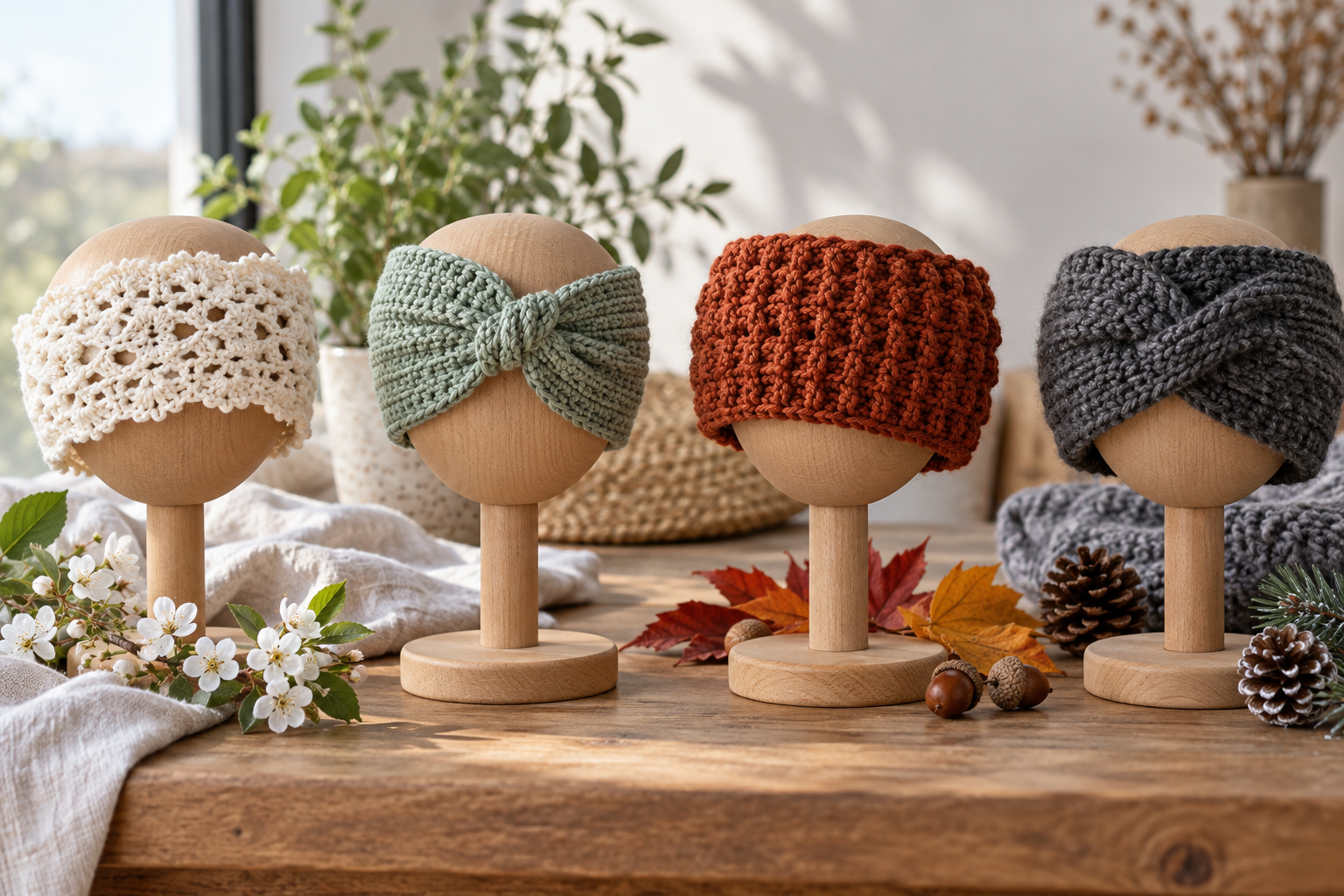
Calculate length from the washed fabric’s actual stretch recovery, not a universal percentage. Match fiber and openness to the weather using the seasonal headband guide.
10. Textured scarf
Choose one reversible texture, keep side edges counted and estimate yarn from a generous swatch. The modern scarf texture guide covers drape and finishing.
Test stress points before adding decoration
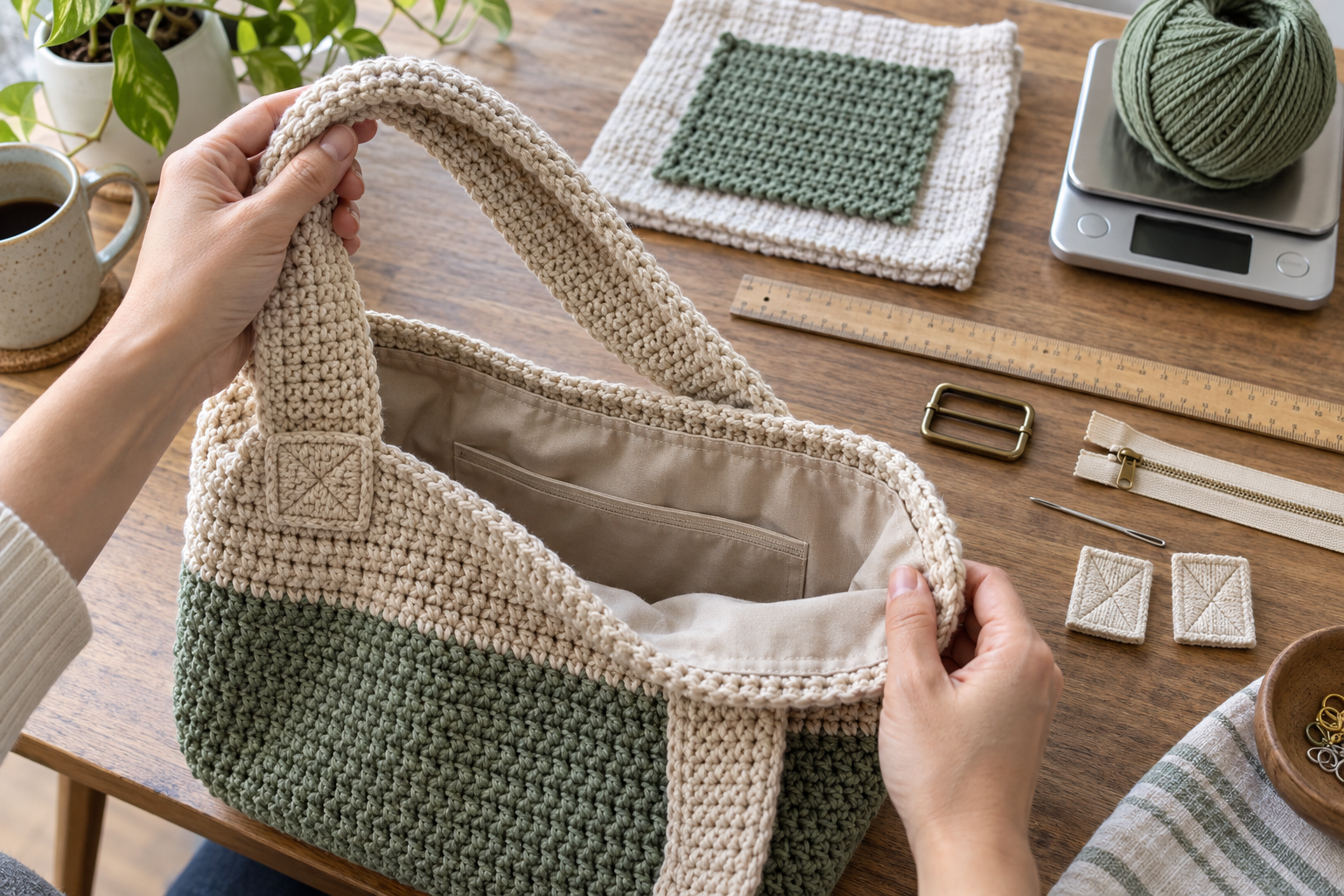
Load a finished bag gradually with soft test weights and leave it hanging briefly. Recheck strap length, stitch distortion and hardware movement. Reinforce problems structurally rather than hiding them beneath a flower or patch. For every accessory, note the finished measurements and hardware source so repairs can match the original construction.
Finish and care for each material on its own terms
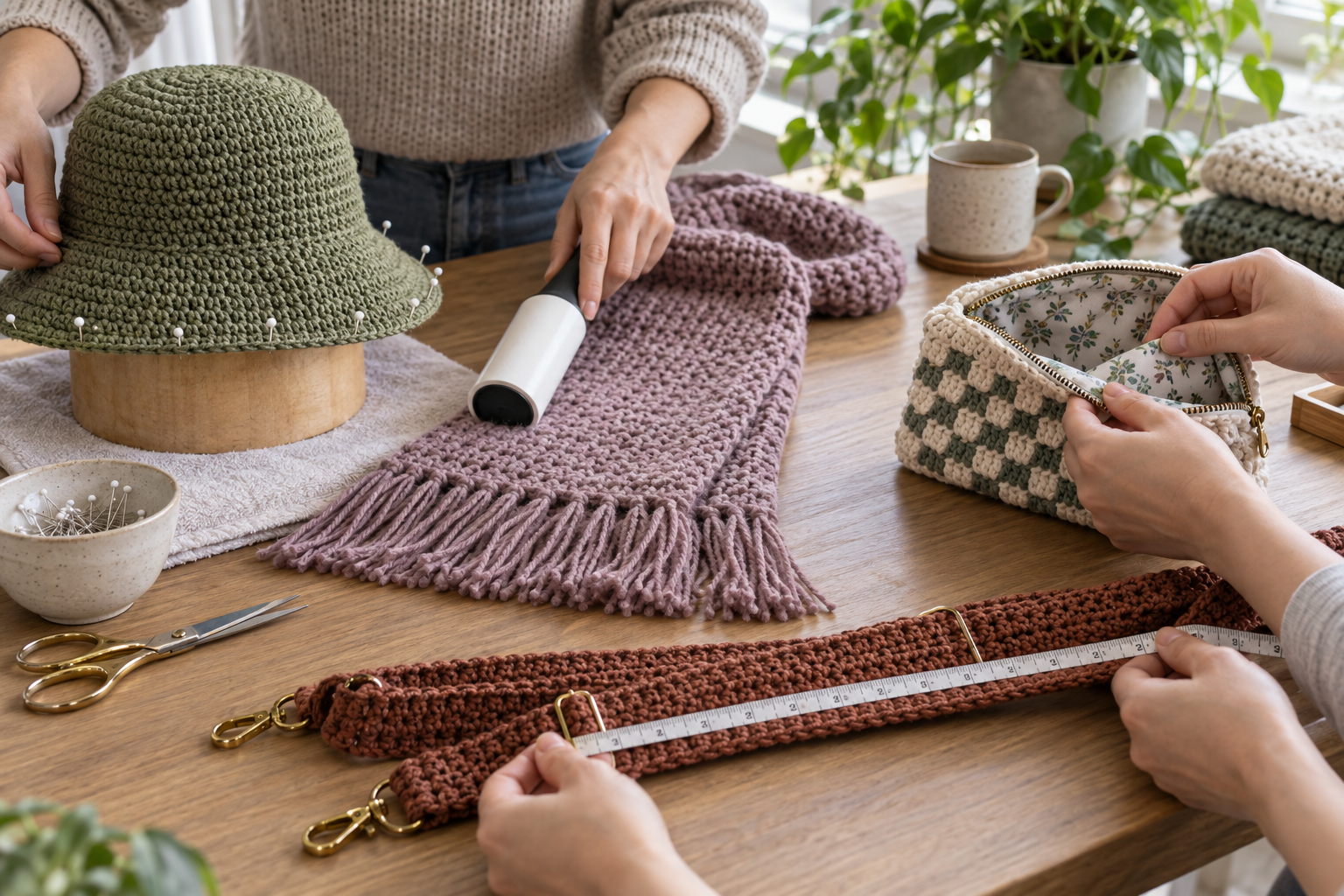
Follow the yarn label and consider the lining and hardware before washing. Remove detachable straps when appropriate, support wet pieces and reshape hats on a suitable form. Air-dry thoroughly, protect metal fittings from prolonged moisture and inspect high-friction areas after use. Store bags filled lightly with clean tissue rather than hanging them by their handles.