Crochet Headband Styles for Every Season
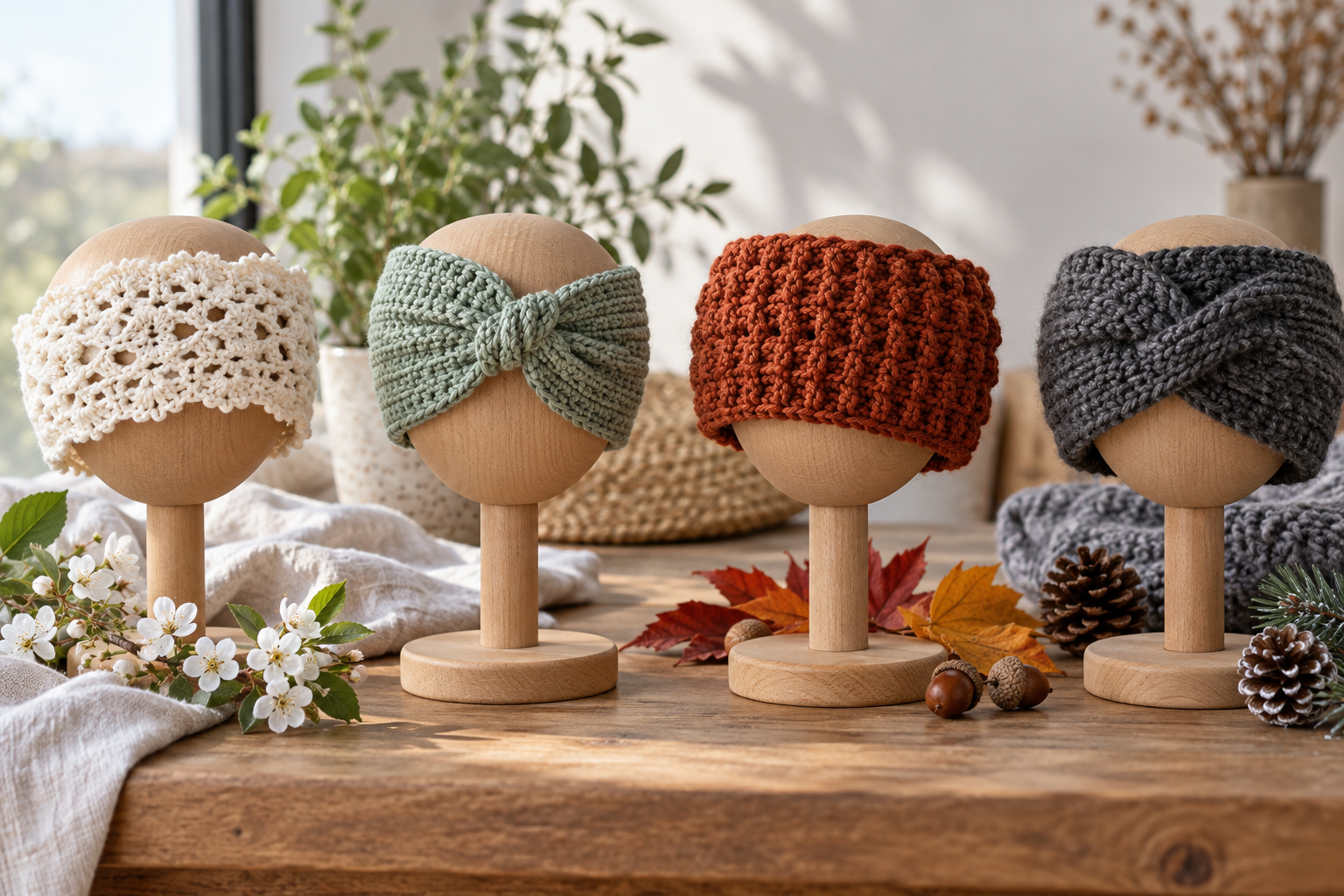
The best crochet headband changes with temperature, moisture and the way it will be worn. A light cotton band and a winter ear warmer may share a simple rectangle construction, but they need different fibers, widths and finishing.
Measure the wearer and test stretch
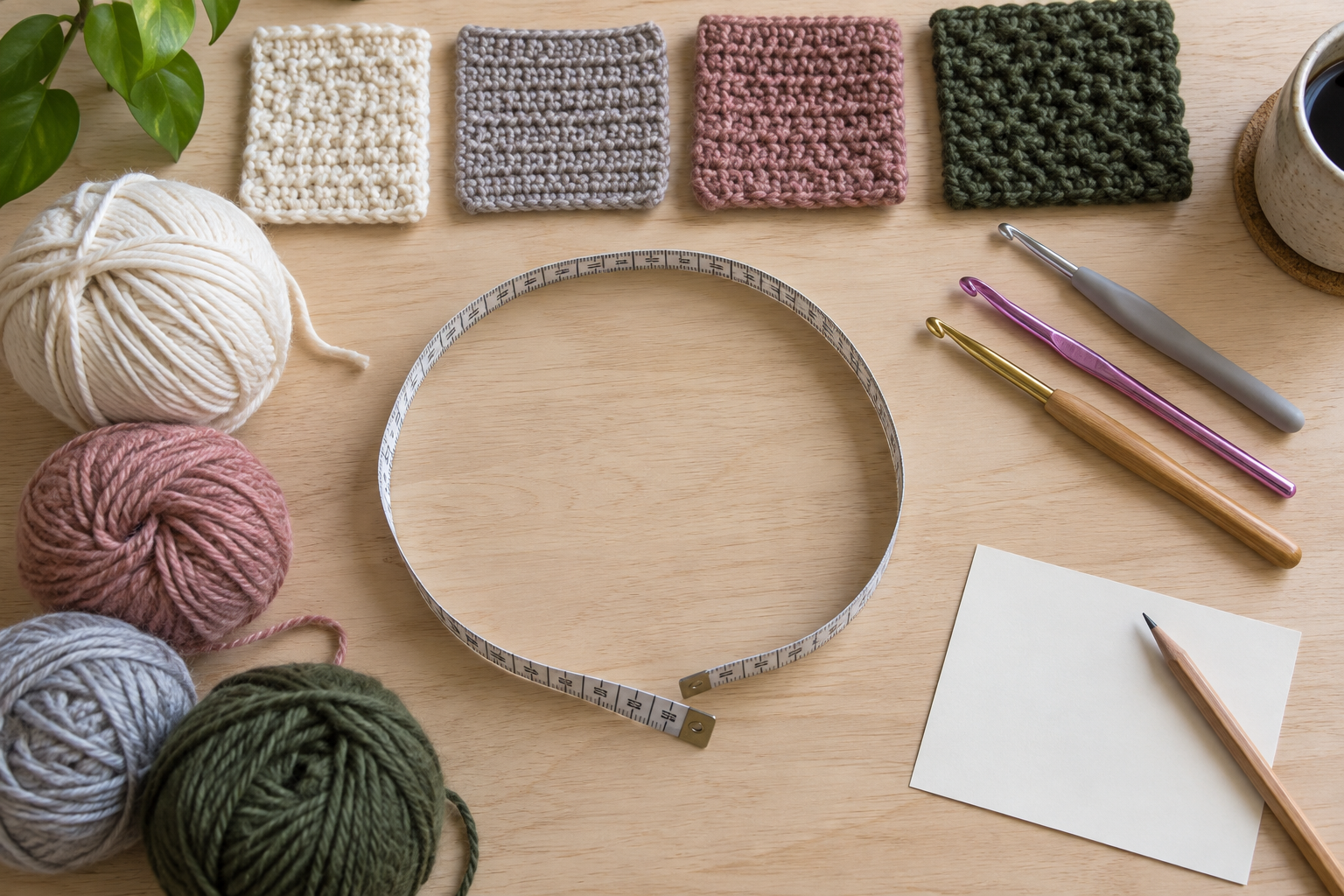
Record head circumference with the tape comfortably level. Stretch the washed swatch, release it and note whether it returns to its original width. Calculate the band from that actual behavior rather than subtracting a universal amount. For gifts, an adjustable button closure is more forgiving than a permanently seamed ring.
Match fiber and fabric to the season
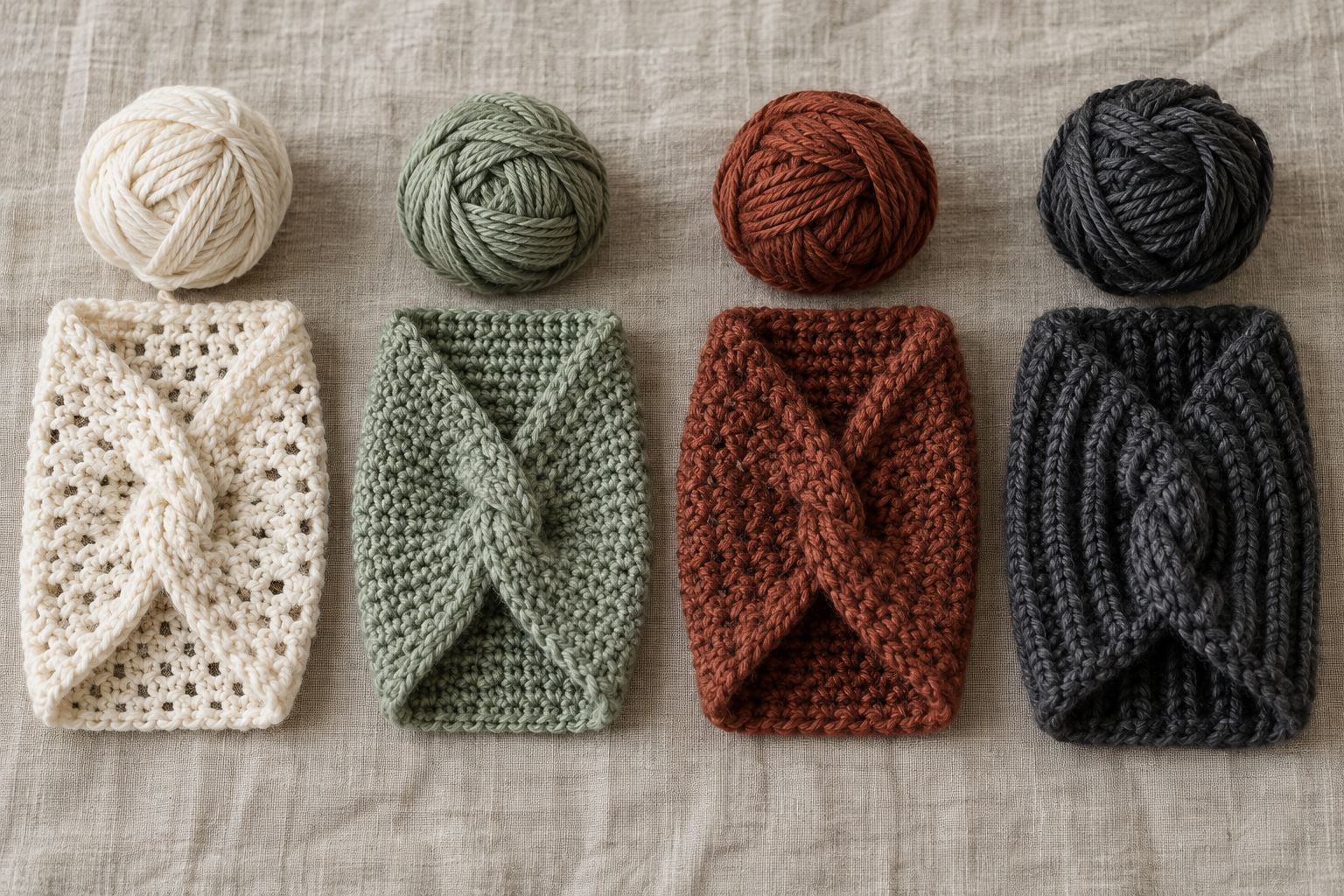
Choose breathable cotton or linen blends for spring and summer, with stitches that remain stable after washing. For autumn, a medium-weight wool blend adds texture without excessive bulk. Winter ear warmers benefit from soft wool or acrylic blends and a dense fabric wide enough to cover the ears. Avoid fibers that feel irritating during a long wear test.
Use a construction method you can adjust
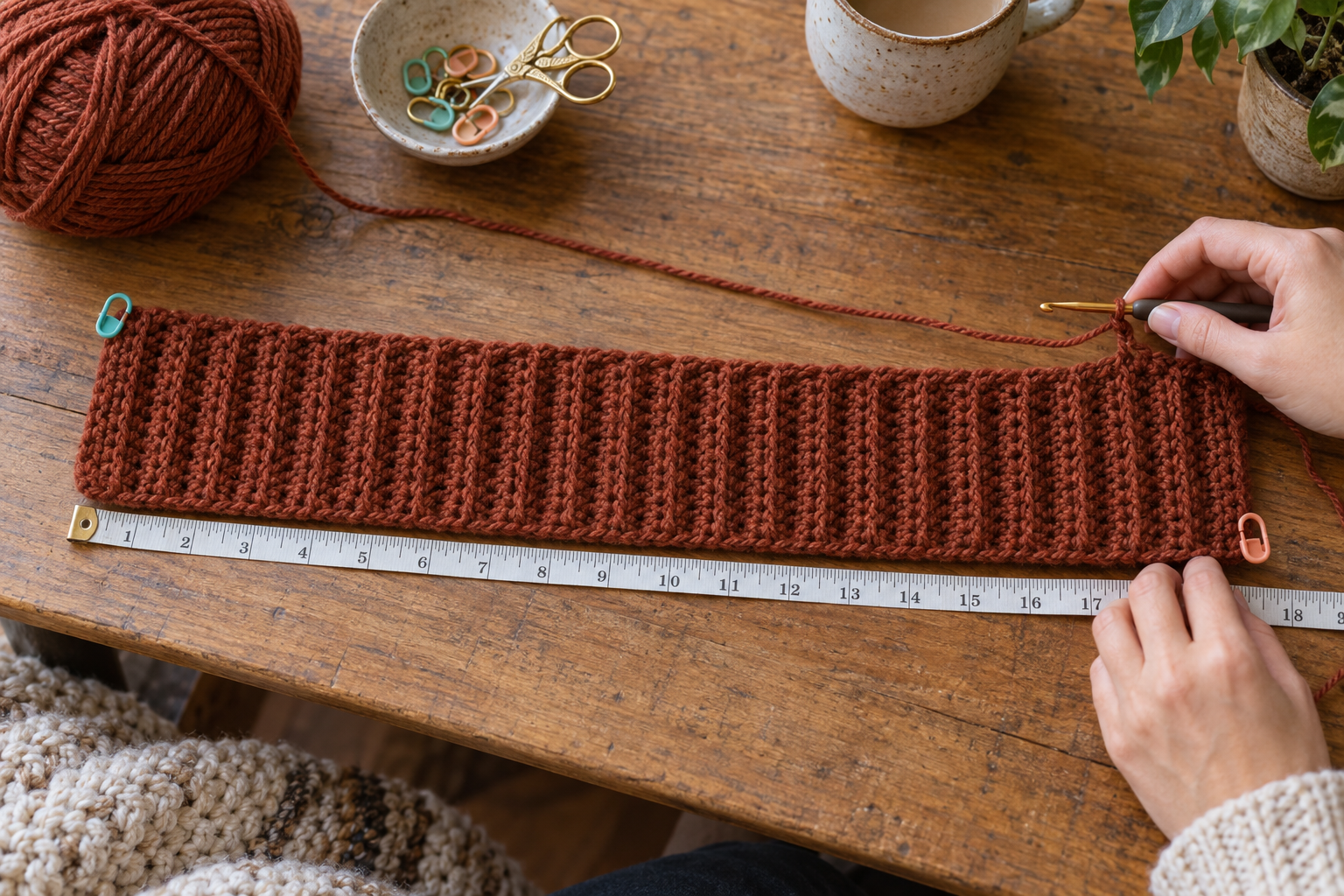
Working rows across the short dimension creates vertical ribbing and makes length easy to change. Working lengthwise creates fewer rows but requires confidence in the starting chain. Measure without pulling the fabric, then wrap the unfinished panel around the head before fastening the final seam.
Choose a join for comfort and styling
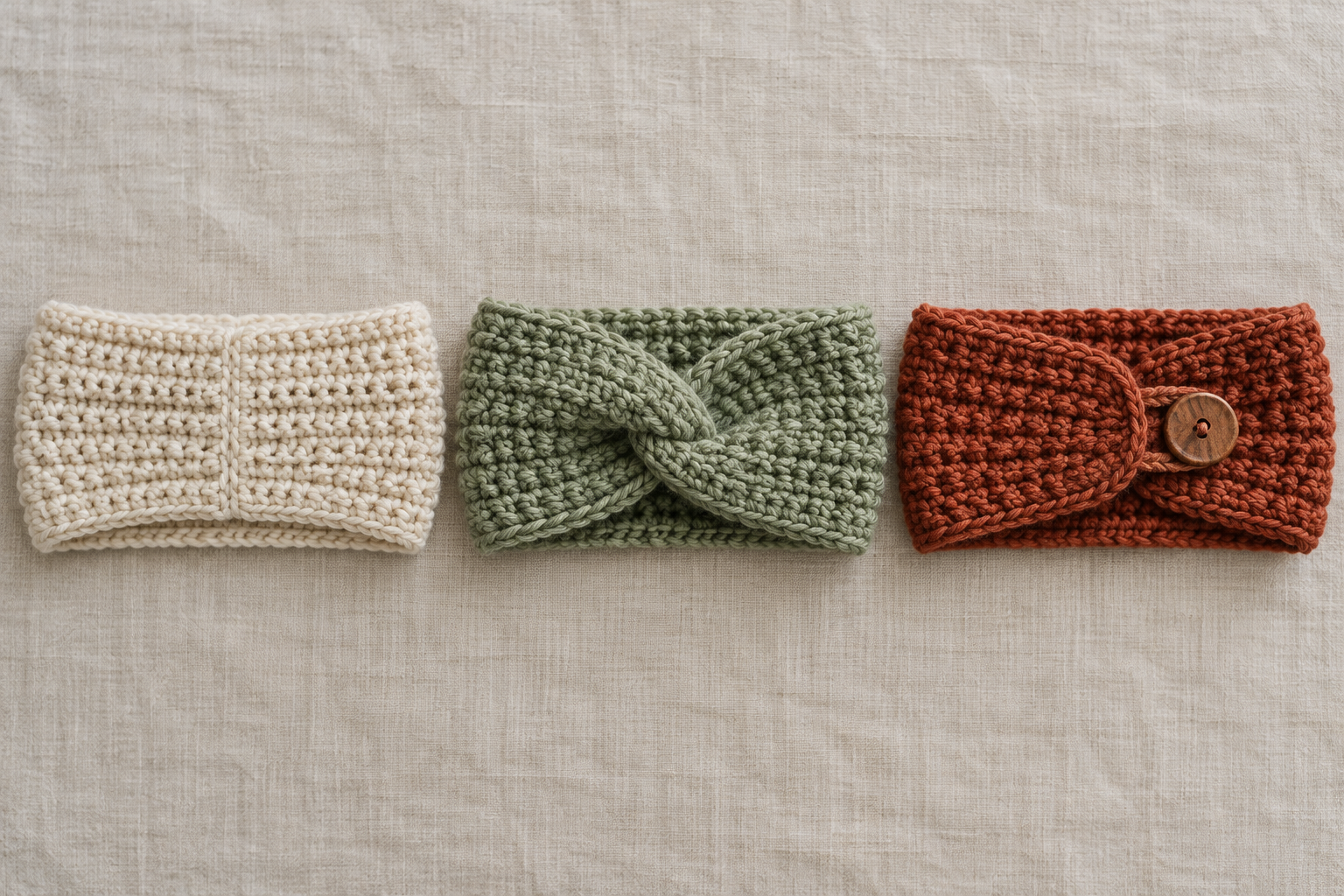
Place permanent joins away from pressure points and weave tails in several directions. A decorative twist uses overlapping folded ends and therefore shortens the wearable circumference; account for that during fitting. Reinforce button loops, select a button too large to slip through accidentally and inspect it regularly.
Wash each fiber by its own rules
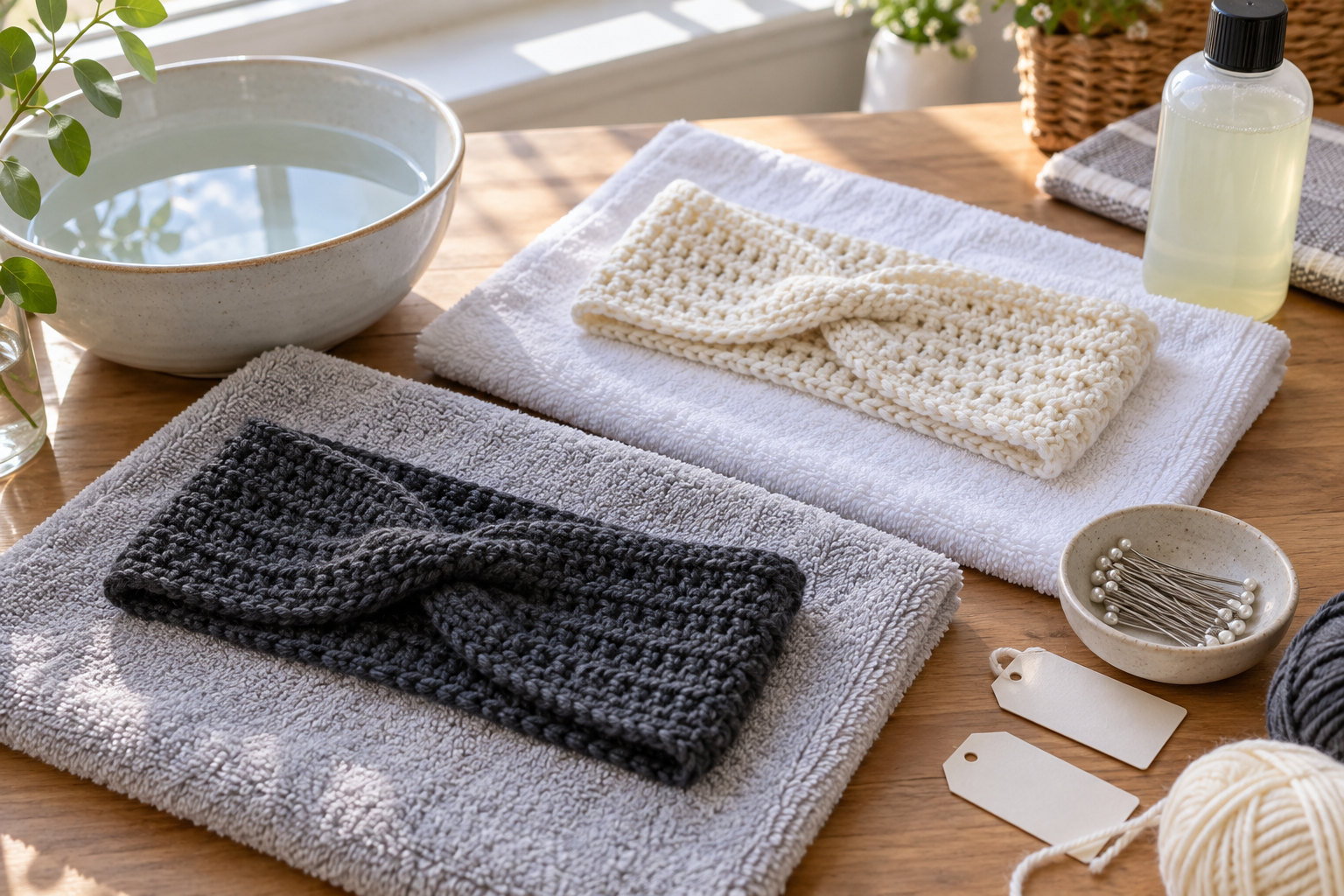
Follow the yarn label, use cool water when appropriate and support the fabric while lifting it. Reshape to the recorded dimensions and dry fully before wearing or storing. Wool and cotton pieces should be washed separately when their care requirements differ.
Build a coordinated accessory set
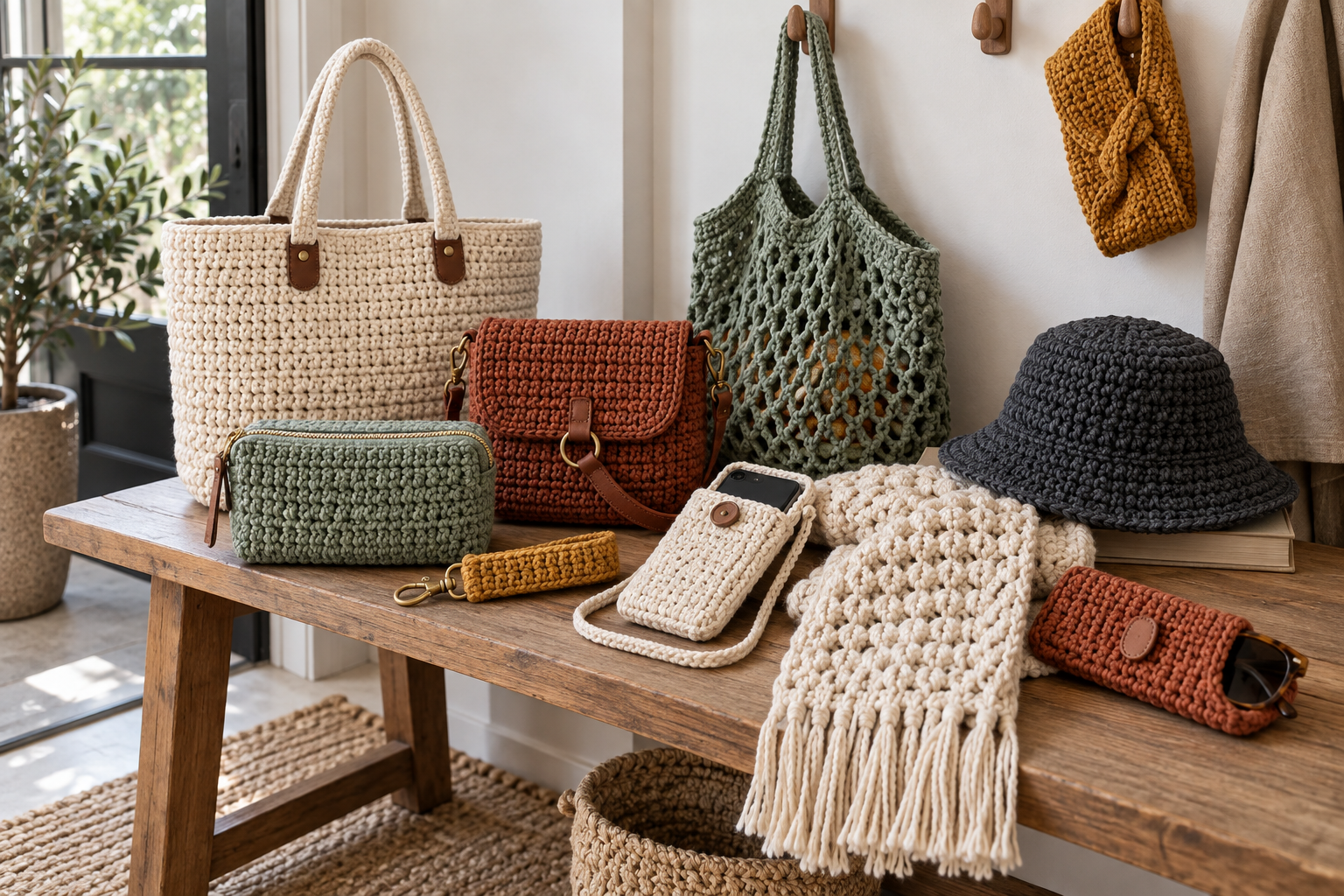
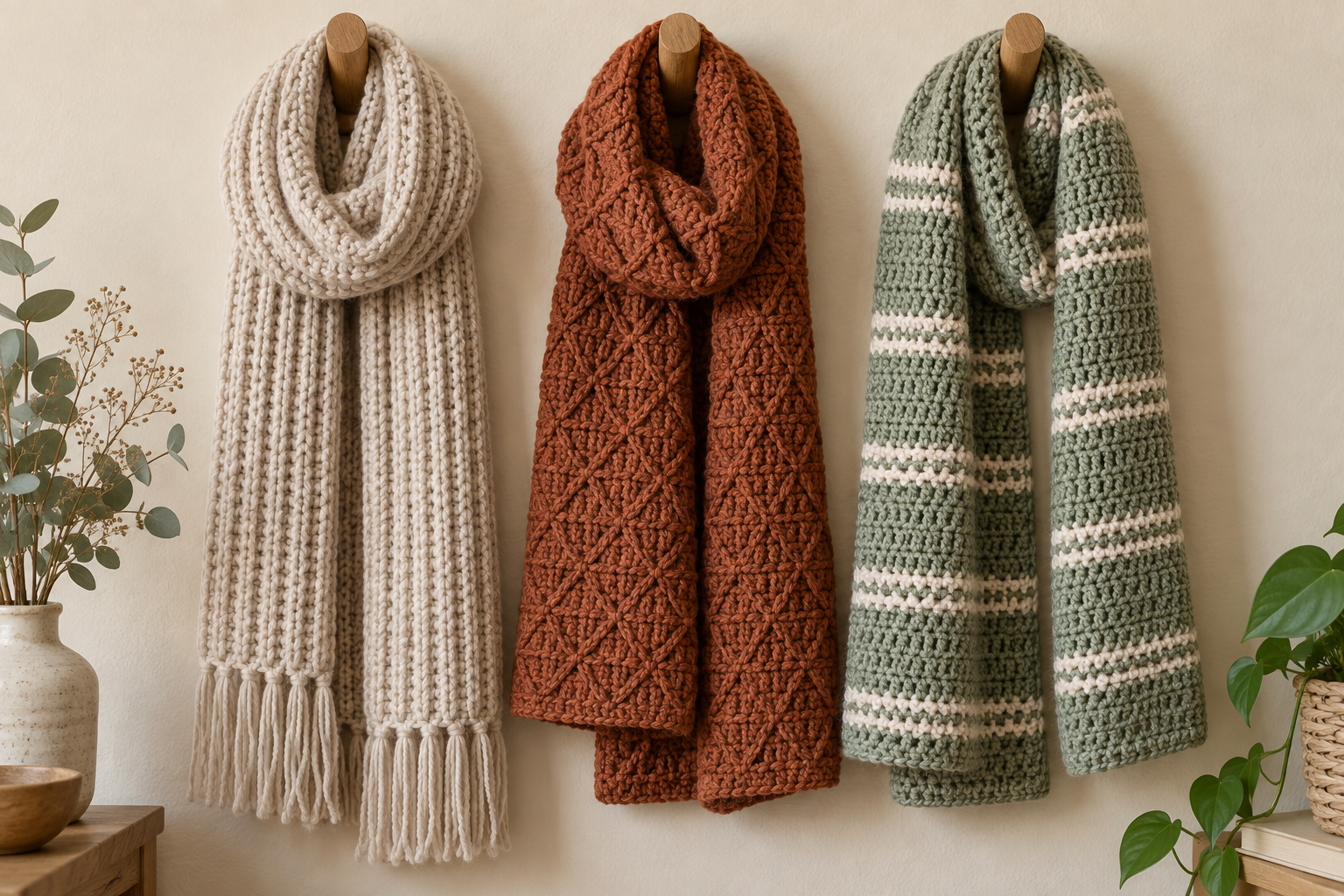
Repeat the winter texture in a modern crochet scarf, use summer cotton alongside a bucket hat, or start with these quick crochet headband ideas when you want a smaller practice project.