Fast Crochet Soap Saver Bag
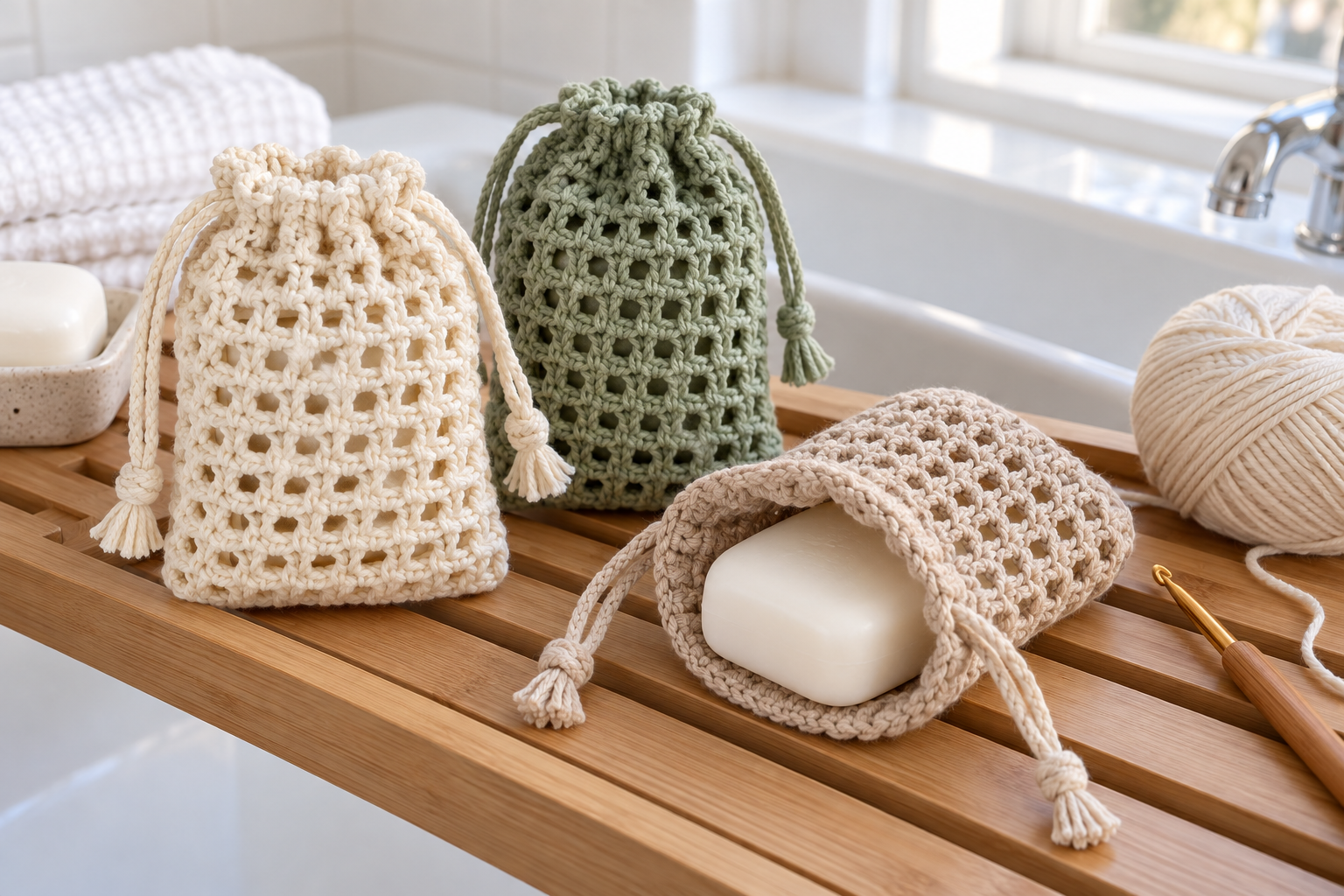
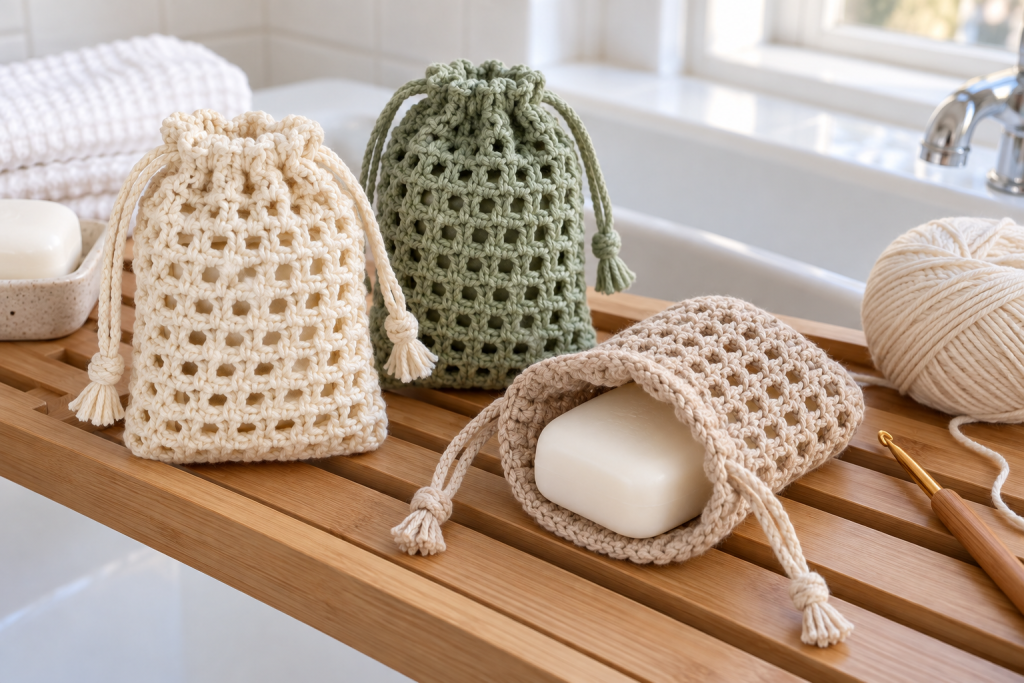
A soap saver bag should hold small soap pieces while allowing water and air to move through the fabric. This guide covers fiber, sizing, drawstring construction and the cleaning routine needed to prevent a damp bag from becoming unpleasant.
Level: beginner
Time: 45–90 minutes
Yarn use: approximately 15–30 g
Priority: complete drying between uses
Choose a washable fiber with the right feel
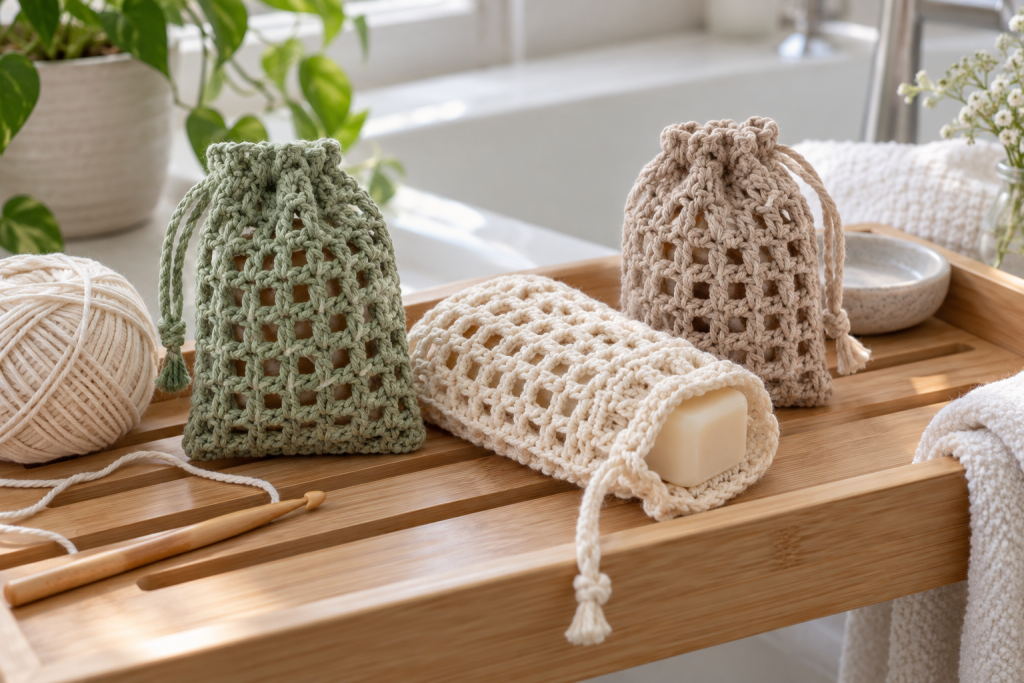
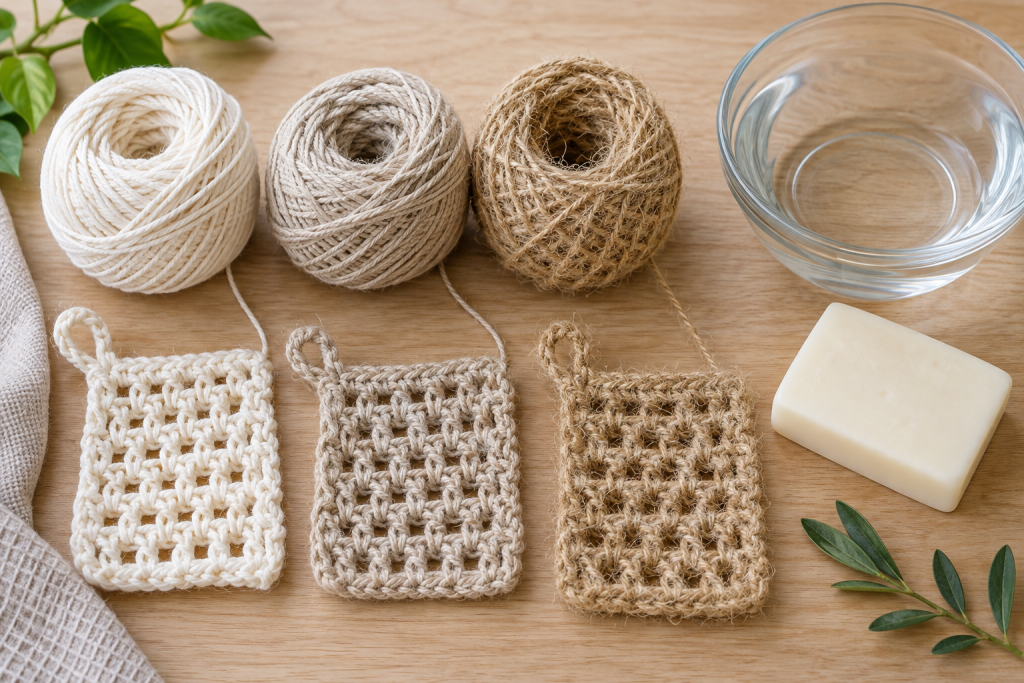
Cotton is easy to crochet, absorbent and widely washable. Cotton-linen can dry more quickly and hold an open stitch well. Sisal-like plant fibers feel much rougher and should be used gently, never on irritated or broken skin. Avoid yarn that sheds dye, glitter or loose fibers when wet.
Wash a swatch first and rub it against the inner forearm. Discontinue use if it feels abrasive or causes persistent redness.
Allow room for soap and circulation
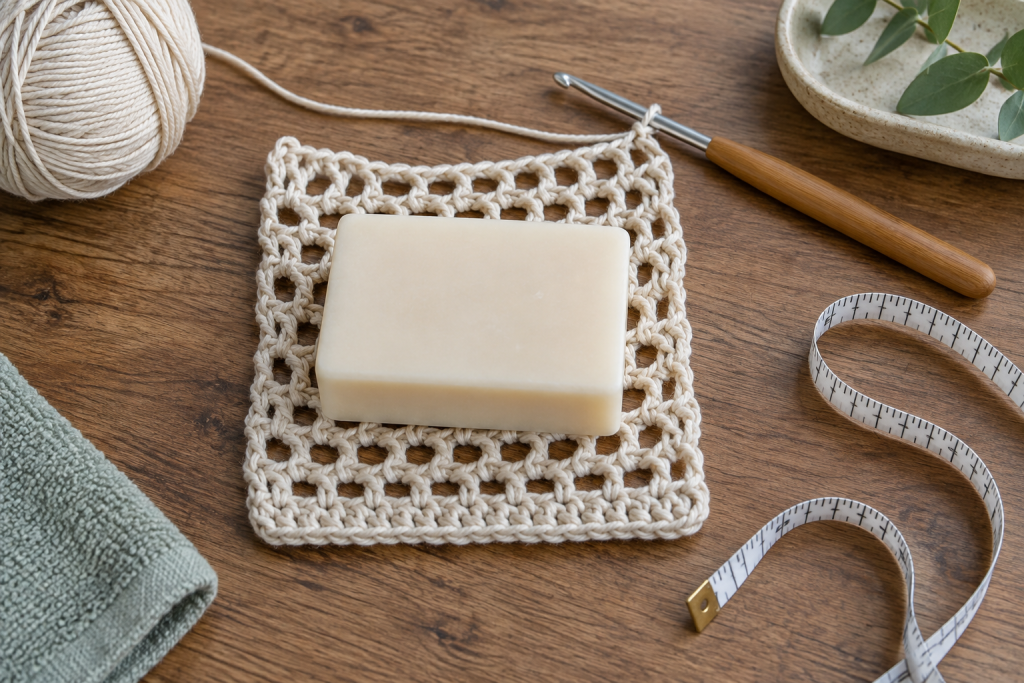
Measure the bar’s width, height and thickness, then add roughly 1–2 cm of ease on each dimension. A saver for small remnants can be narrower, but it still needs an opening large enough to turn inside out for cleaning. Test the unfinished fabric around the actual soap before closing the side or base.
Combine a firm base with an open body
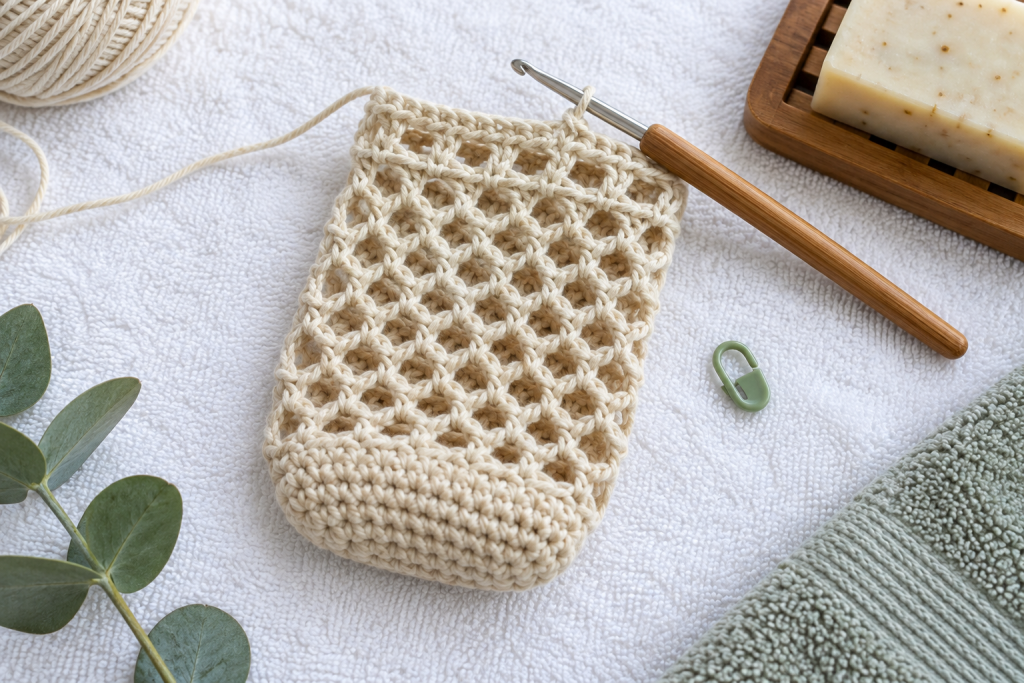
- Crochet a solid chain or small oval base slightly wider than the soap.
- Work upward in an open mesh or spaced stitch without creating large holes.
- Add a denser top round to support the drawstring channel.
- Make a cord long enough to operate easily but not so long that it tangles.
- Secure cord ends with compact knots or sewn stops that cannot slip through.
Keep the hanging loop short. Long cords can snag on fixtures and are inappropriate where small children may access them.
Dry the bag fully after use
A closed wet pouch keeps both soap and yarn damp. After bathing, remove the bar when practical, rinse the empty bag and squeeze gently without twisting. Hang it in a ventilated location away from pooled shower water. Rotate between two bags if one cannot dry before the next use.
Launder it regularly

Wash according to the yarn label, using a mesh bag to contain the cord. Rinse thoroughly and dry completely. Replace the bag when it retains odor, develops mildew staining or has loose loops that can snag. Crochet does not make soap more hygienic by itself—the cleaning routine does.
Responsible use
A textured bag can increase friction. Use light pressure and avoid damaged, inflamed or infected skin. Do not share personal washing accessories. Seek medical guidance for persistent skin problems rather than relying on exfoliation.
More washable cotton projects
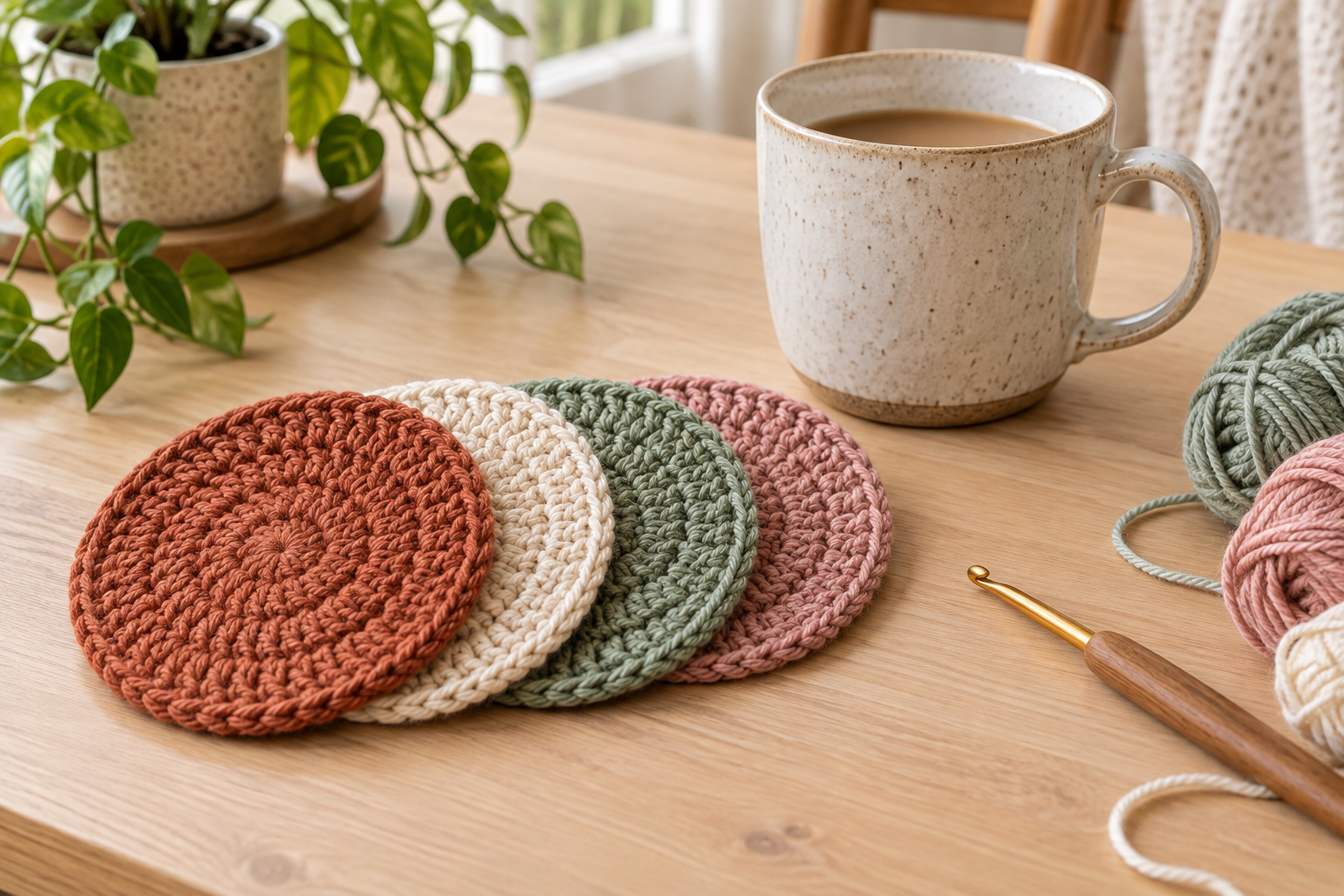
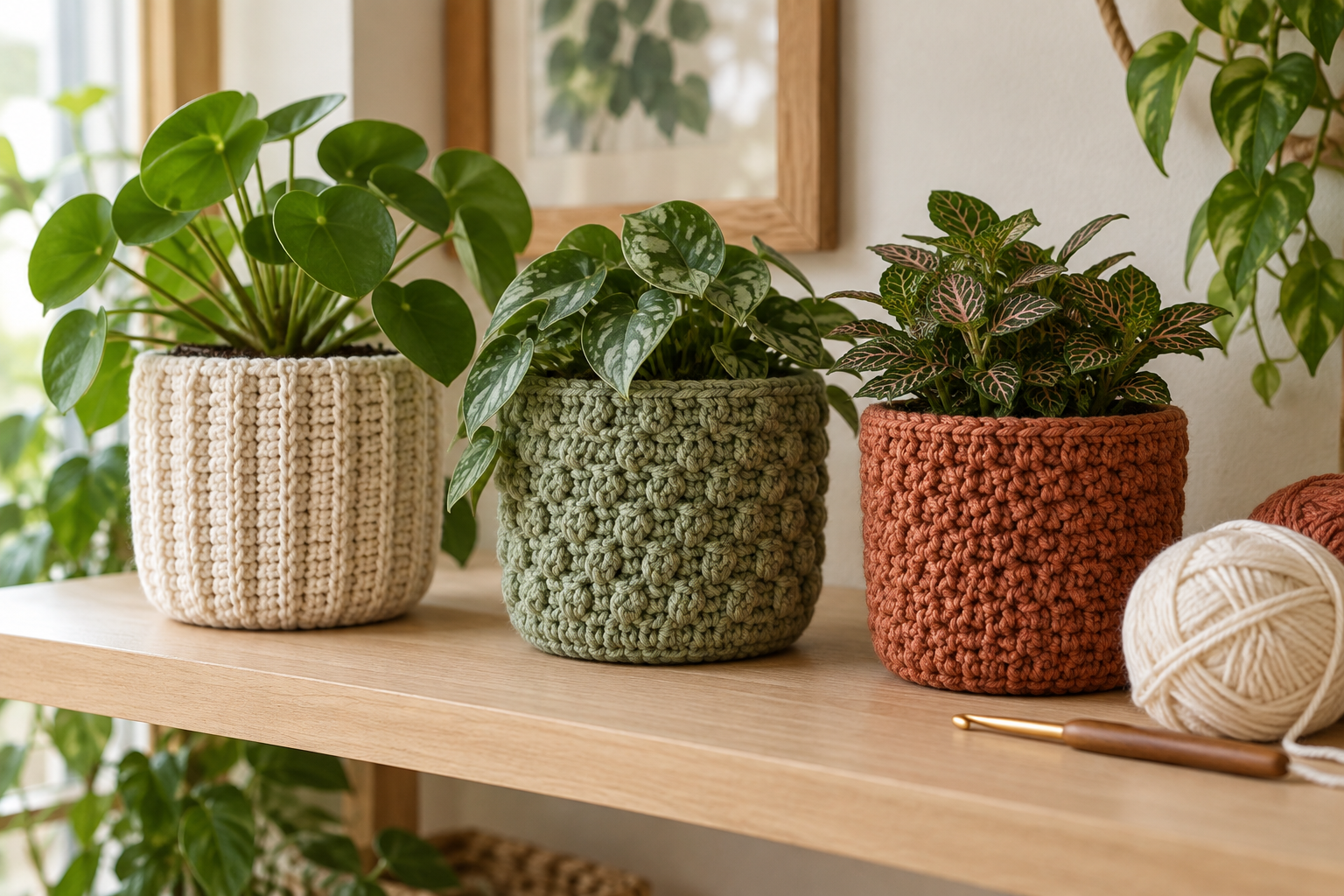
Make reusable face scrubbies, a dry plant pot cozy, or practical one-hour coasters.