12 Quick Crochet Projects for Beginners
A genuinely quick crochet project has a small stitch count, limited finishing and a construction method you already understand. “One hour” is useful as a comparison, not a promise: reading a new pattern, correcting mistakes, blocking and drying all add time. These 12 ideas are organized by shape and skill so you can choose the right kind of fast project.
Start with flat projects you can measure easily
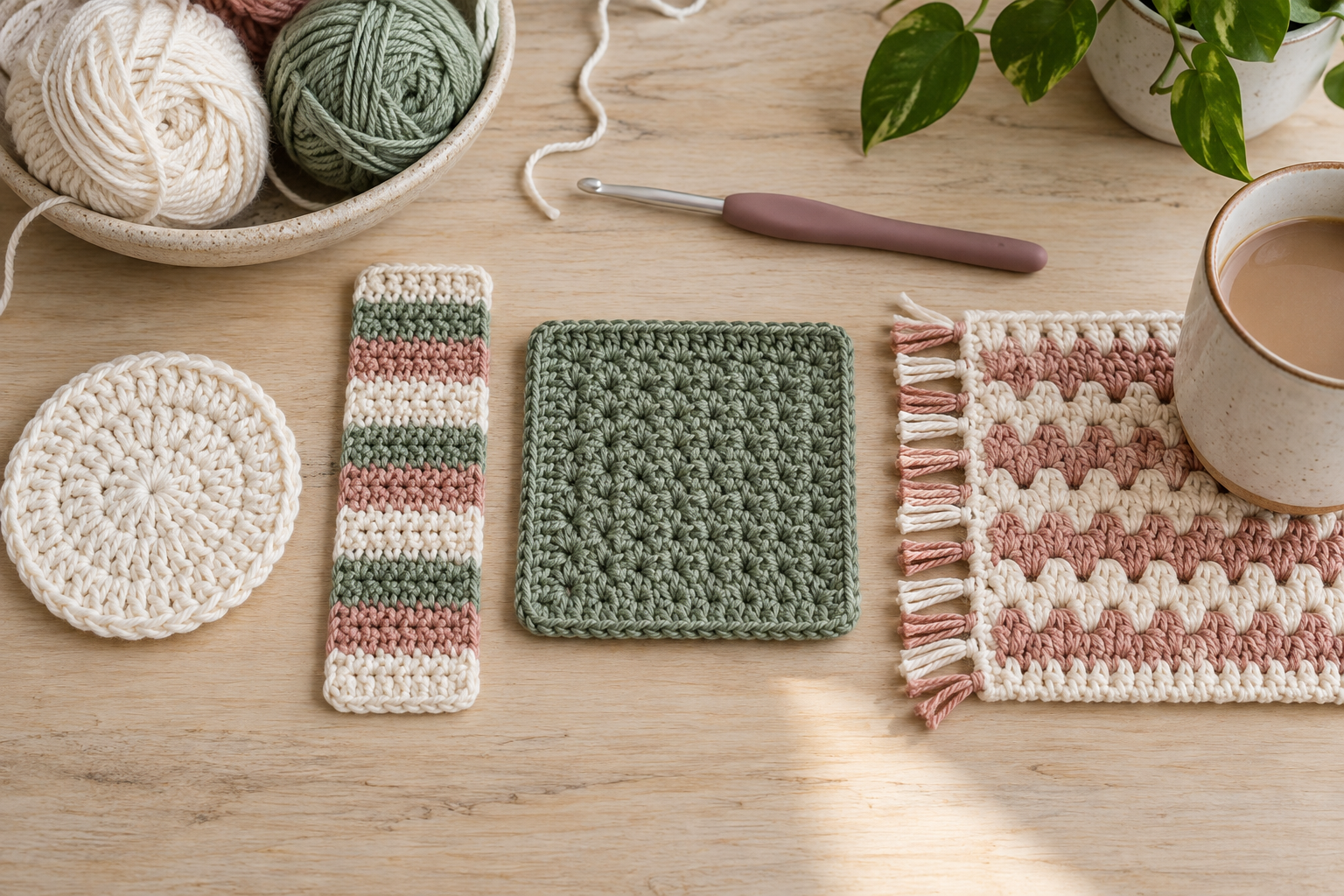
1. Cotton face scrubbie
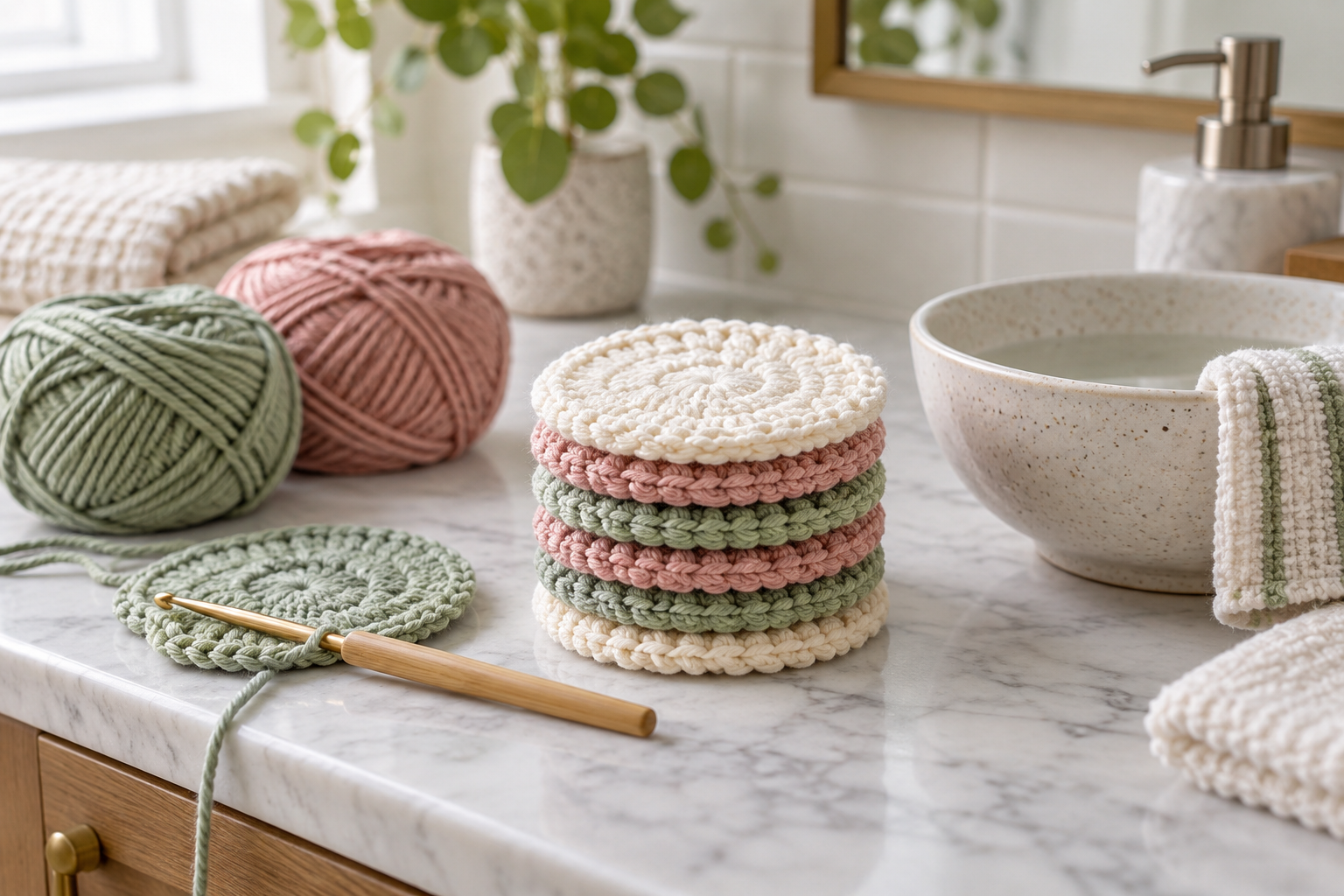
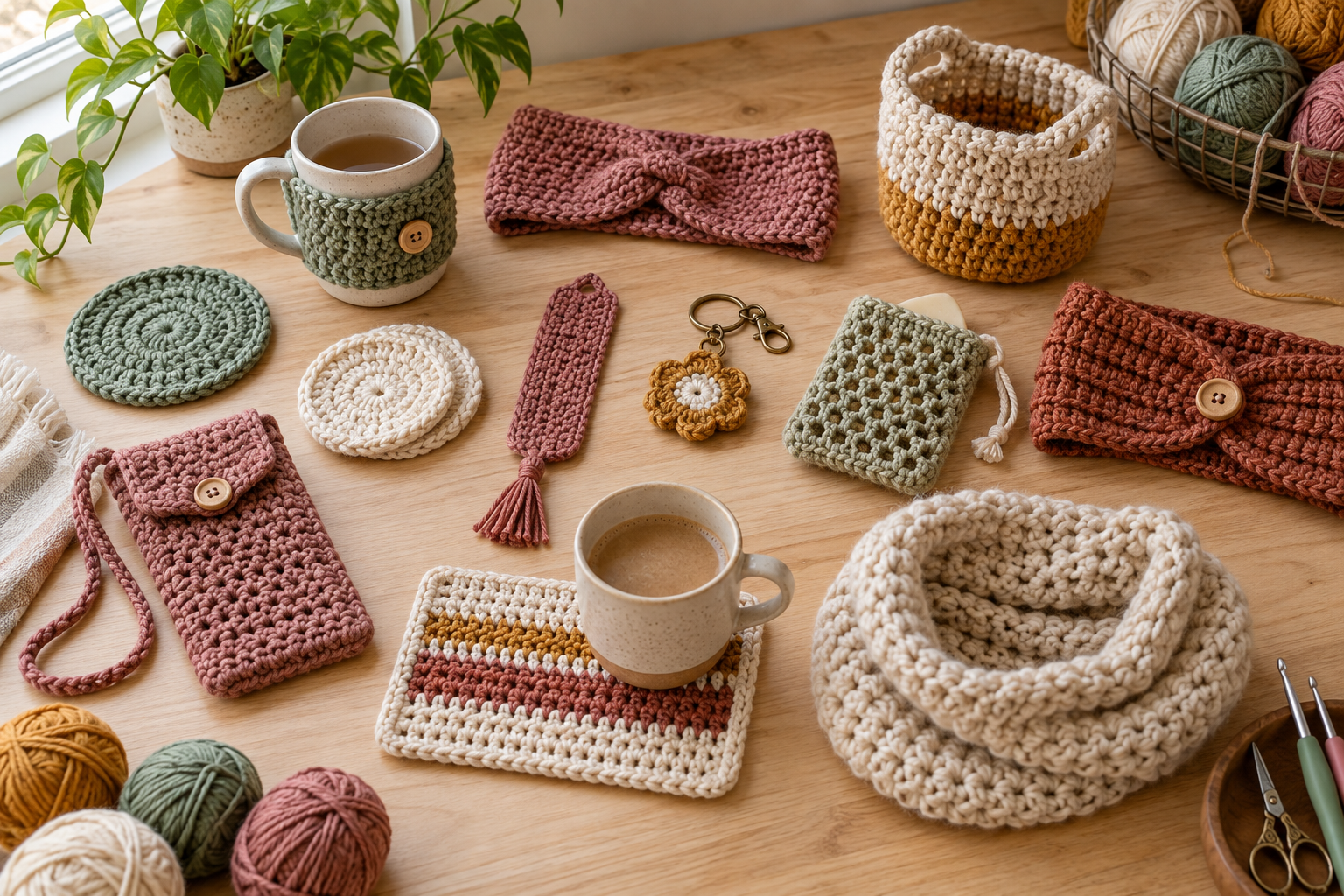
Work a dense circle in smooth washable cotton and keep the final edge flat. Make a test piece, wash it and check softness before using it on skin. The reusable face scrubbie guide covers fiber and care choices.
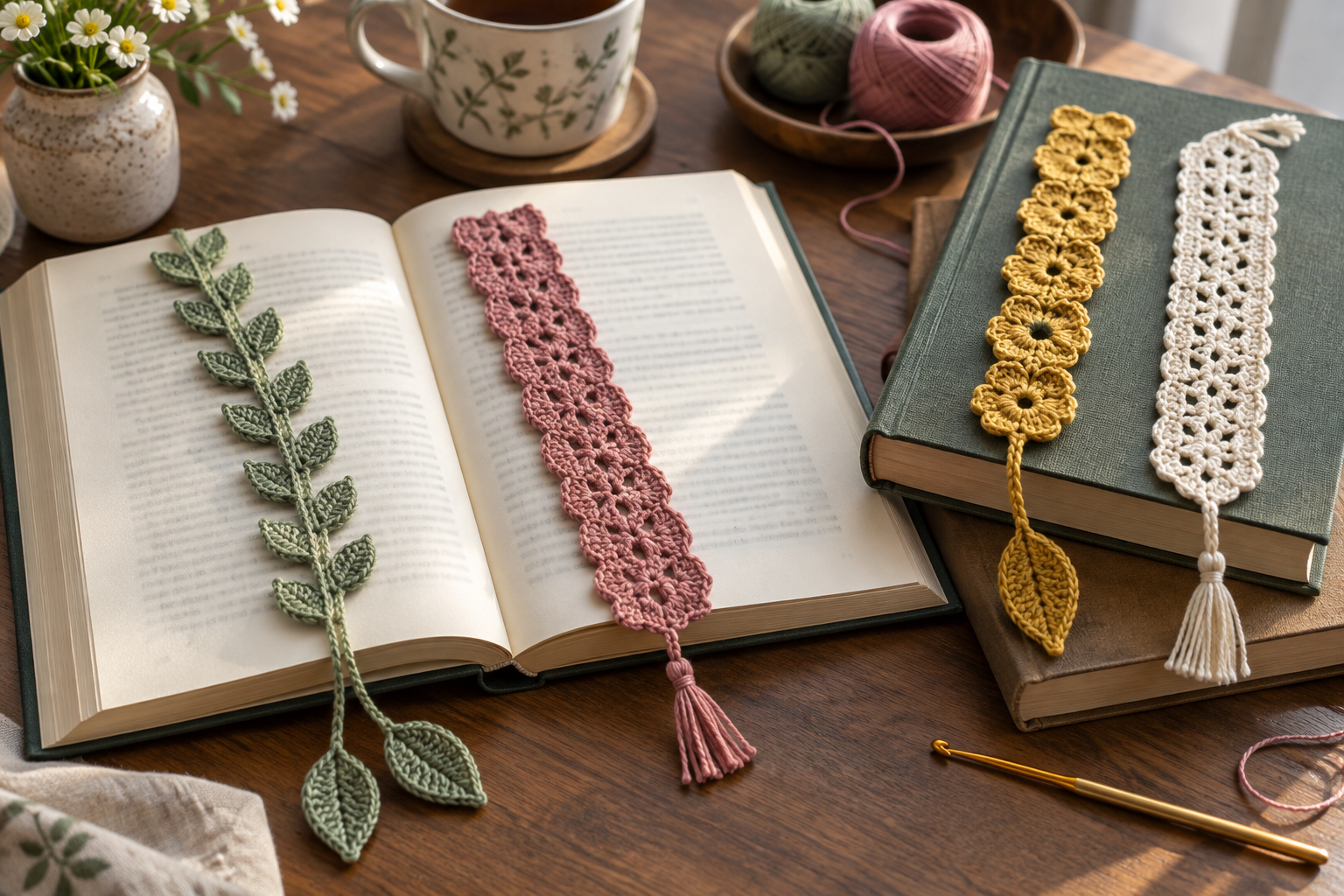
2. Striped bookmark
A narrow rectangle uses very little yarn and makes row tension obvious. Avoid bulky decorations that can strain a book’s spine; see these quick bookmark ideas.
3. Simple coaster
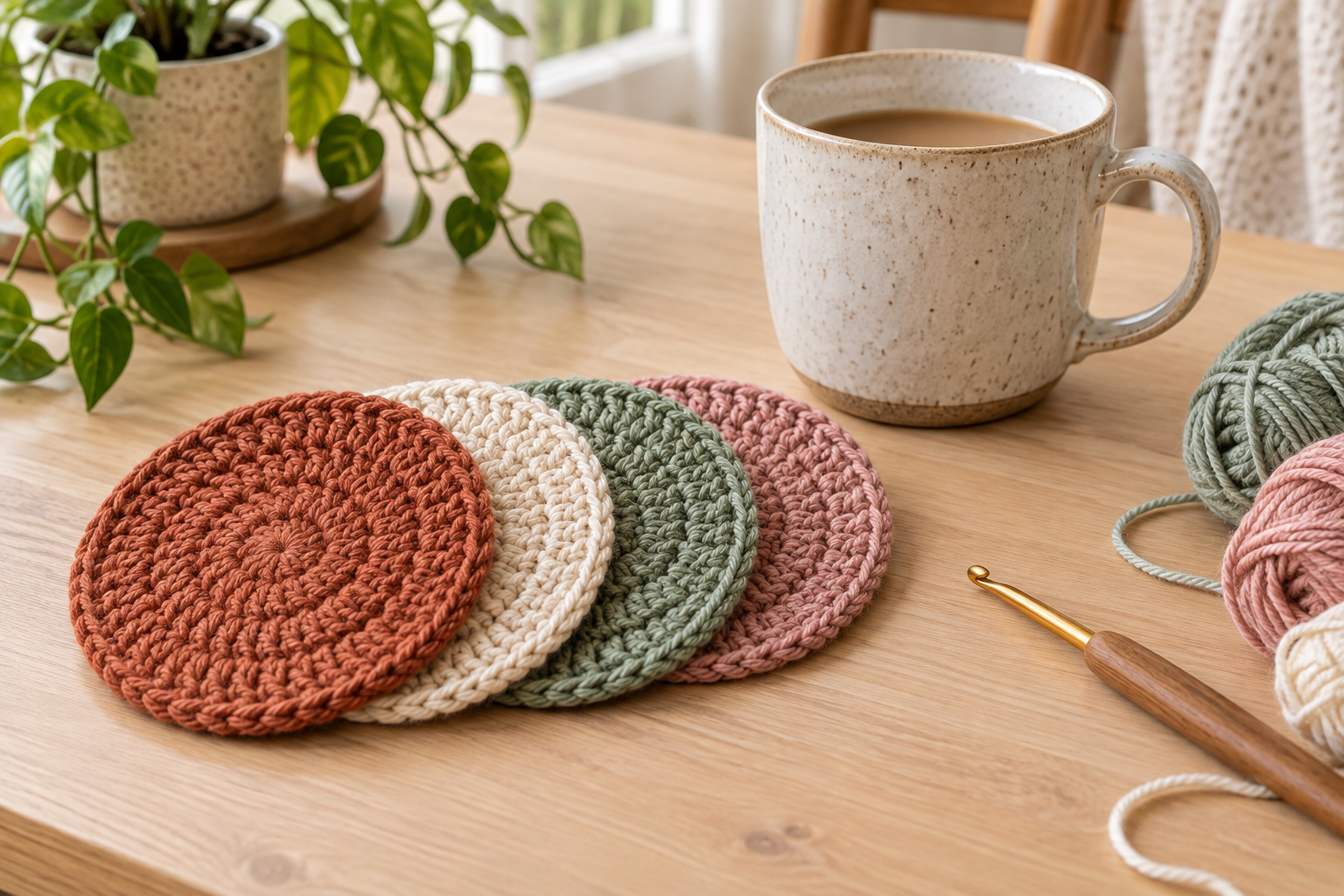
A coaster is ideal for learning circles or crisp square corners. Choose absorbent, heat-appropriate yarn and test whether the finished piece lies flat with our one-hour coaster guide.
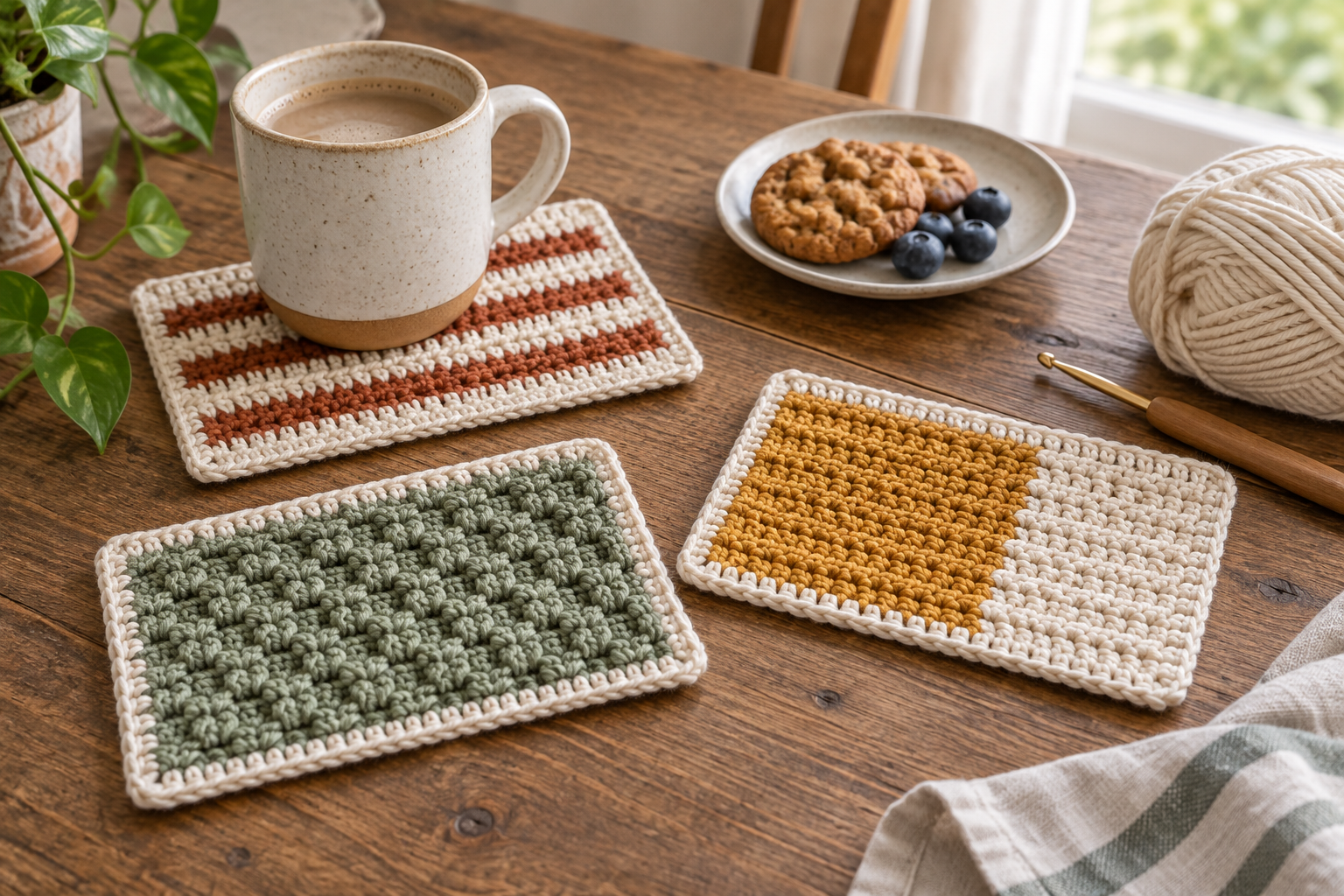
4. Textured mug rug
A mug rug adds edge control and optional fringe. Measure the usable flat area before adding the border, then review the beginner mug rug guide.
Make useful accessories with minimal assembly
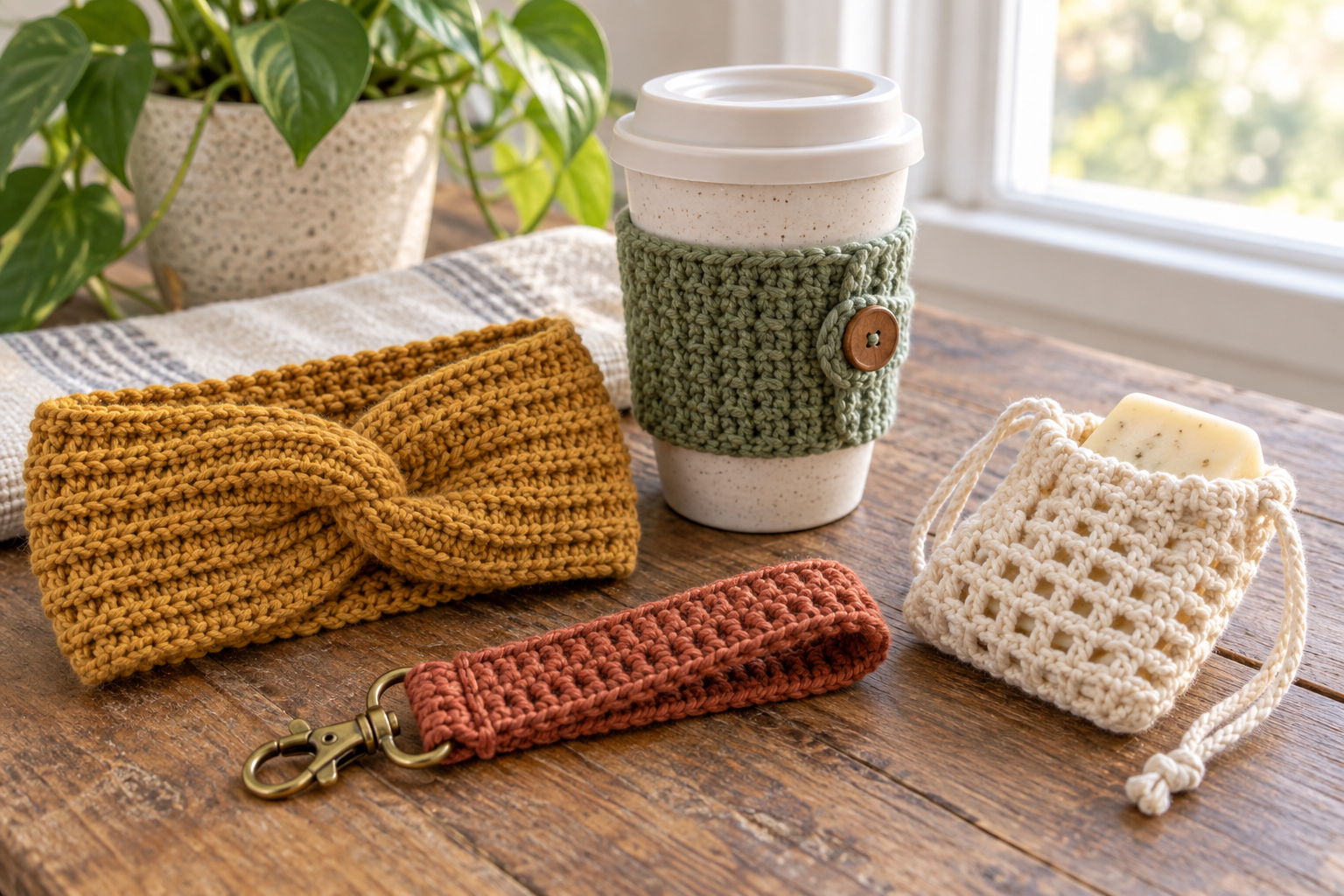
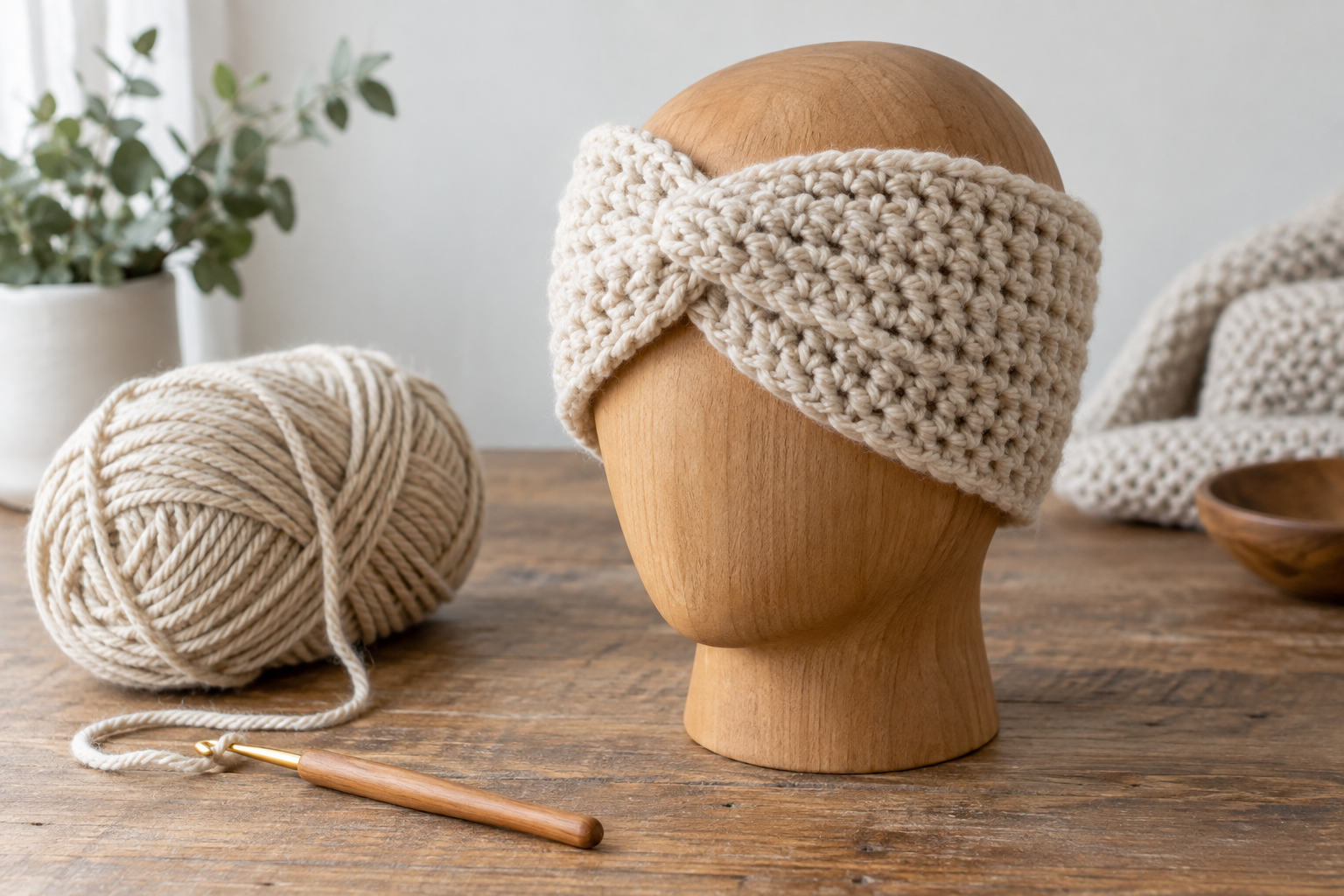
5. Ribbed ear warmer
Crochet a rectangle to the wearer’s actual head measurement and allow for the stretch shown by a washed swatch. A flexible seam is more comfortable than a stiff join; use the quick ear-warmer guide for sizing.
6. Buttoned cup cozy
Measure the cup at its widest and narrowest points. Keep buttons and thick seams away from the gripping area, and never treat yarn as heat protection. Compare construction options in these cup cozy ideas.
7. Keychain wristlet
A dense strap provides fast practice in consistent edges. Fold the end securely around appropriate hardware and reinforce the high-stress area; it is decorative and should not carry heavy loads.
8. Drawstring soap saver
Use washable plant fiber and an open stitch that drains well. Keep the cord short, rinse the bag and dry it fully between uses. The soap saver guide explains practical sizing.
Estimate time from a swatch—not a headline
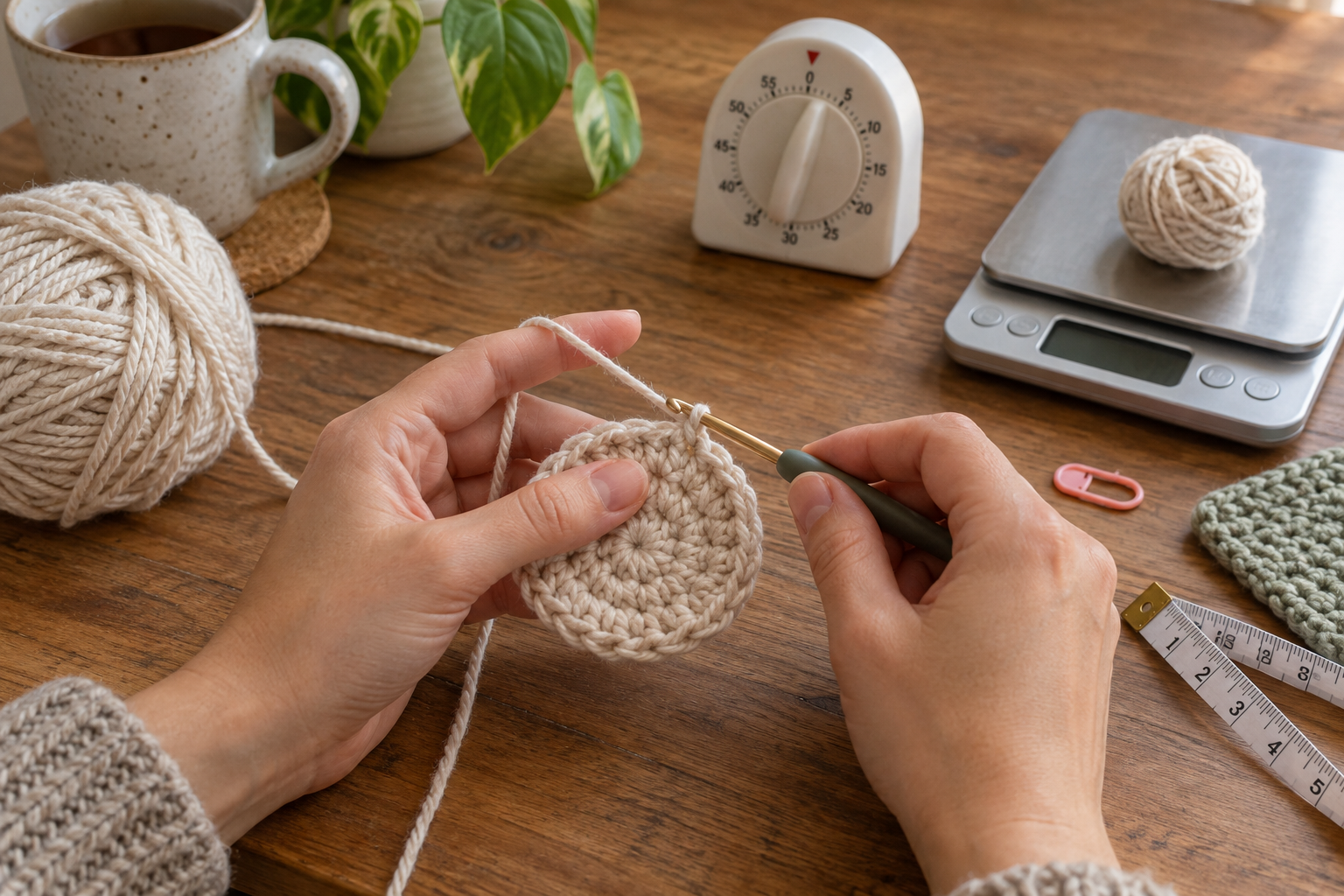
Crochet for 15 relaxed minutes, count the completed stitches or rows and weigh the swatch. Compare that result with the project’s approximate area, then add time for setup, joining, weaving ends and blocking. A familiar stitch may be faster even if another stitch looks simpler. Choose a slightly larger hook only when the resulting fabric still suits the job.
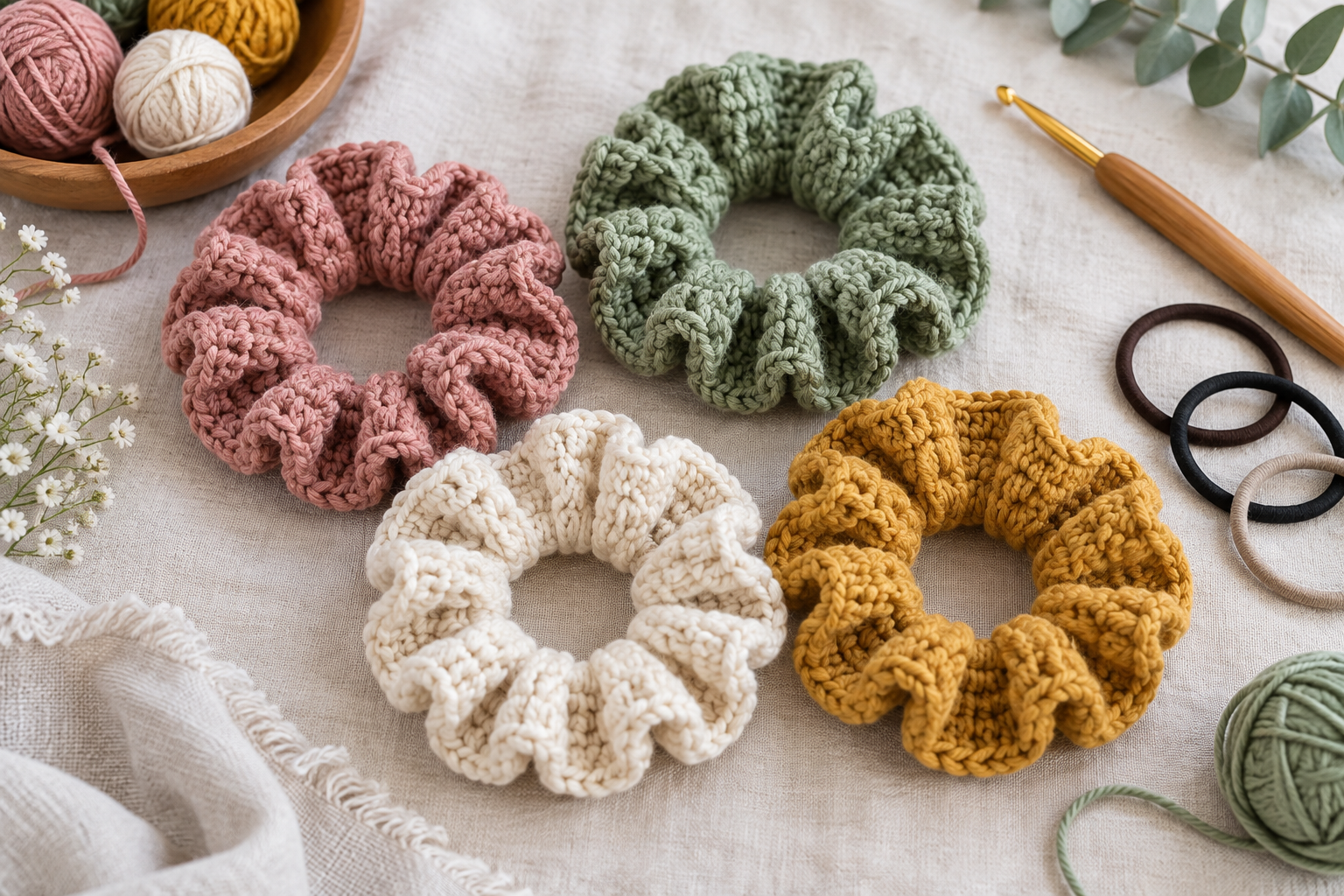
9. Scrap-yarn scrunchie
Crochet around a quality hair elastic with light, flexible fabric rather than overloading it with dense stitches. Match yarn tails carefully and follow the fast scrunchie guide.
10. Gift card holder
Make a small envelope from a measured rectangle. Test it with a blank card of the same dimensions and position the closure where it cannot catch the contents. See the gift card holder guide.
Choose a slightly larger project to build one new skill
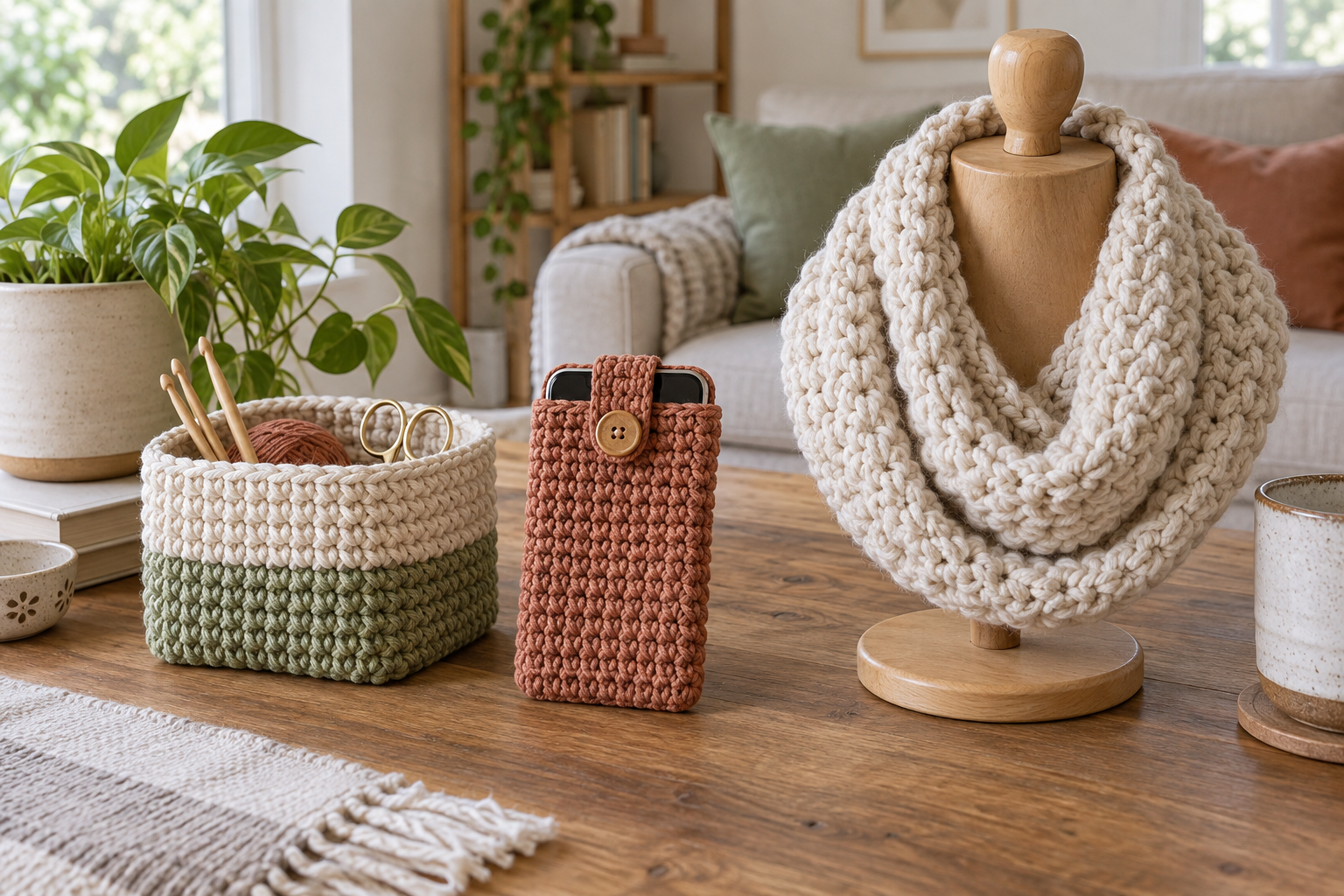
11. Small plant-pot cozy
A straight-sided cozy teaches diameter and vertical fit. Keep it clear of drainage holes and remove it before watering; the plant-pot cozy guide includes moisture precautions.
12. Chunky cowl
A one-skein cowl is the largest project here, but bulky yarn and a repeated stitch keep progress visible. Wash the swatch because heavy yarn can grow, then size the loop for comfortable movement rather than a tight fit.
Finish the project instead of racing the clock
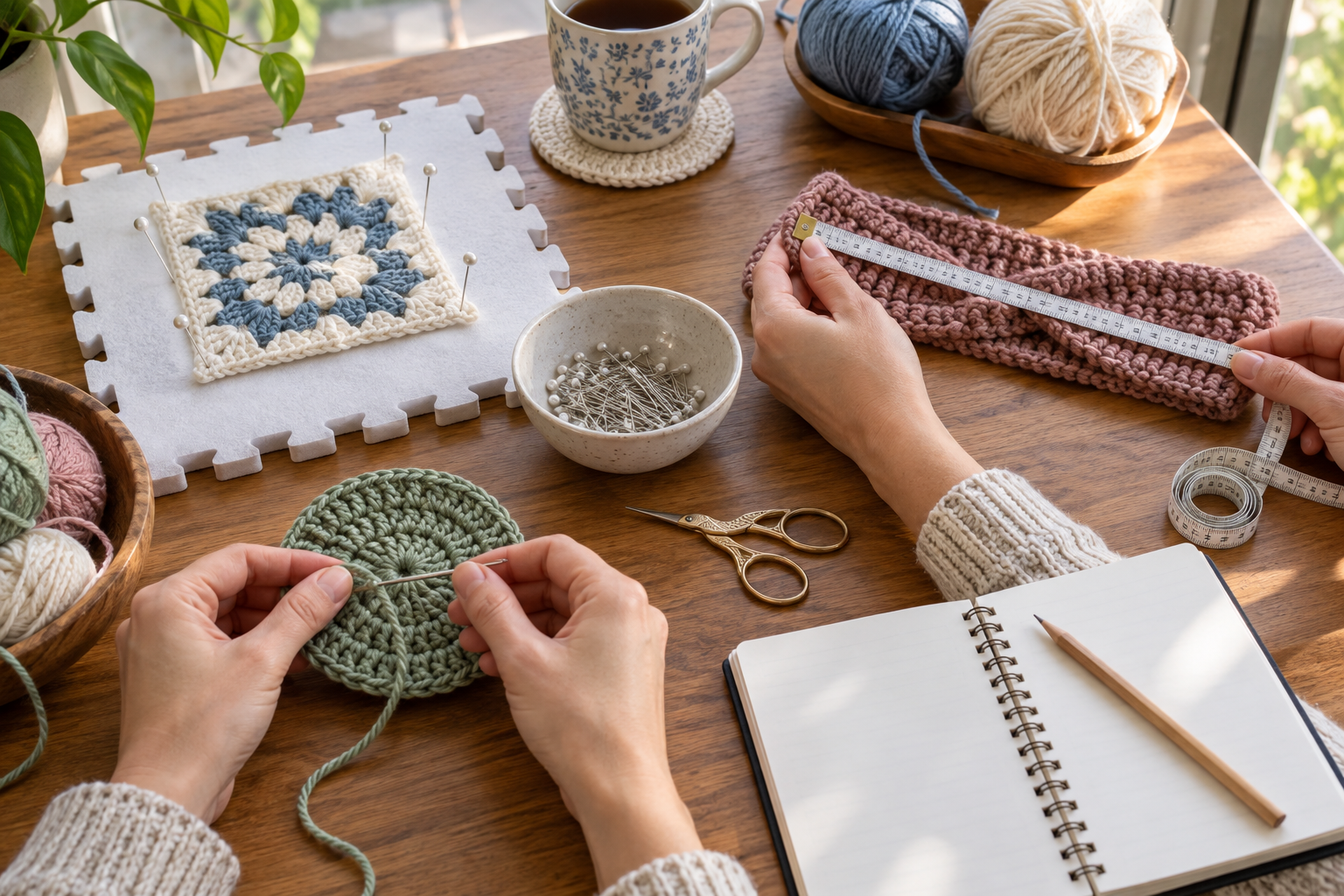
Weave each tail through several directions, inspect seams and hardware, and block only as the fiber permits. Record the yarn, hook, dimensions and actual working time. Those notes make your next project estimate more accurate—and they are more useful than forcing every maker into the same advertised finish time.