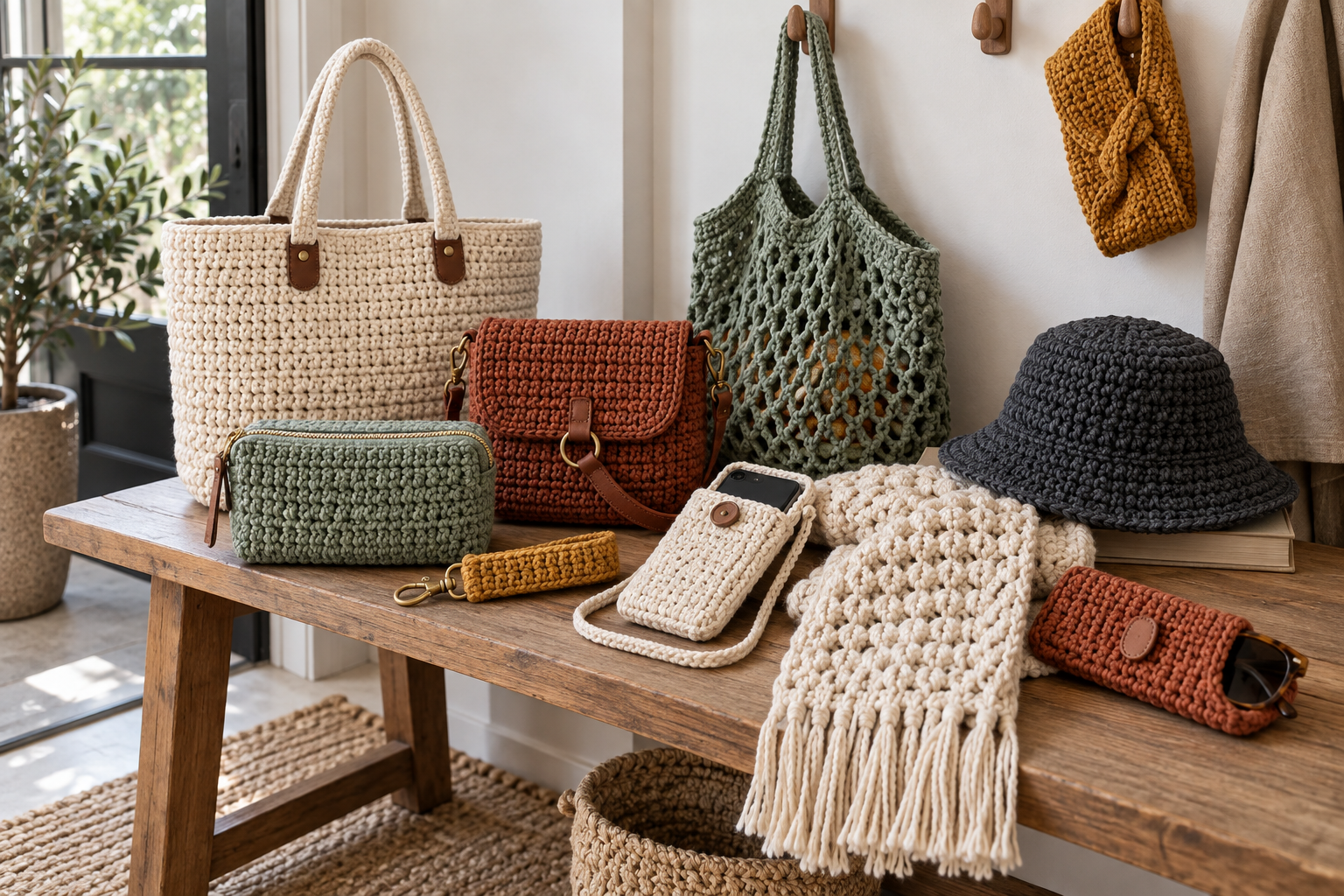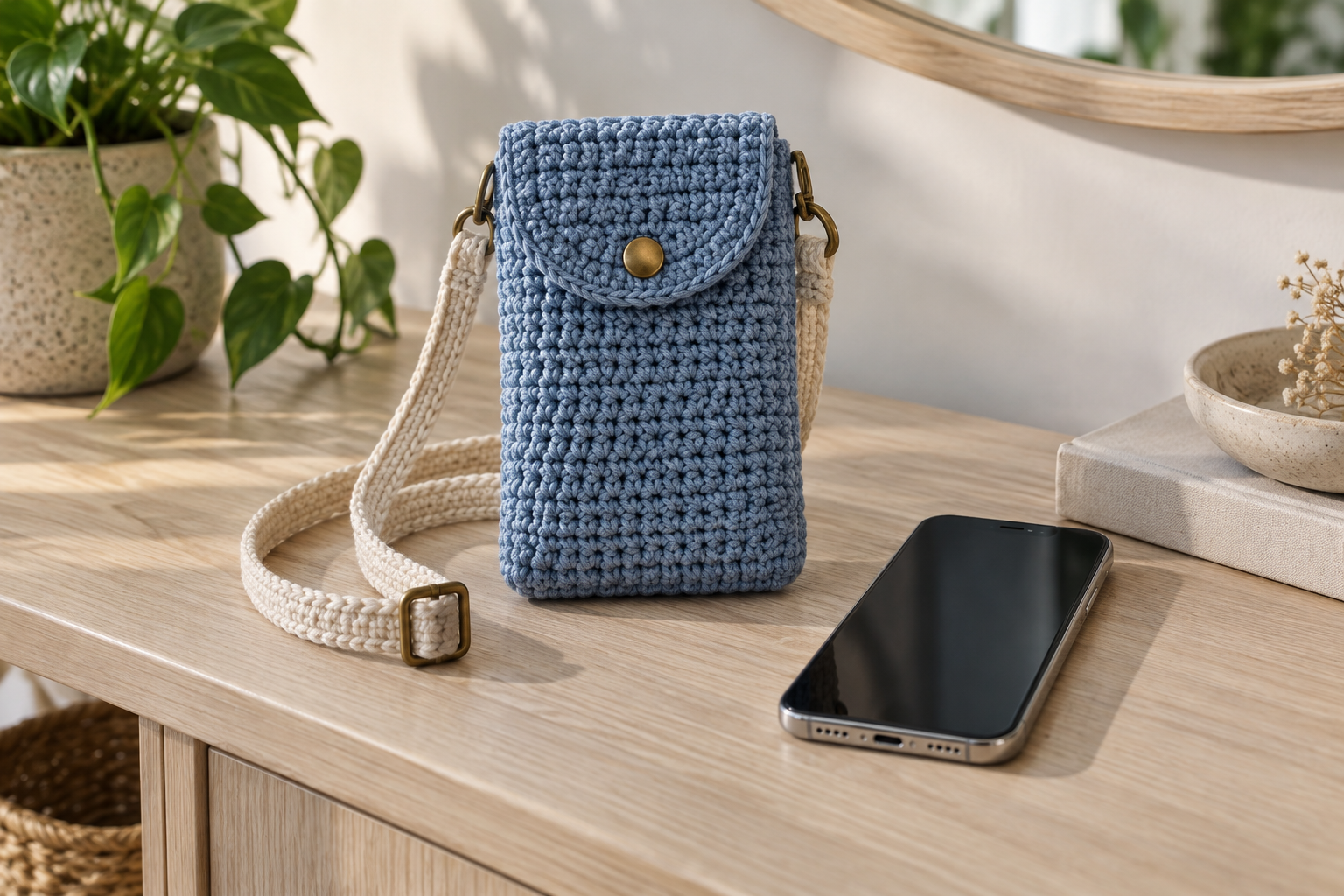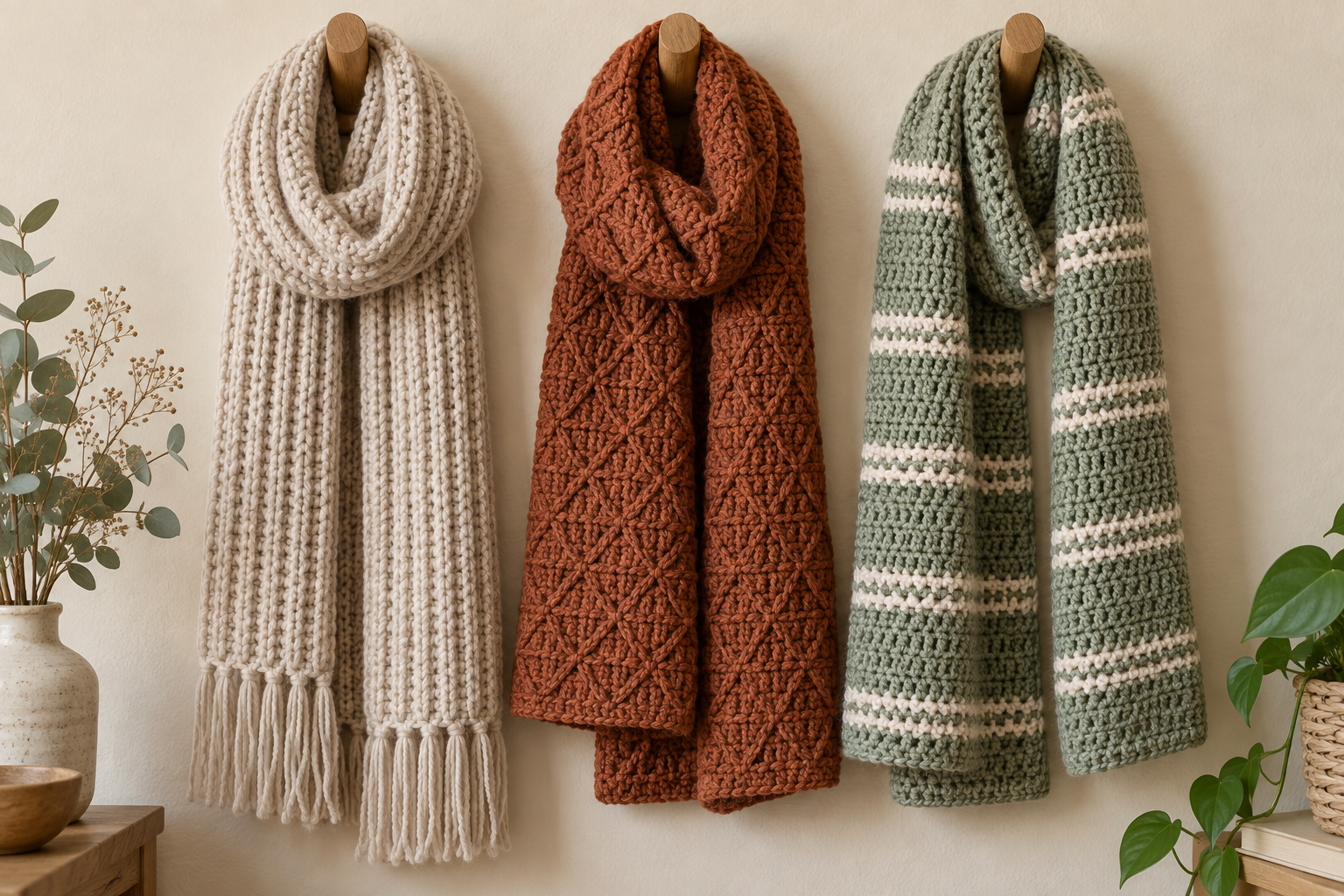
Modern Crochet Tote Bag Design Ideas
A modern crochet tote succeeds when its shape, fabric and handles are designed around what the bag will carry. Instead of choosing a decorative stitch first, use this decision guide to build a practical tote with controlled stretch and a polished finish.
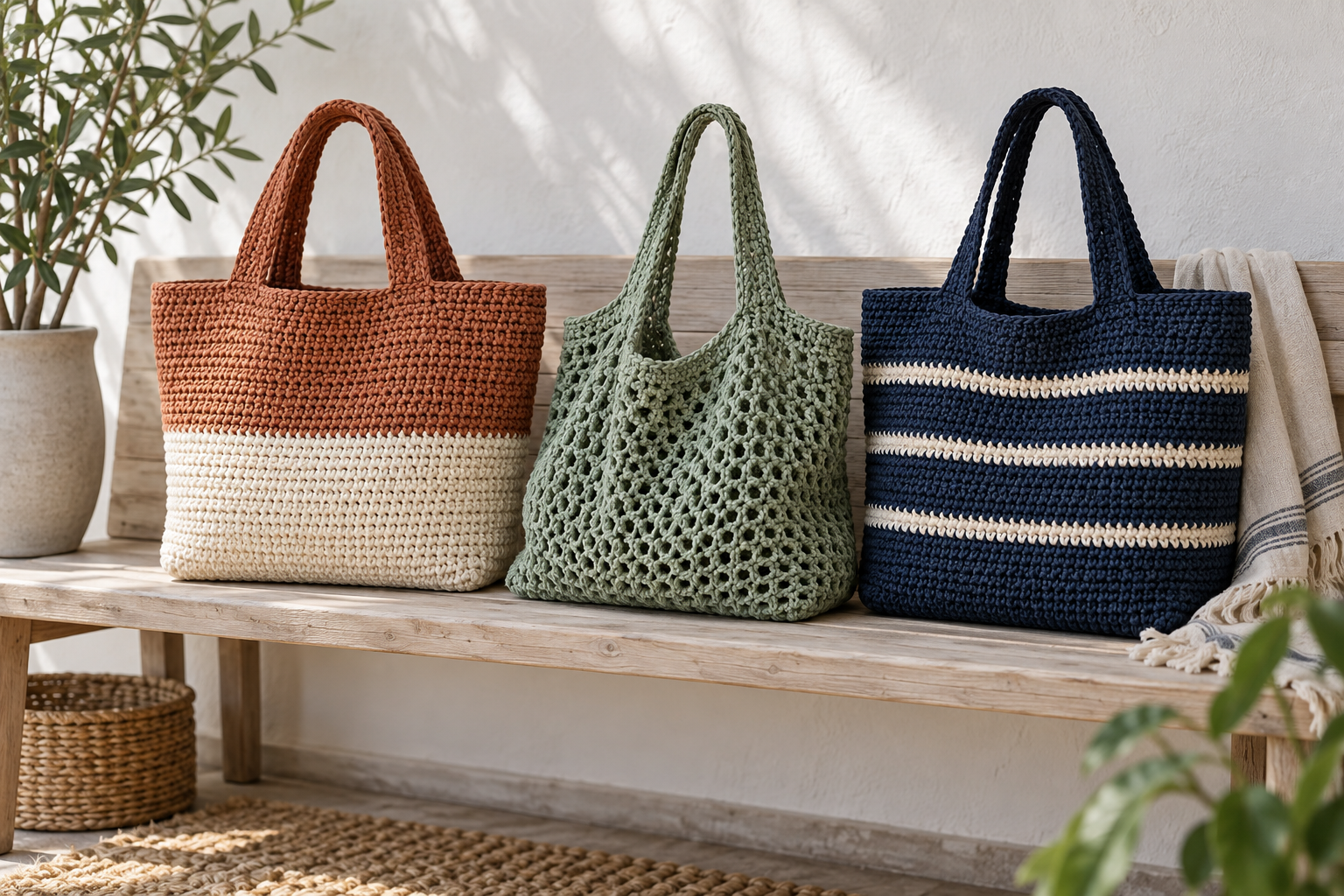
Decision 1: define the job and proportions
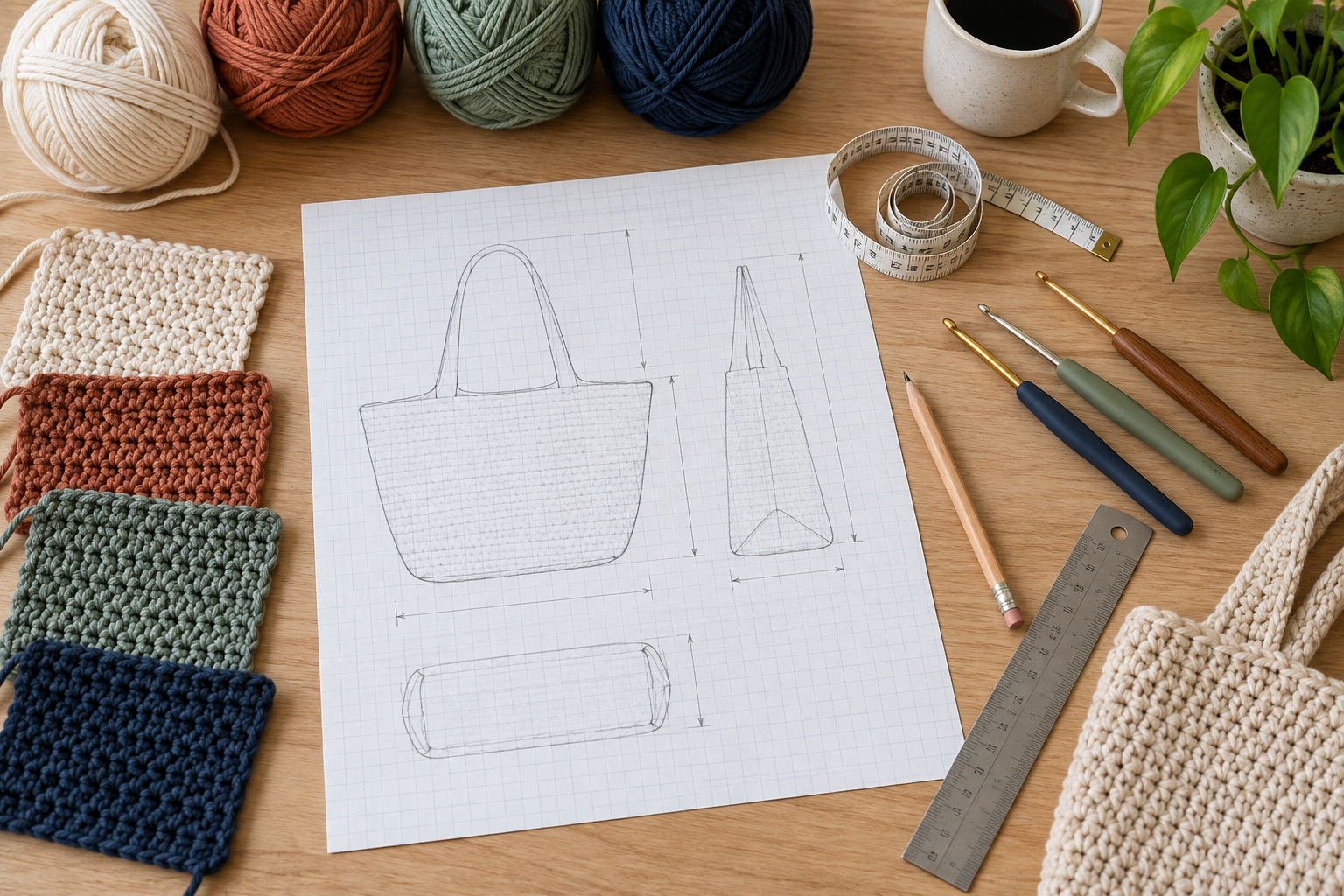
List the largest item the tote must hold, then add ease without making the opening excessively wide. A commuting tote benefits from a flat base and secure pocket; a produce bag can be lighter and expandable. Make a full-size paper rectangle of the planned front panel and hold it at carrying height to check scale.
Decision 2: match fabric density to the load
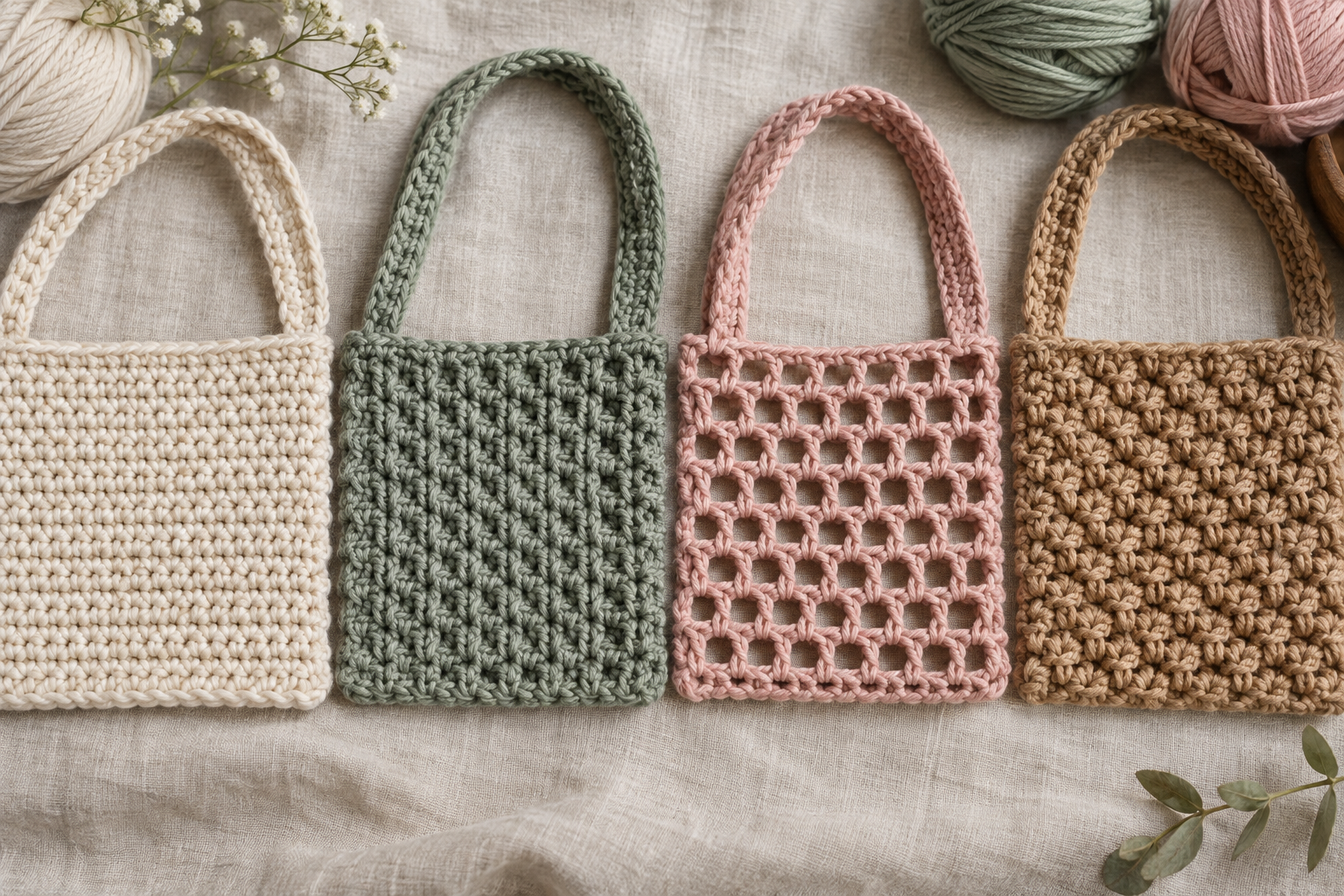
Choose smooth, multi-ply cotton or a firm cotton blend for clear stitches and manageable stretch. Make and wash a swatch, then hang it overnight with a small measured weight. If it lengthens dramatically, use a smaller hook, denser stitch or lining. Reserve very open mesh for contents that cannot slip through.
Decision 3: build stability from the bottom
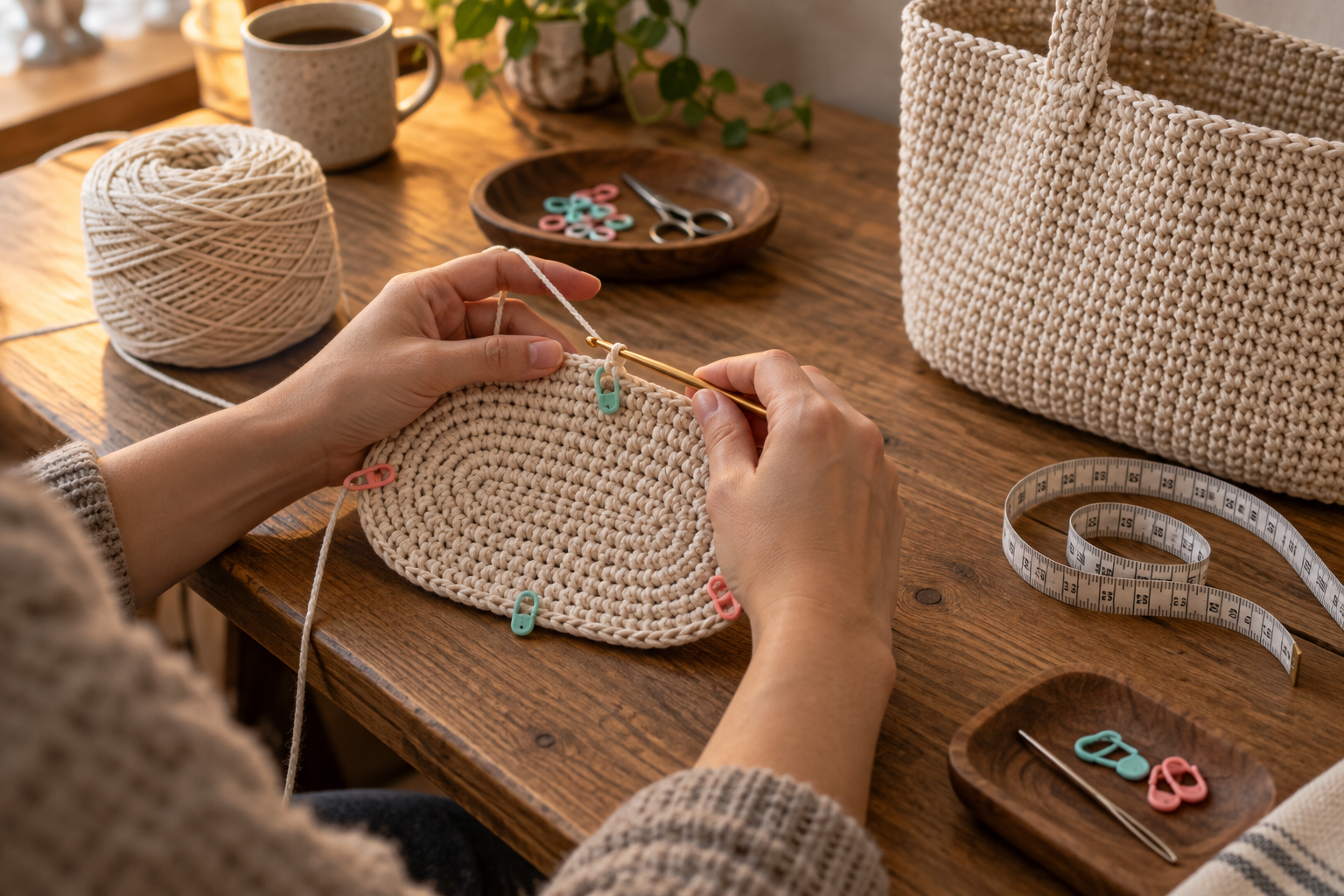
A flat oval creates a soft everyday shape; a rectangle with defined corners gives more structure. Count carefully, distribute increases evenly and place the base on a table every few rounds. Correct cupping by adding needed increases; correct rippling by removing excess increases. Start the body only when the base lies flat without force.
Decision 4: engineer handles, not just their appearance
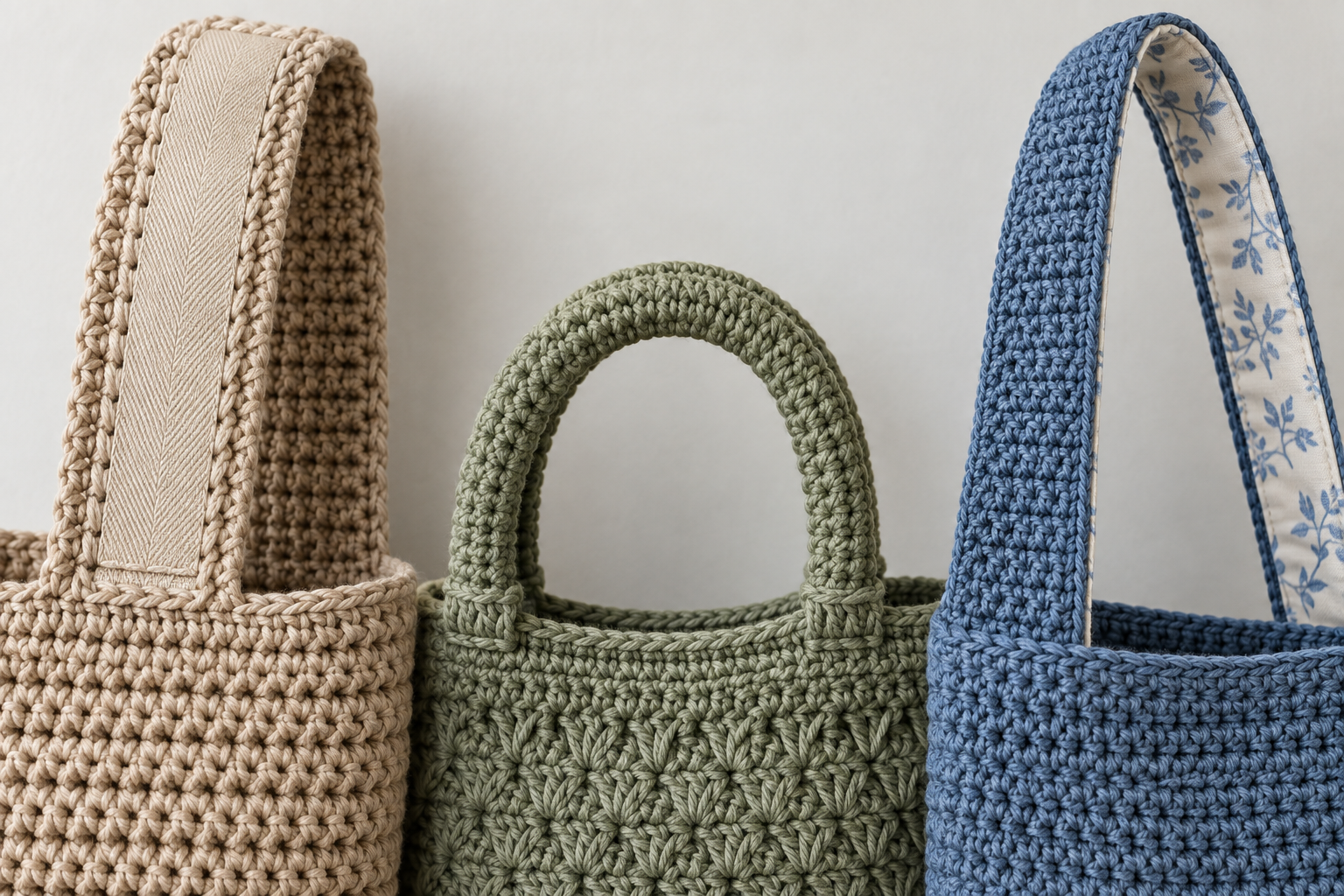
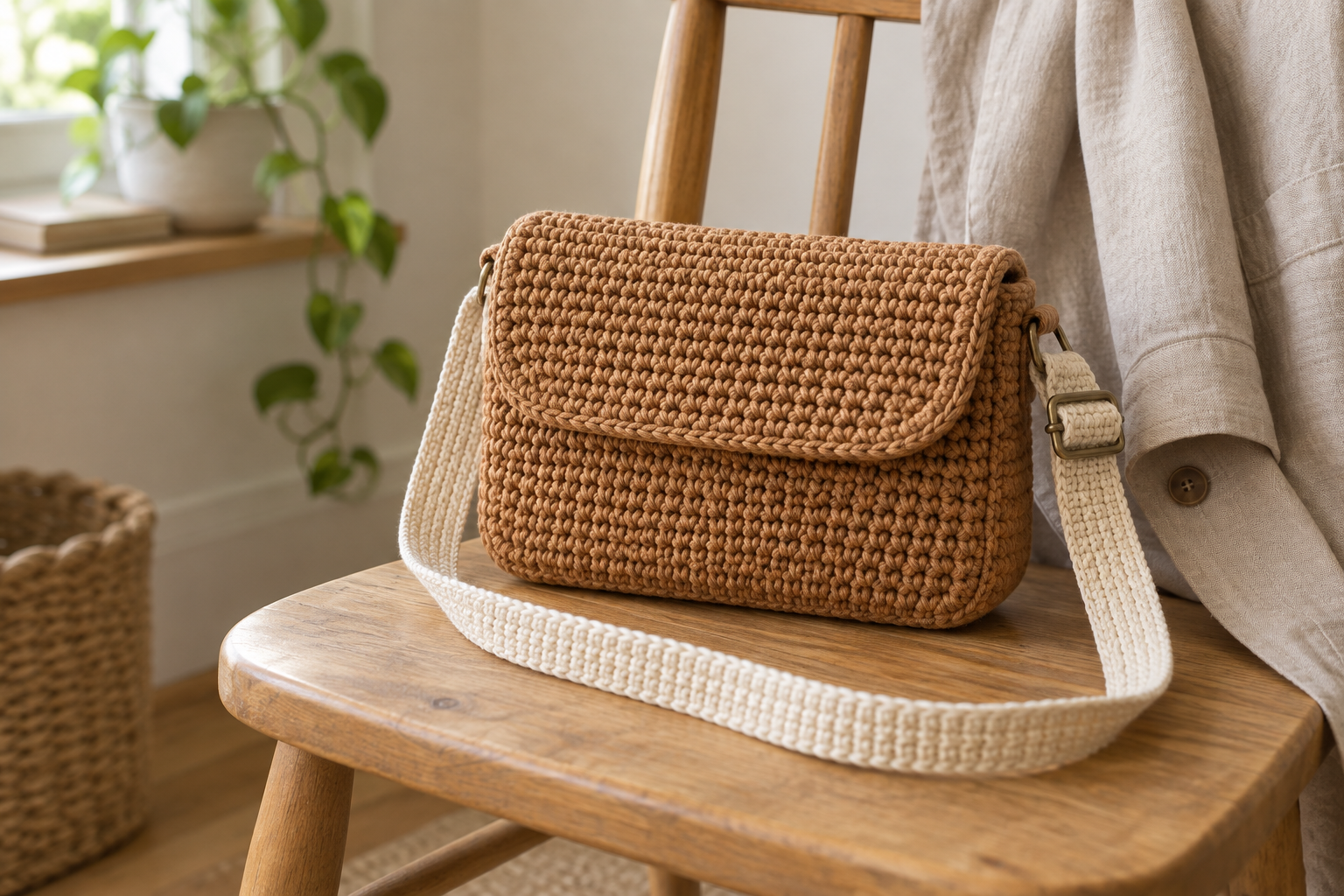
Make two identical straps and attach each across a broad section of the bag. Crochet into the bag body or sew through several rows with strong thread. Cotton tape or woven ribbon hidden inside a strap can reduce stretching. Before finishing, load-test the tote gradually over a soft surface and inspect every attachment point.
Decision 5: add the finish the contents require
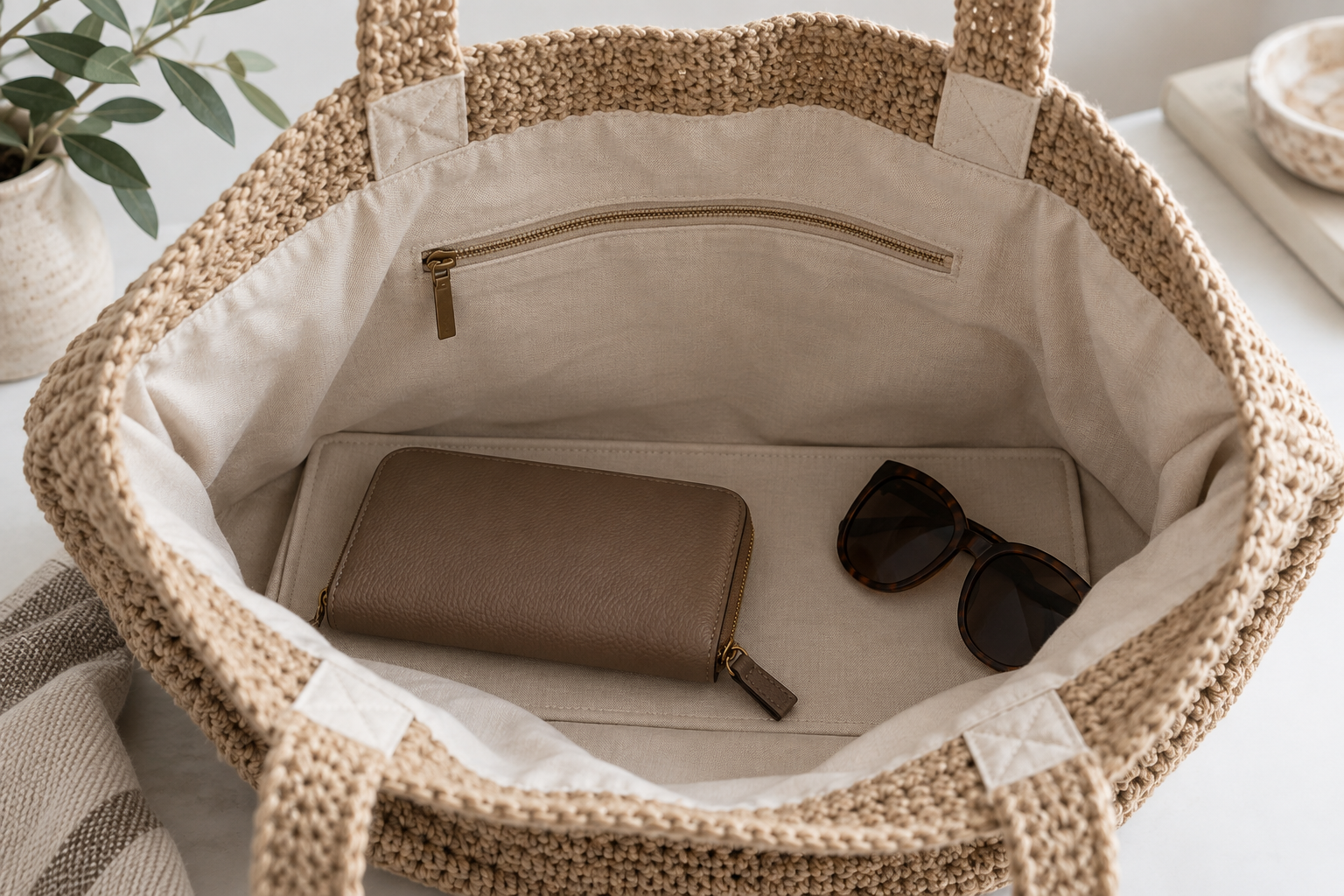
Wash and dry the crochet shell before measuring a lining. Allow seam allowance, anchor the lining around the upper edge without pulling, and reinforce the fabric behind handle joins. A removable firm base insert helps a structured tote stand, but it should come out before washing.
Choose your next bag project
For groceries and produce, continue with the strong-base market bag guide. For a smaller hands-free design, use the beginner crossbody bag plan. Add a removable zipper pouch when the tote’s main compartment is intentionally open.