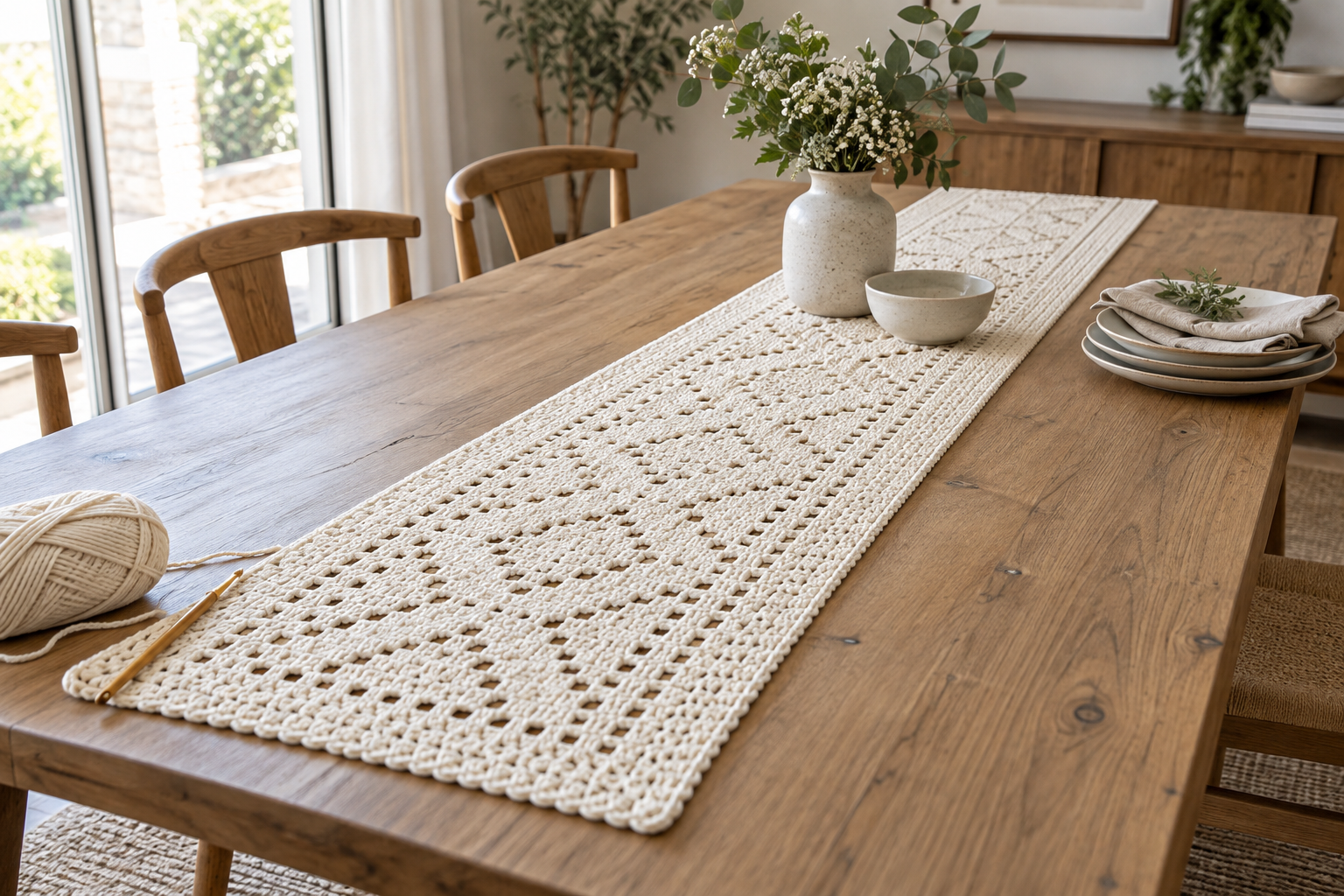
Easy Crochet Table Runner for Modern Homes
A modern table runner should suit the actual table, lie flat beneath décor and remain easy to wash. This guide covers proportional sizing, yarn drape, repeat planning and blocking a long narrow project without distorted edges.
Level: confident beginner
Time: 8–20 hours
Typical width: one-quarter to one-third of table width
Best fiber: washable cotton or cotton-linen
Calculate width, length and overhang
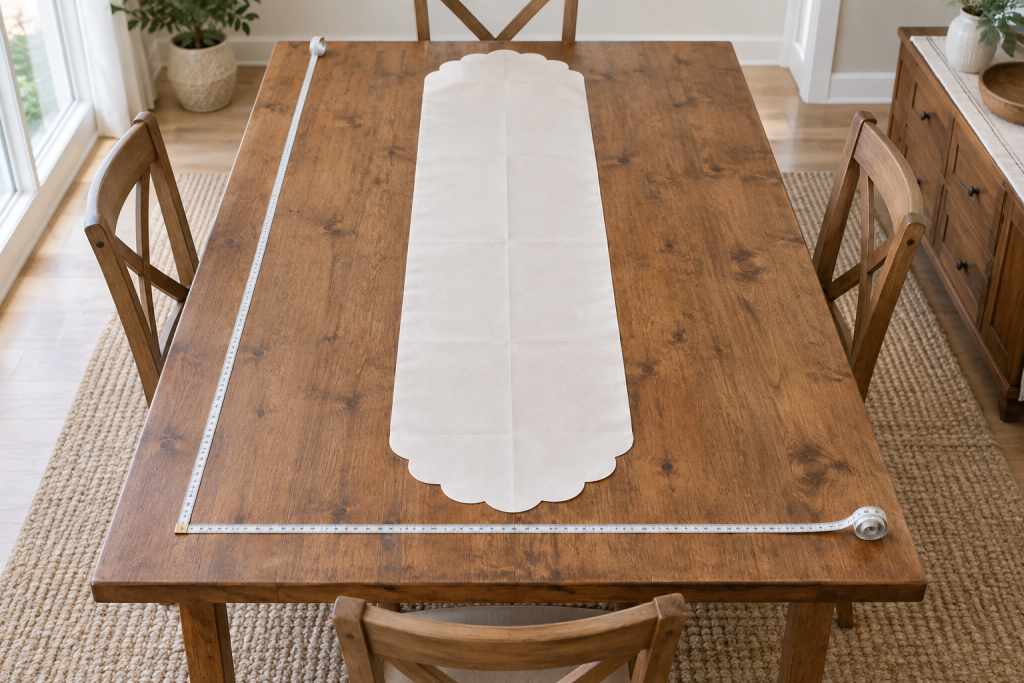
Measure the table length and width. For everyday use, a runner can stop short of both ends. For a traditional overhang, add approximately 15–30 cm at each end. Keep the width narrow enough that plates and glasses remain stable on the table surface. Test proportions with paper or folded fabric first.
Match fiber and stitch to the table
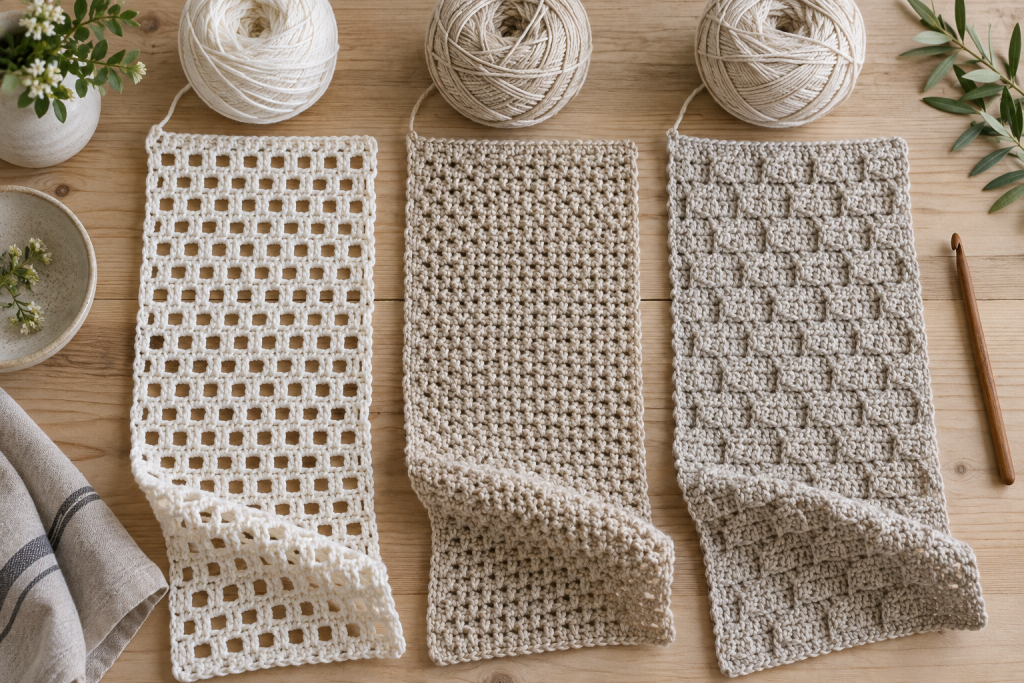
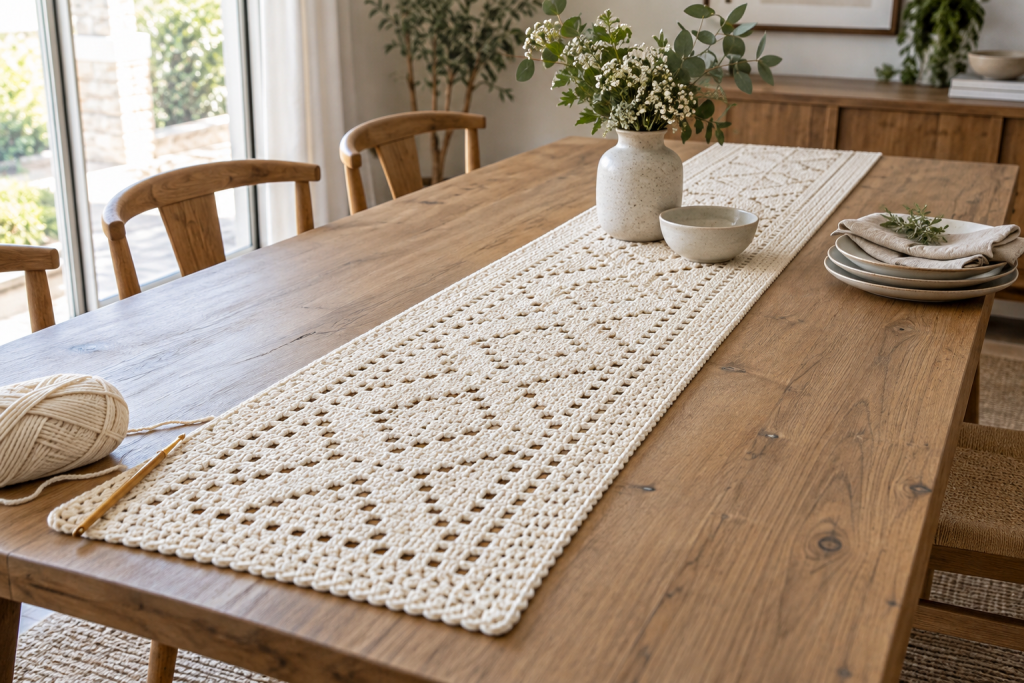
Smooth cotton is washable and shows geometry clearly. Cotton-linen produces elegant drape but may soften after washing. Dense stitches suit busy wood grain; open mesh keeps a solid-color table visually light. Avoid thick raised stitches under candles, vases or serving pieces because they can create unstable surfaces.
Plan repeats before starting
Make a full motif swatch, wash it and measure the repeat height. Divide the target length by that measurement and choose a whole number of repeats. Add border and end treatment separately. This prevents the final motif from being cut off merely to reach an exact measurement.
Maintain straight edges across a long project
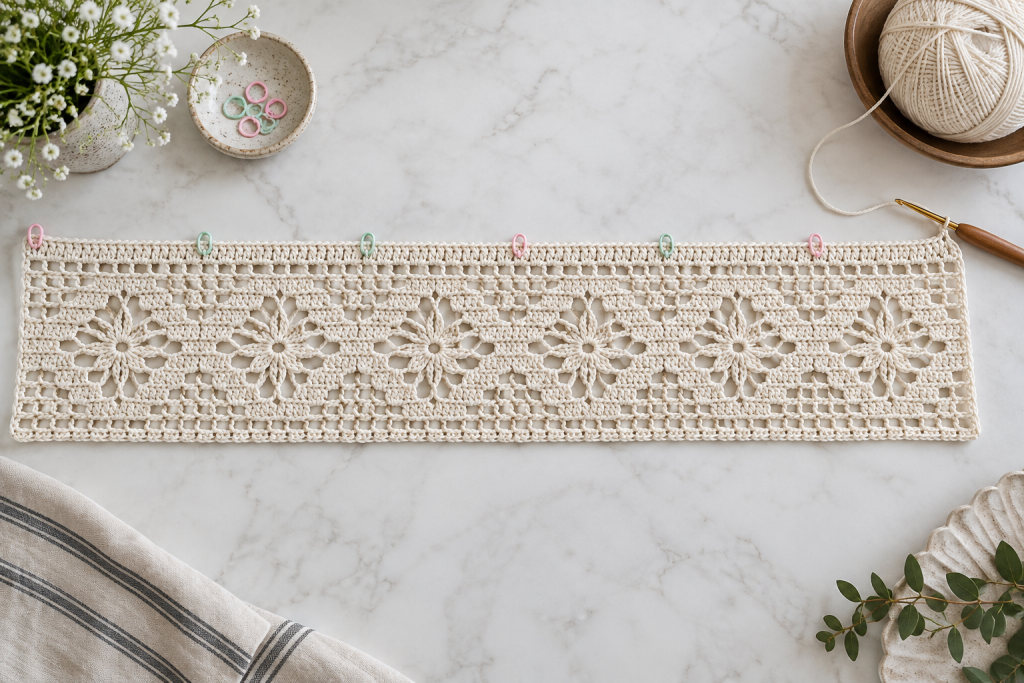
- Use a relaxed foundation and verify its width after several rows.
- Mark the first and last stitch of every row.
- Place markers between pattern repeats and recount regularly.
- Lay the runner flat every 15–20 cm to check taper and twist.
- Secure color changes along an edge that the border will cover.
Do not expect blocking to correct a steadily narrowing runner. Undo to the last accurate repeat and restore the stitch count.
Block it evenly and safely
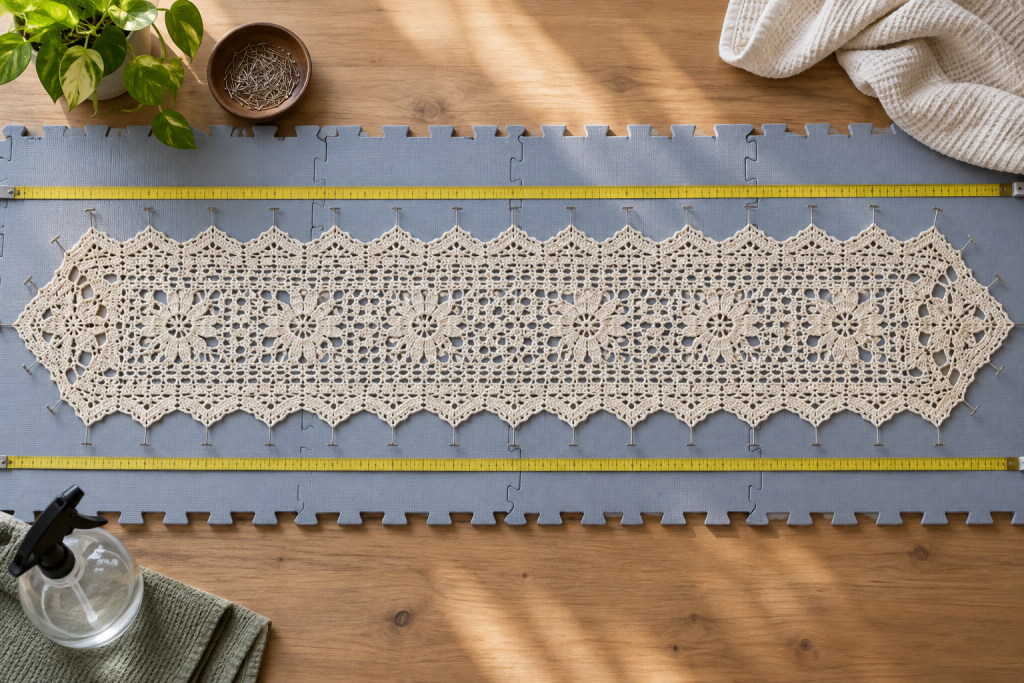
Follow the yarn-care label. Pin the center, ends and side midpoints before filling the gaps with rustproof pins. Measure across the width at several locations. Let the runner dry fully before moving it, and never stretch openwork so aggressively that thread junctions become thin.
Style it for more than one season
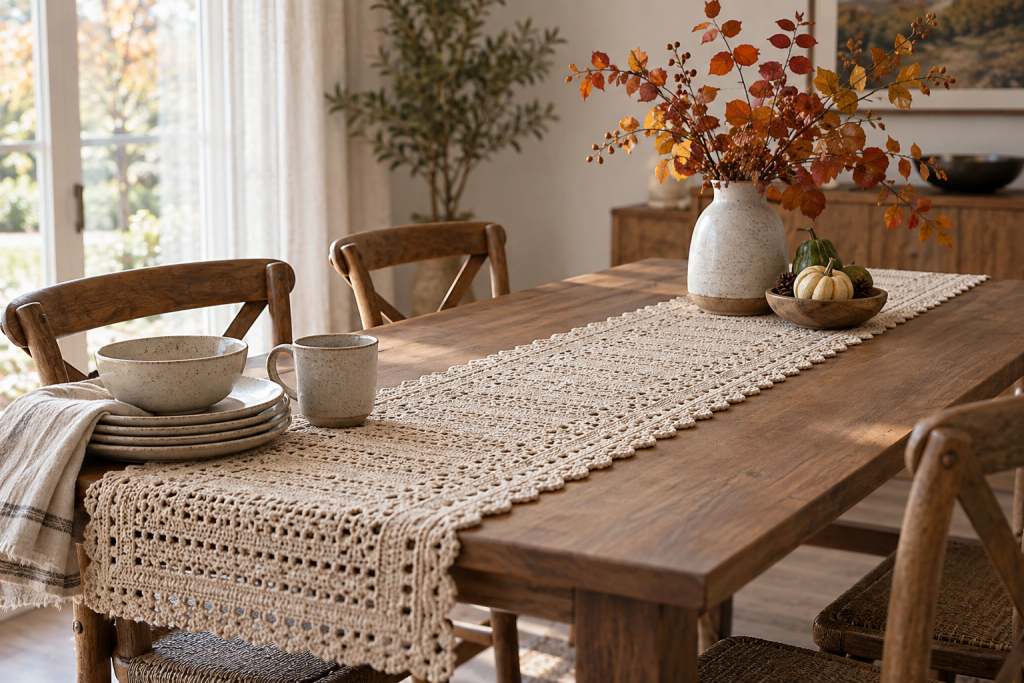
Use low arrangements that do not interrupt conversation. Keep flame and hot cookware away from crochet fabric. For seasonal updates, add branches, ceramics or napkins rather than attaching beads and bulky appliqués to the runner. This makes washing and storage simpler.
Coordinate the dining space
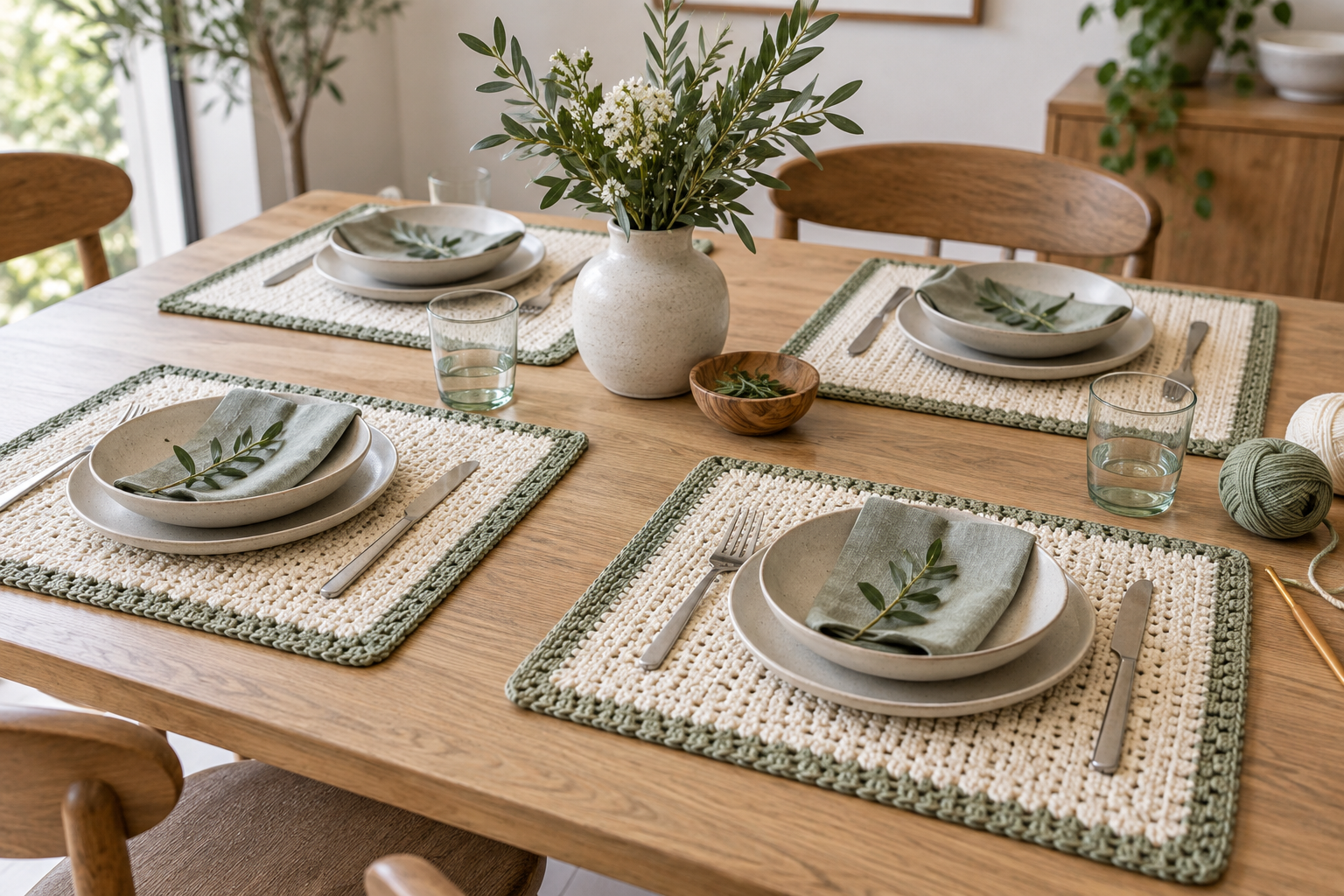
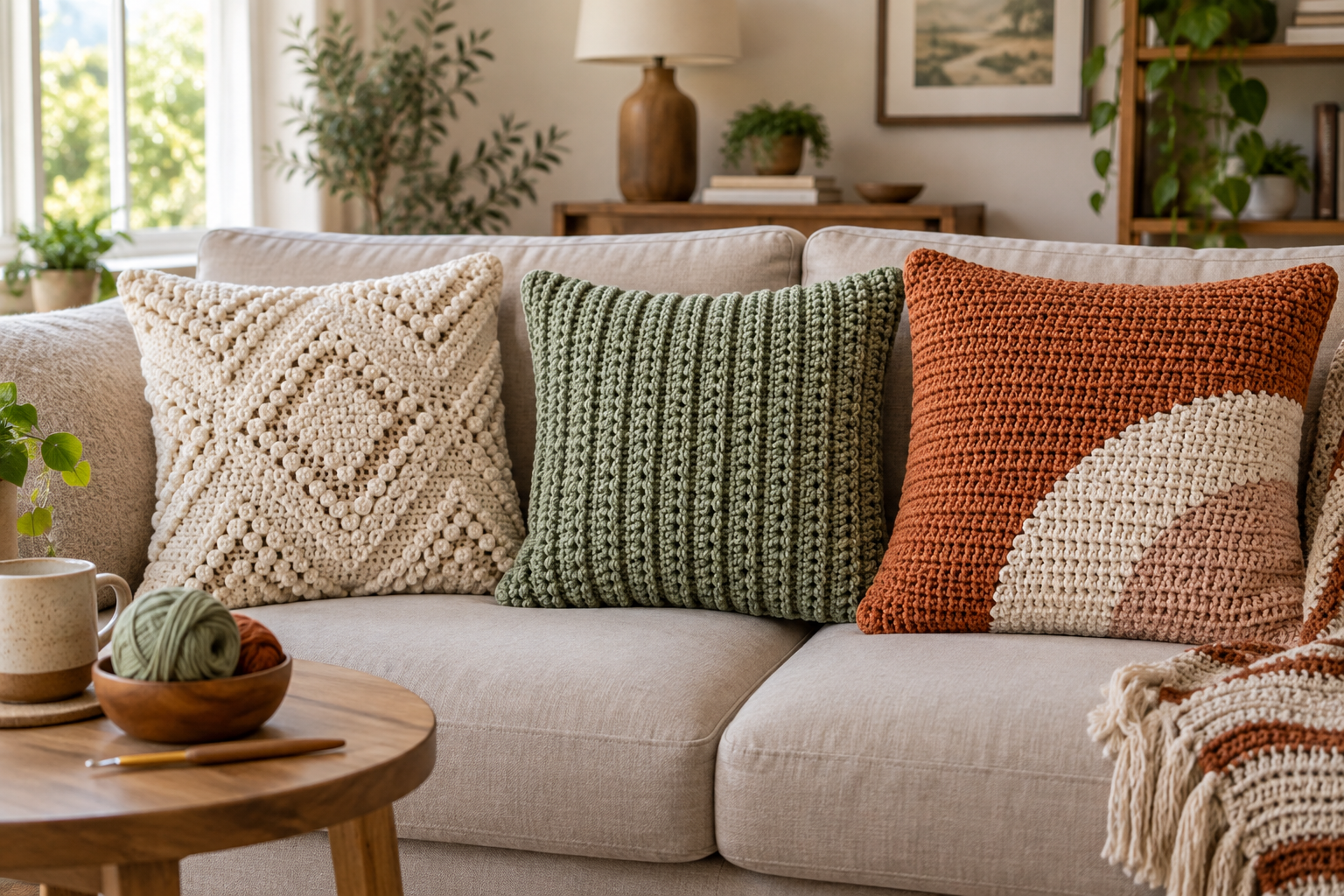
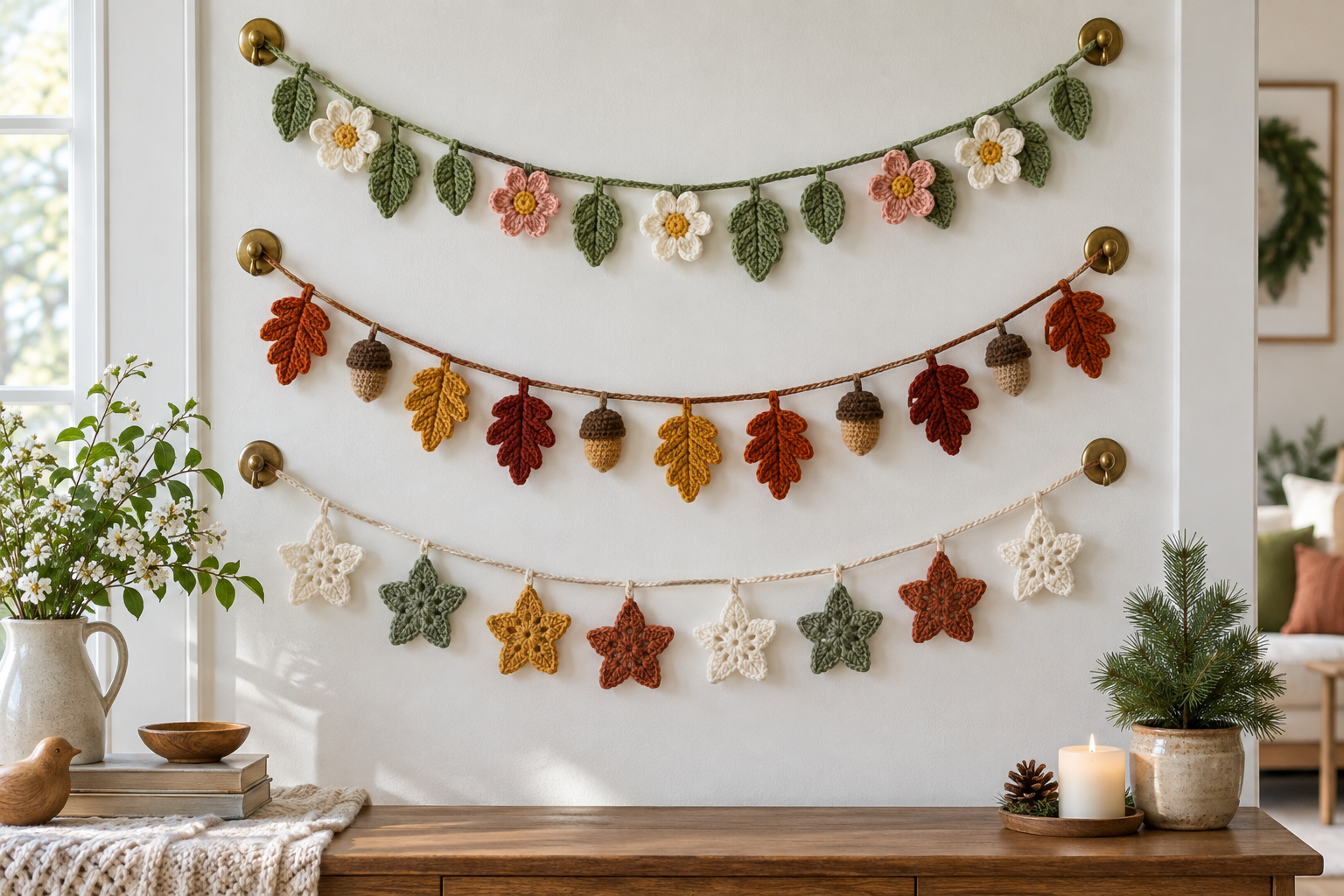
Add a matching crochet placemat set, repeat one accent color in cushion covers, or create a removable seasonal garland.