Textured Crochet Throw Blanket Planning Guide
A throw blanket is a material-heavy project, so good planning matters before the first long row. This guide explains size, swatching, yarn estimation, progress checks and care for a textured blanket that remains comfortable and practical.
Level: confident beginner
Time: approximately 30–70 hours
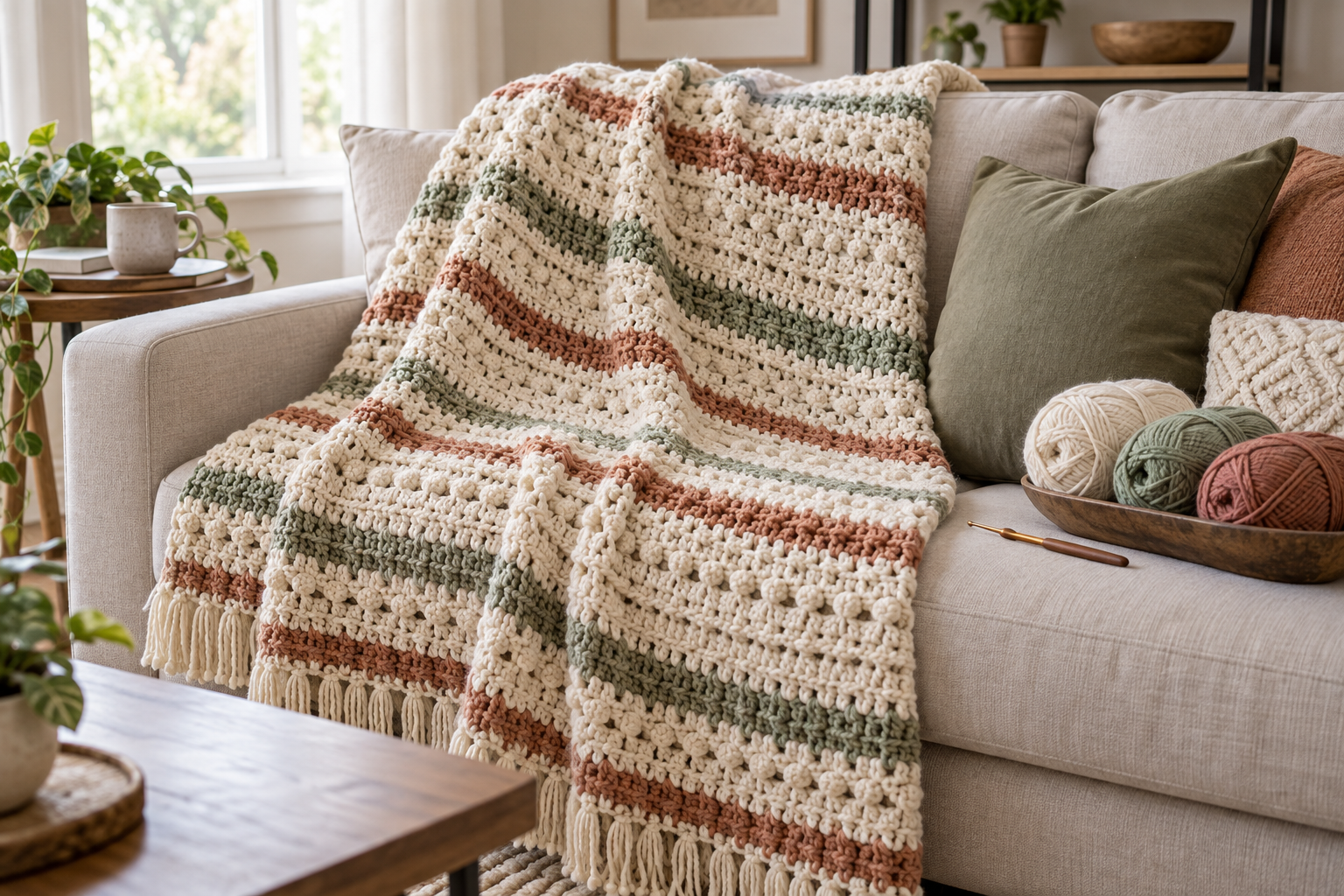
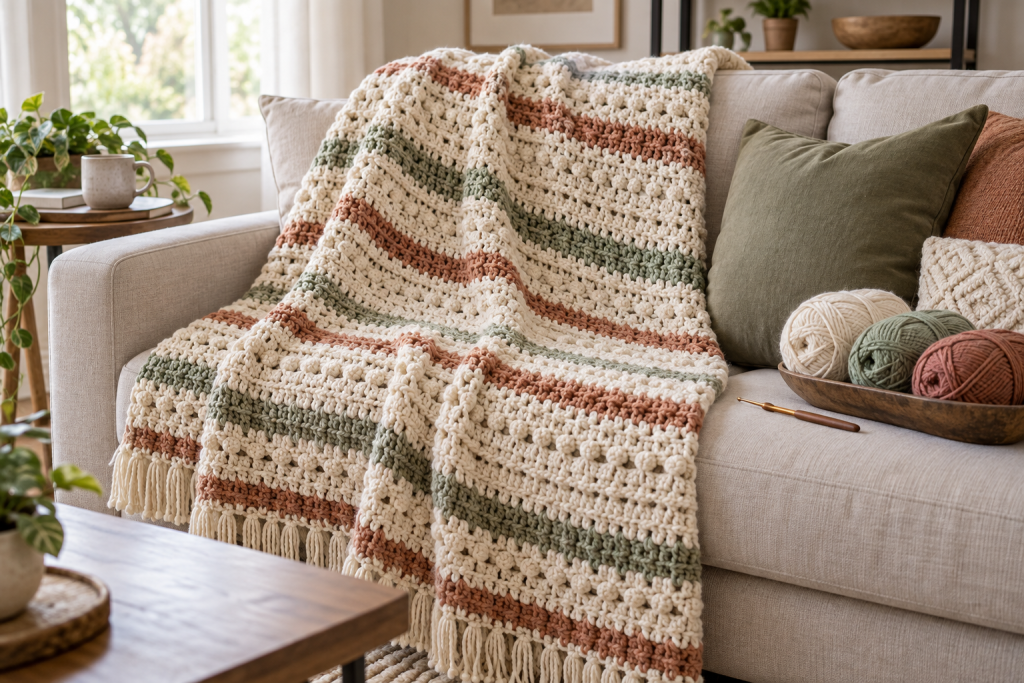
Typical throw: about 125 × 150 cm / 50 × 60 in
Essential first step: wash and measure a full texture swatch
Choose a finished size from how it will be used
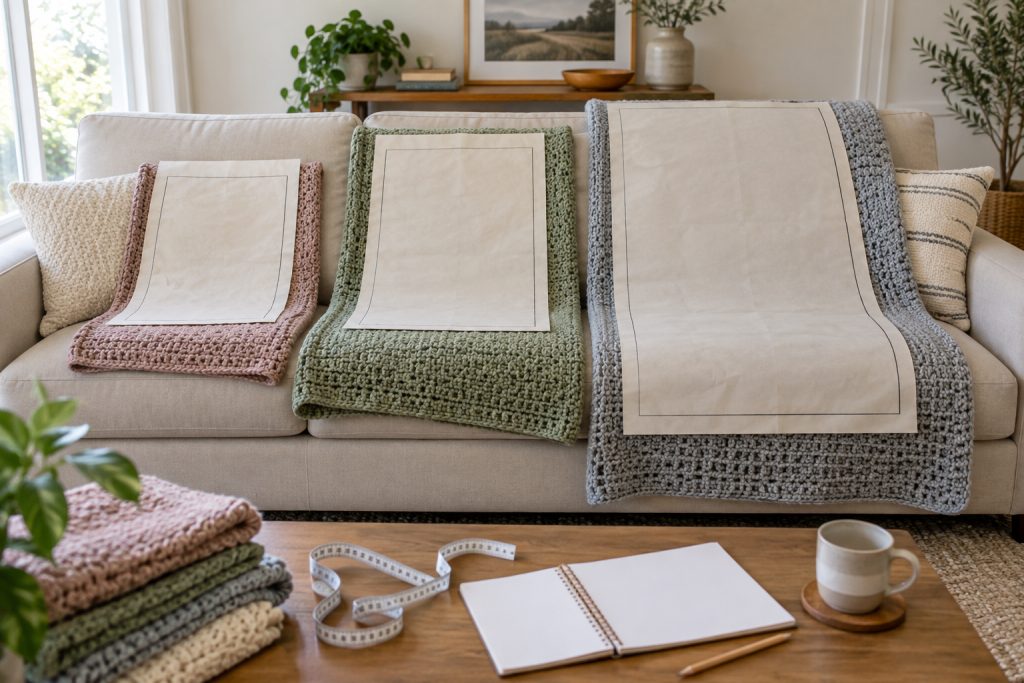
A compact lap blanket is manageable for a first large project. A sofa throw needs enough length to cover the legs and drape over an arm. A bed blanket requires exact mattress measurements and substantially more material. Create a paper or fabric template, then test it while seated before deciding.
Balance texture, weight and washing
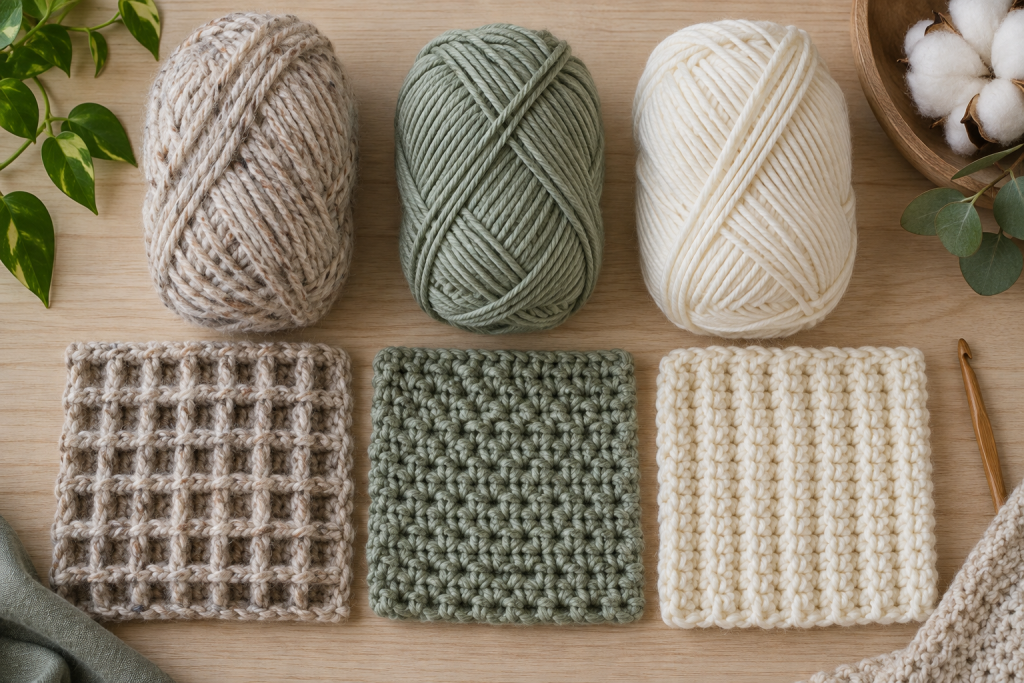
Wool blends are warm and resilient but may require gentle care. Washable acrylic is affordable for large projects and comes in consistent dye lots. Cotton blends feel breathable but can become heavy at full size. Crochet a swatch at least 20 cm square, wash it exactly as planned and evaluate drape, weight and skin feel.
Estimate yarn from a washed swatch
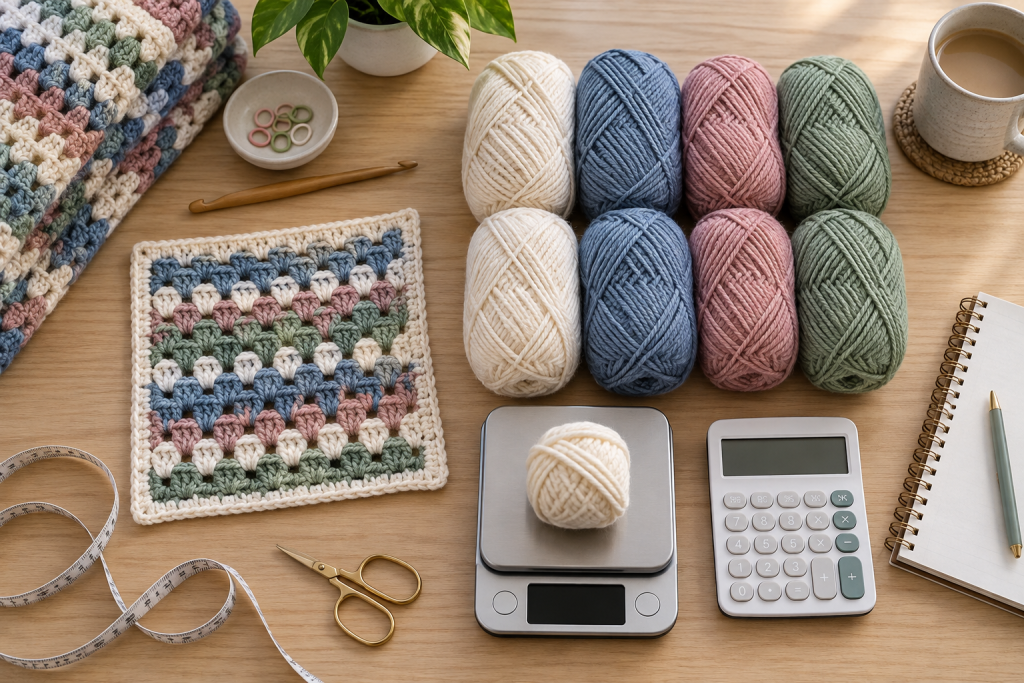
Measure the washed swatch area and weigh it. Divide the target blanket area by the swatch area, then multiply by swatch weight. Add at least 10–15% for borders, joins, swatch variation and finishing. Highly textured stitches may require a larger reserve. Buy the same dye lot when color consistency matters.
Plan width and pattern repeats
Multiply stitches per measured swatch width to estimate the foundation count, then adjust to a whole pattern repeat plus edge stitches. Make the first several rows before committing: foundations often relax differently from the full texture. Measure in three places across the width.
Manage a long project without width drift
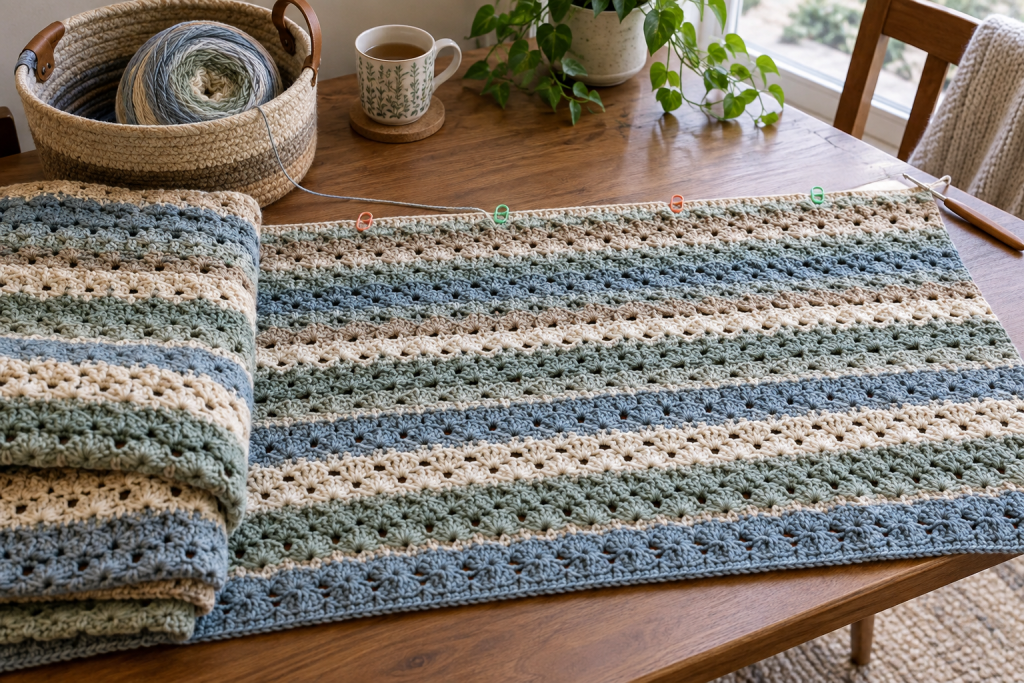
- Mark every pattern repeat and both edge stitches.
- Count at the end of each textured row.
- Measure width after each yarn skein.
- Record skein number, dye lot and completed rows.
- Rotate the work regularly to reduce wrist and shoulder strain.
If the blanket narrows, undo to the last accurate row. A border cannot hide substantial width loss.
Wash, dry and store the finished throw
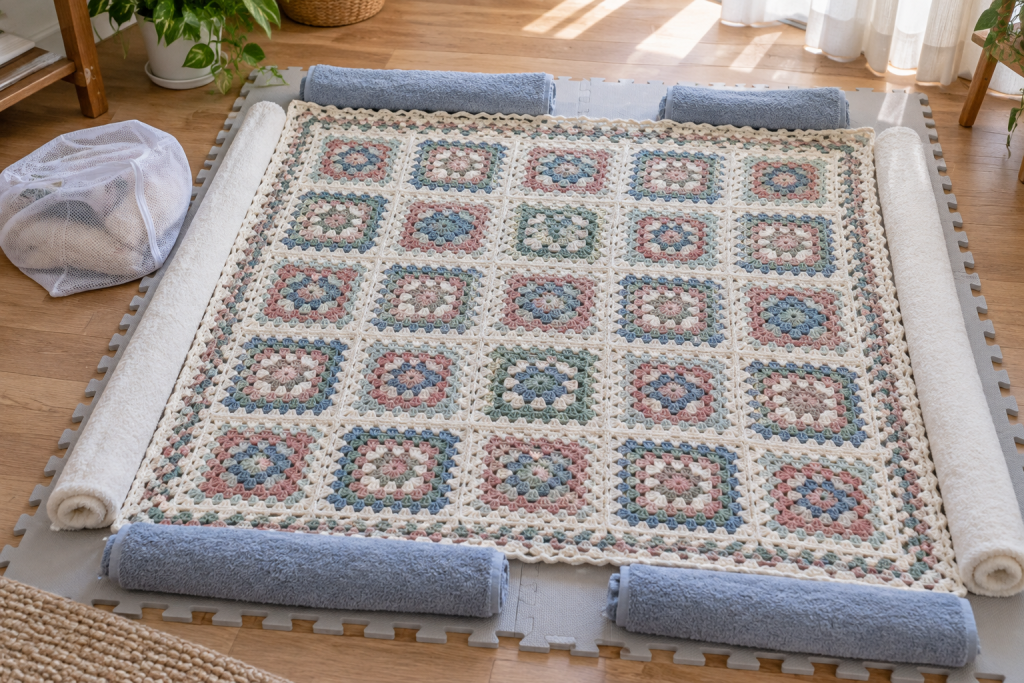
Follow the yarn label and use a machine only when both fiber and size permit. Support the wet blanket rather than lifting it from one corner. Dry flat or evenly supported, square the edges and turn it periodically. Store clean and dry in a breathable container, not compressed beneath heavy objects.
Coordinate a comfortable room
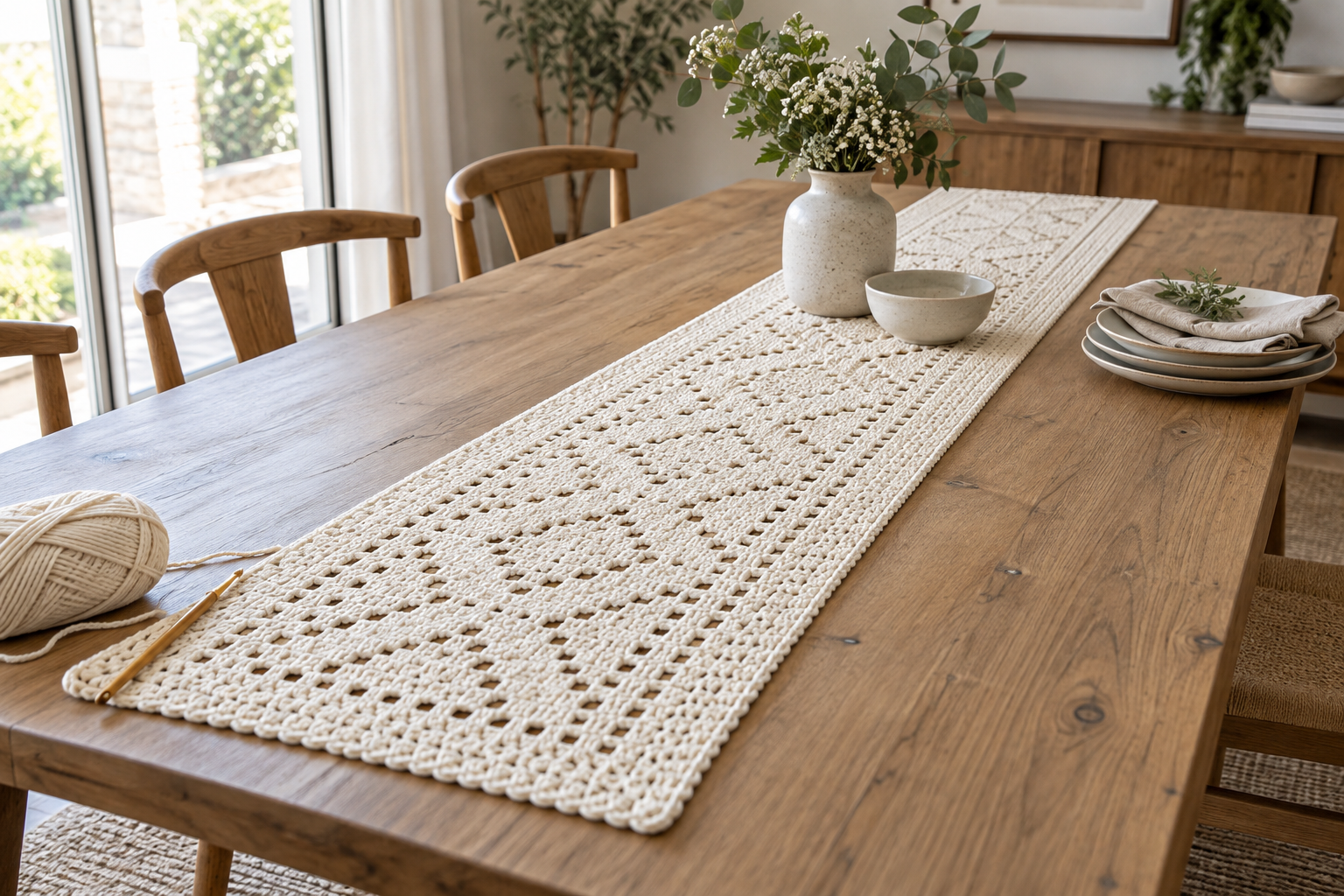
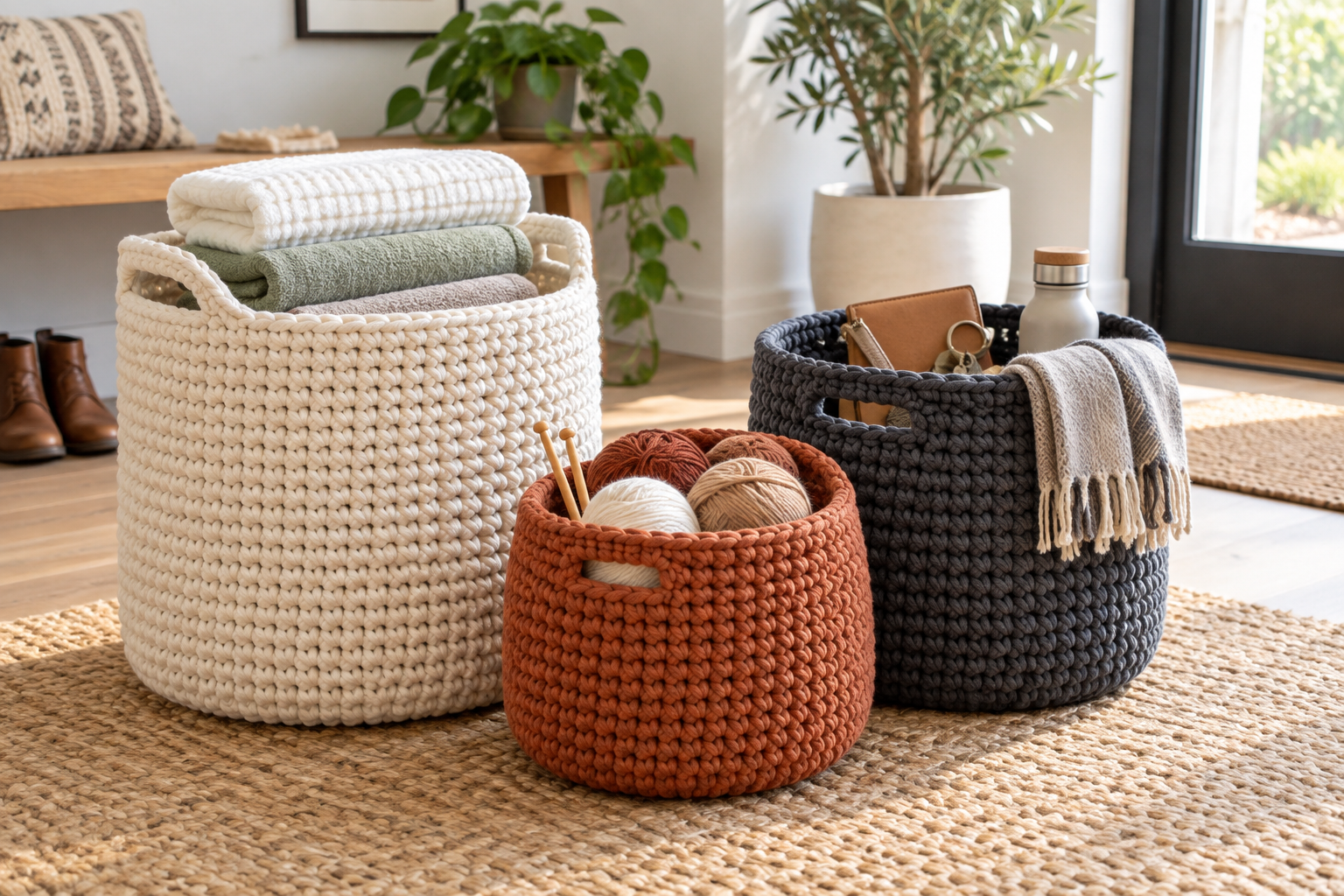
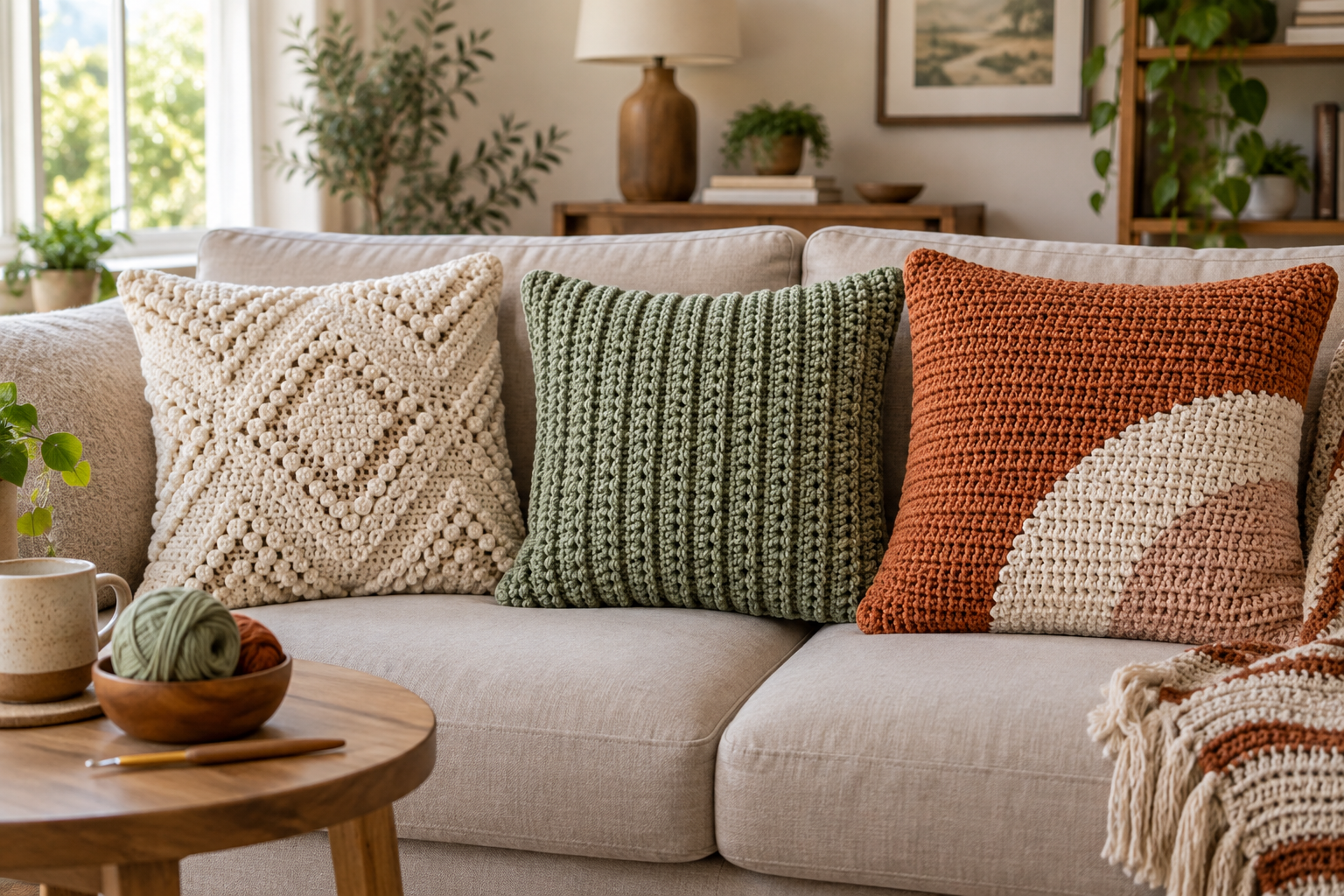
Repeat one blanket color in crochet cushion covers, store it in a sturdy crochet basket, or use a related accent in a modern table runner.