Mini Crochet Octopus for Markets and Gifts
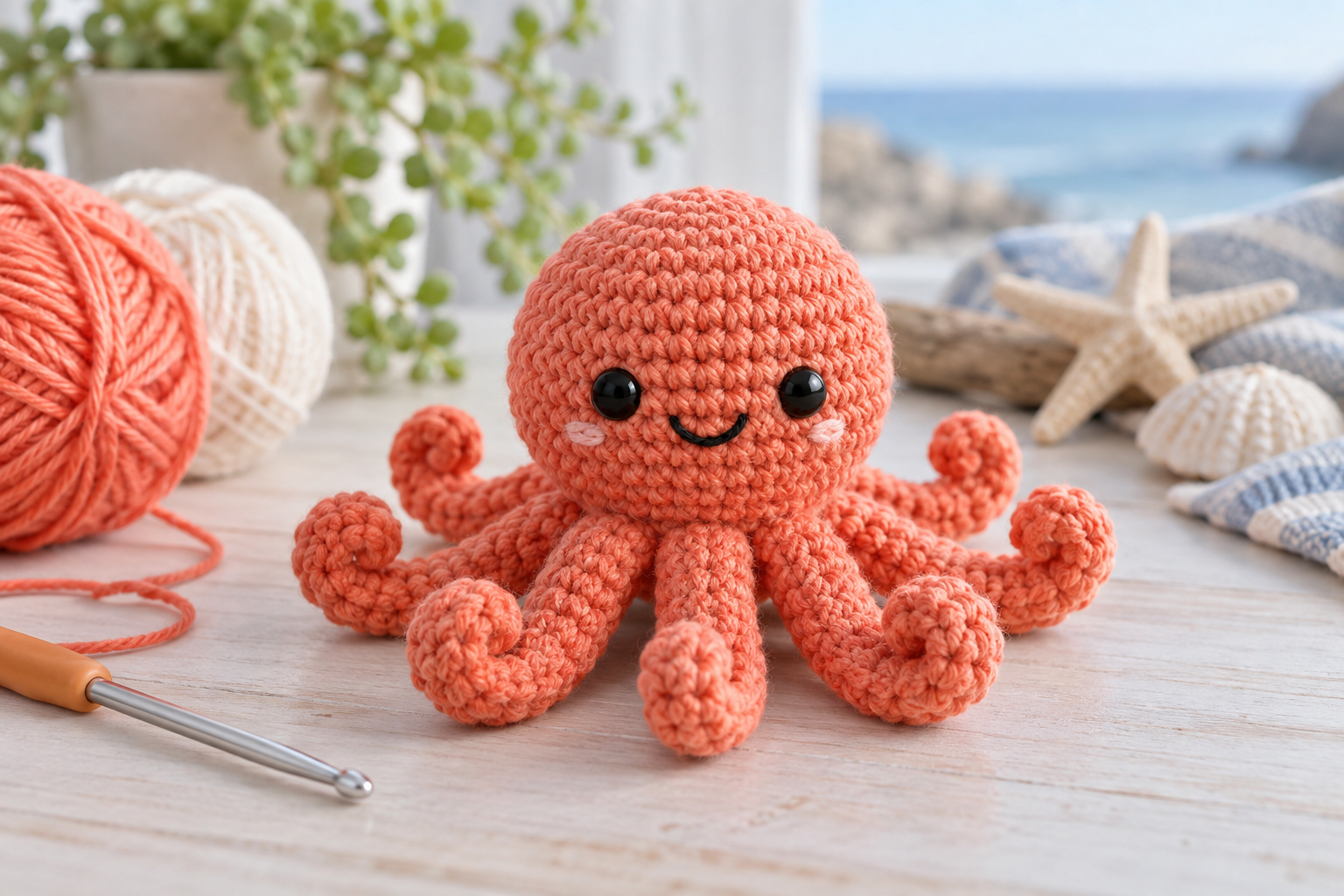
Mini octopuses are useful for practicing speed without sacrificing finish. A market-ready version needs consistent size, secure tentacles, a centered face and a predictable yarn cost. This guide treats the project as both a quick make and a small product.
Level: confident beginner
Time: 45–90 minutes
Yarn use: approximately 15–30 g
Best batch size: four coordinated colors
Start with a repeatable product plan
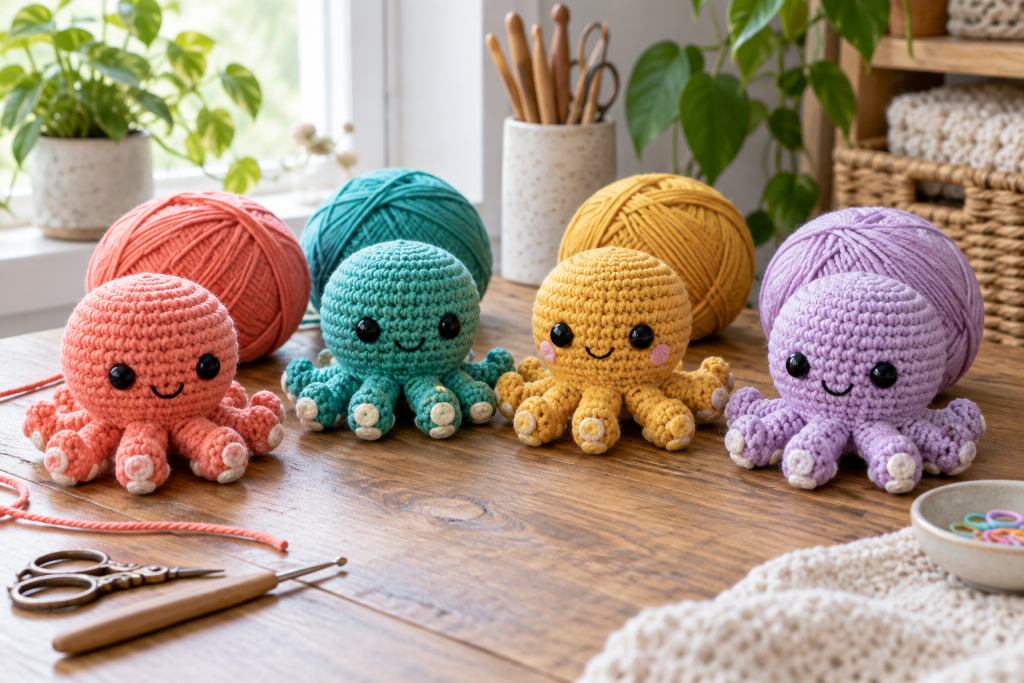
Choose one pattern, one yarn line and one hook for the full batch. Record the finished height, weight and time for the first octopus. Those three numbers help you reproduce the item and price it realistically. Photograph the group together before selling individual pieces so customers can understand scale and color.
Prepare materials in measured portions
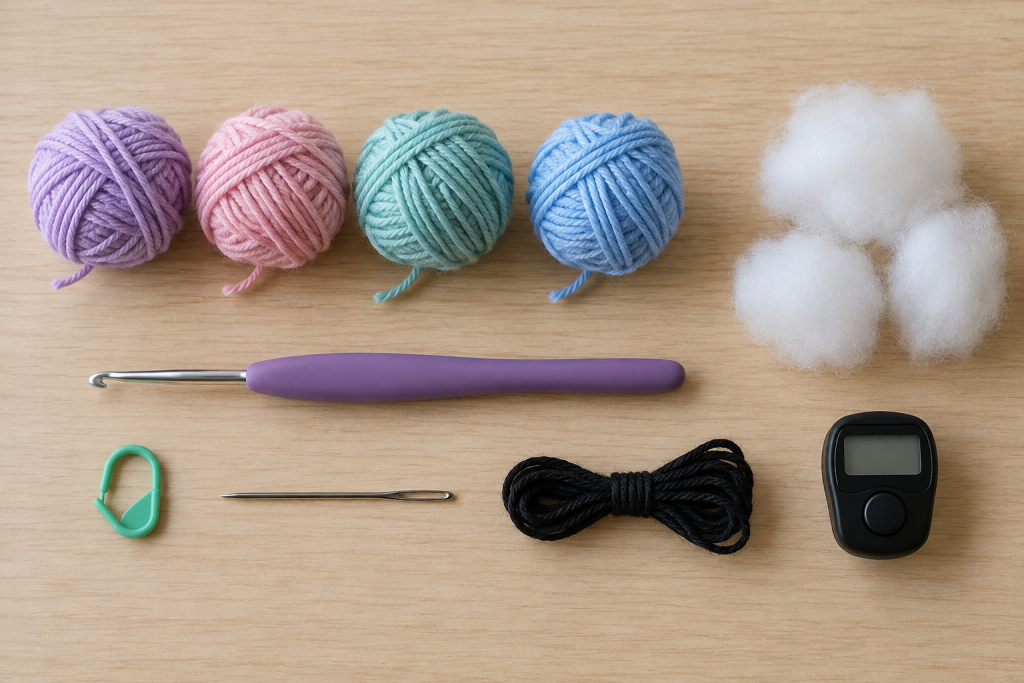
Weigh the first finished toy, then prepare slightly more yarn for each remaining piece. Divide fiberfill into equal loose portions rather than grabbing directly from a large bag. Use a locking marker at the first stitch of every round; a missed stitch is much harder to diagnose after the tentacles begin.
Smooth cotton or cotton-acrylic makes durable keychains. Chenille works for a larger plush version but is slower to count and should be priced for the additional material and handling.
Use an efficient making sequence
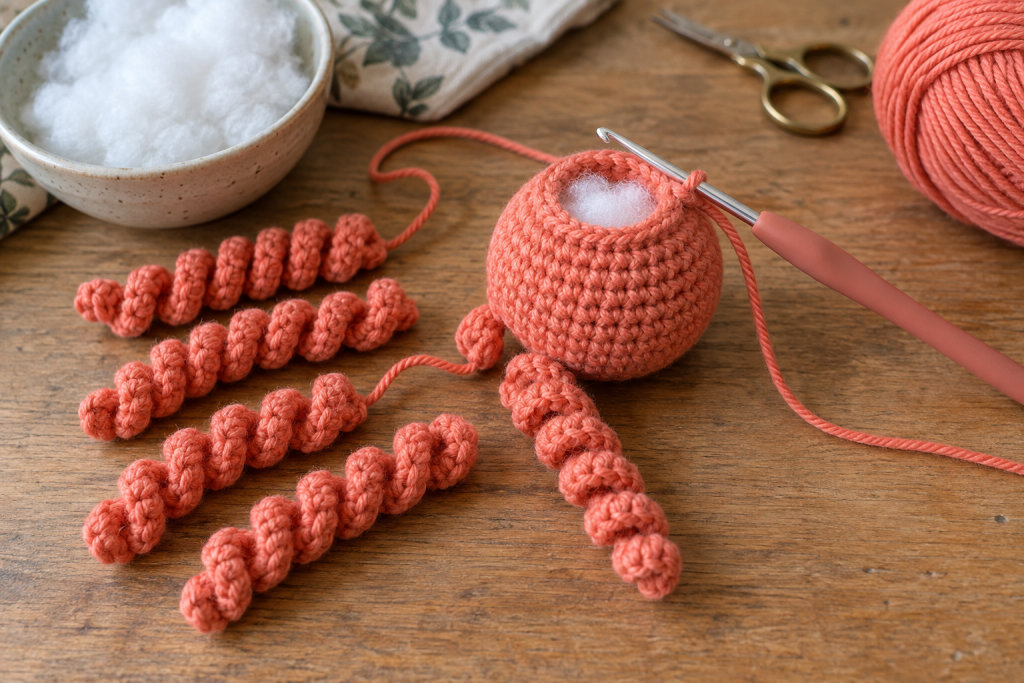
- Crochet the body through its widest round and pause to verify stitch count.
- Embroider the eyes and mouth while you can still reach the reverse side.
- Add small tufts of stuffing, keeping the bottom flexible.
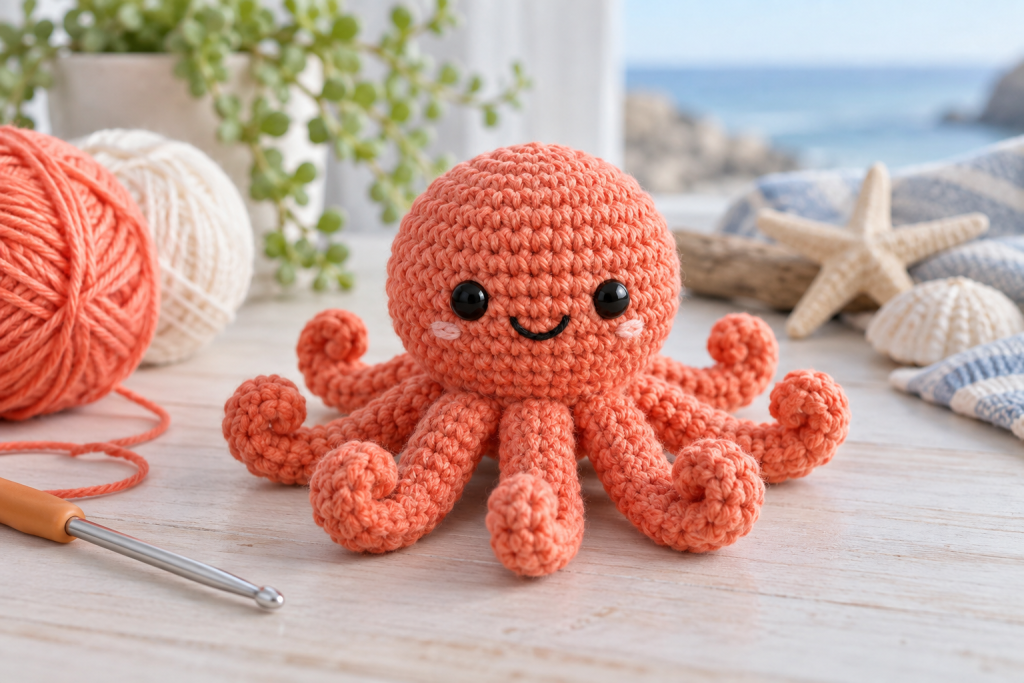
- Form each tentacle with the same chain count and the same number of stitches in every chain.
- Close the underside gradually, checking that the curls remain evenly spaced.
For tighter curls, work more stitches into each chain; for softer waves, use fewer. Test one tentacle first instead of discovering after eight that the fabric is too dense.
Run a market-quality inspection
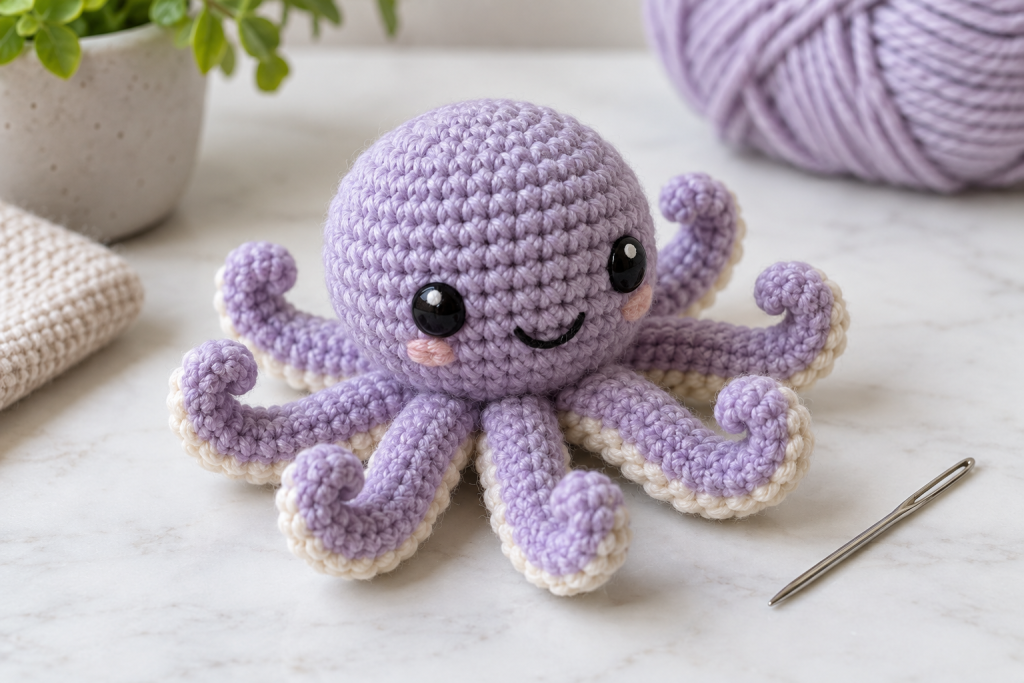
- Count all eight tentacles and compare their lengths.
- Pull gently on embroidery and hanging loops.
- Confirm that no stuffing appears through stretched fabric.
- Check the toy on a flat surface for an obvious lean.
- Remove loose fibers and record fiber content and care guidance.
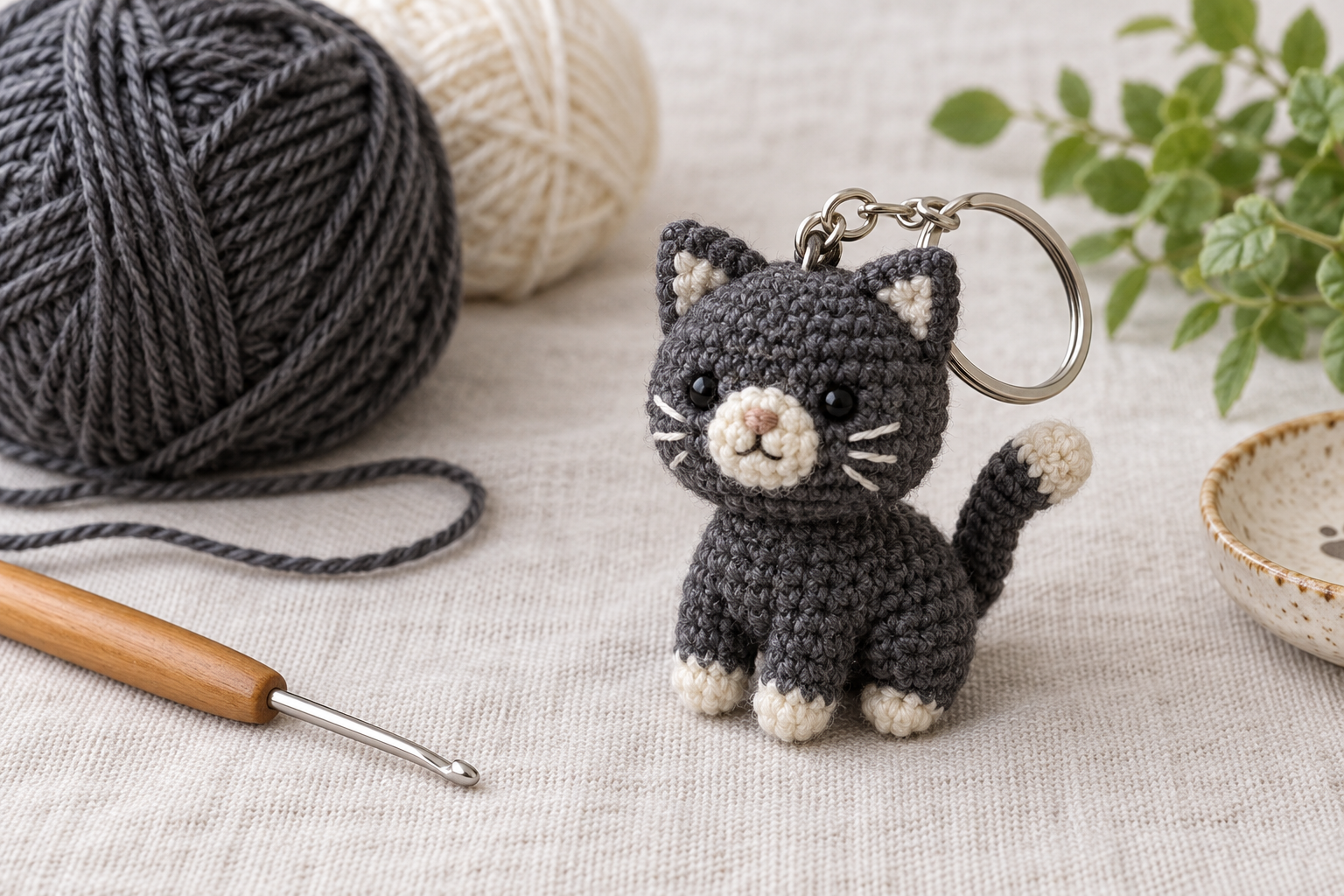
Embroidered eyes are the safer default when a purchaser may give the item to a young child. A metal keychain ring should connect to a reinforced yarn loop that passes through several body stitches—not one surface loop.
Create variations with a clear purpose
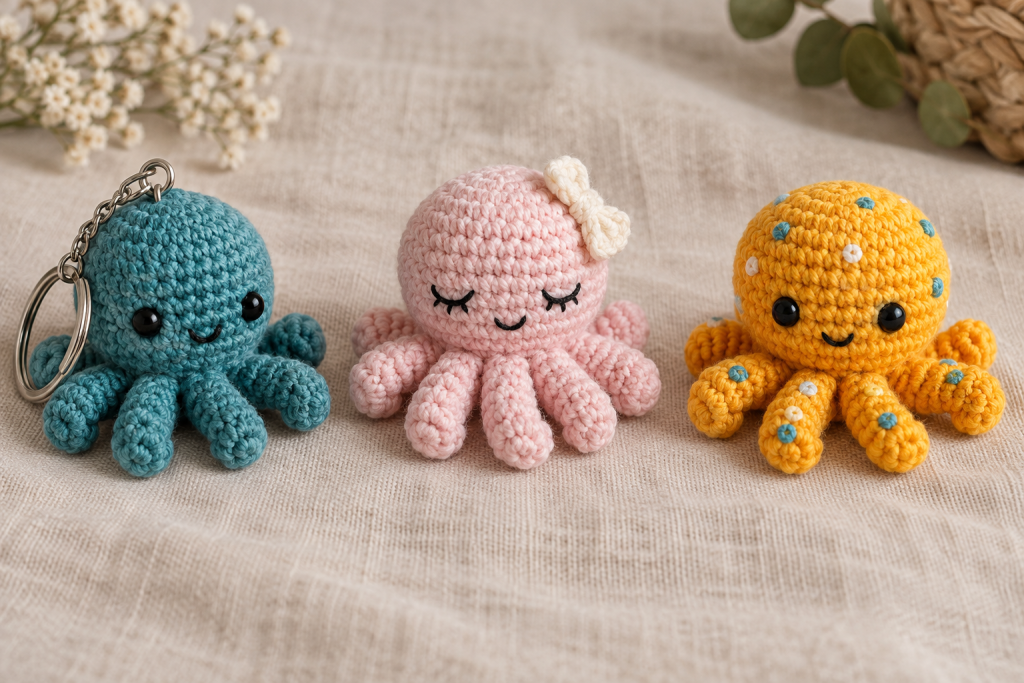
A keychain version needs the firmest fabric. A nursery version benefits from sleepy embroidered eyes and washable yarn. A market-display version can use small embroidered spots to catch attention, but avoid beads or glued decorations. Limit each variation to one main change so production time stays measurable.
Pricing and presentation notes
Include yarn, stuffing, hardware, packaging, selling fees and active labor in the cost. “Quick” does not mean free labor. Display the octopuses upright in a shallow basket with a clearly labeled sample for handling, while keeping sale stock clean.
Continue with another small project
Try the crochet cat keychain for reinforced hardware, the beginner bee for color changes, or the amigurumi mushroom for controlled two-part shaping.