Crochet Market Bag with a Strong Base
A market bag is only as dependable as its base, handle joins and response to weight. This construction guide combines a dense bottom with a lighter mesh body, then uses a gradual load test to reveal stretching before the bag reaches the store.
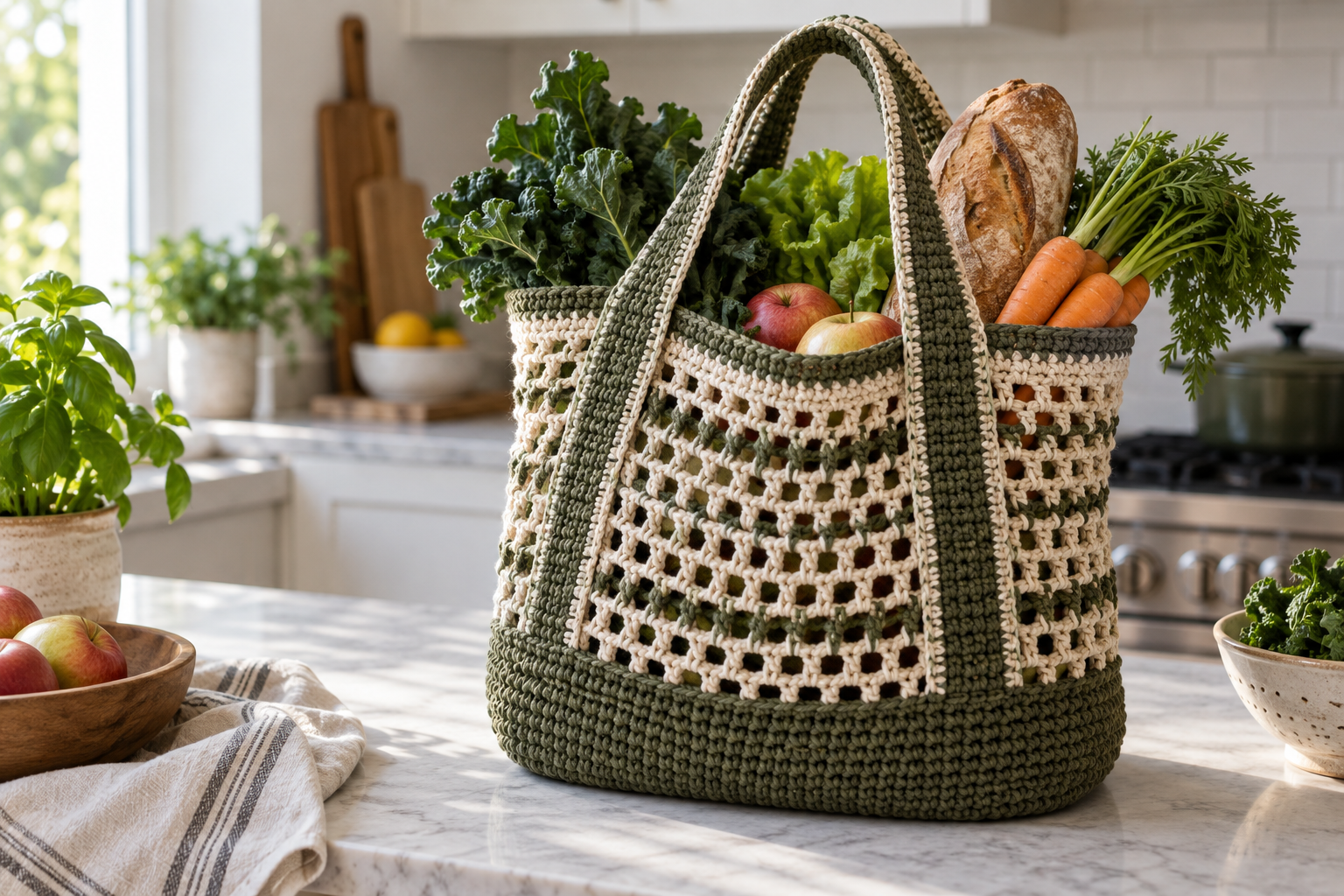
Best fiber: firm, washable cotton
Base: dense oval or rectangle
Handles: wide and reinforced
Final check: progressive load test
Select yarn by behavior after washing
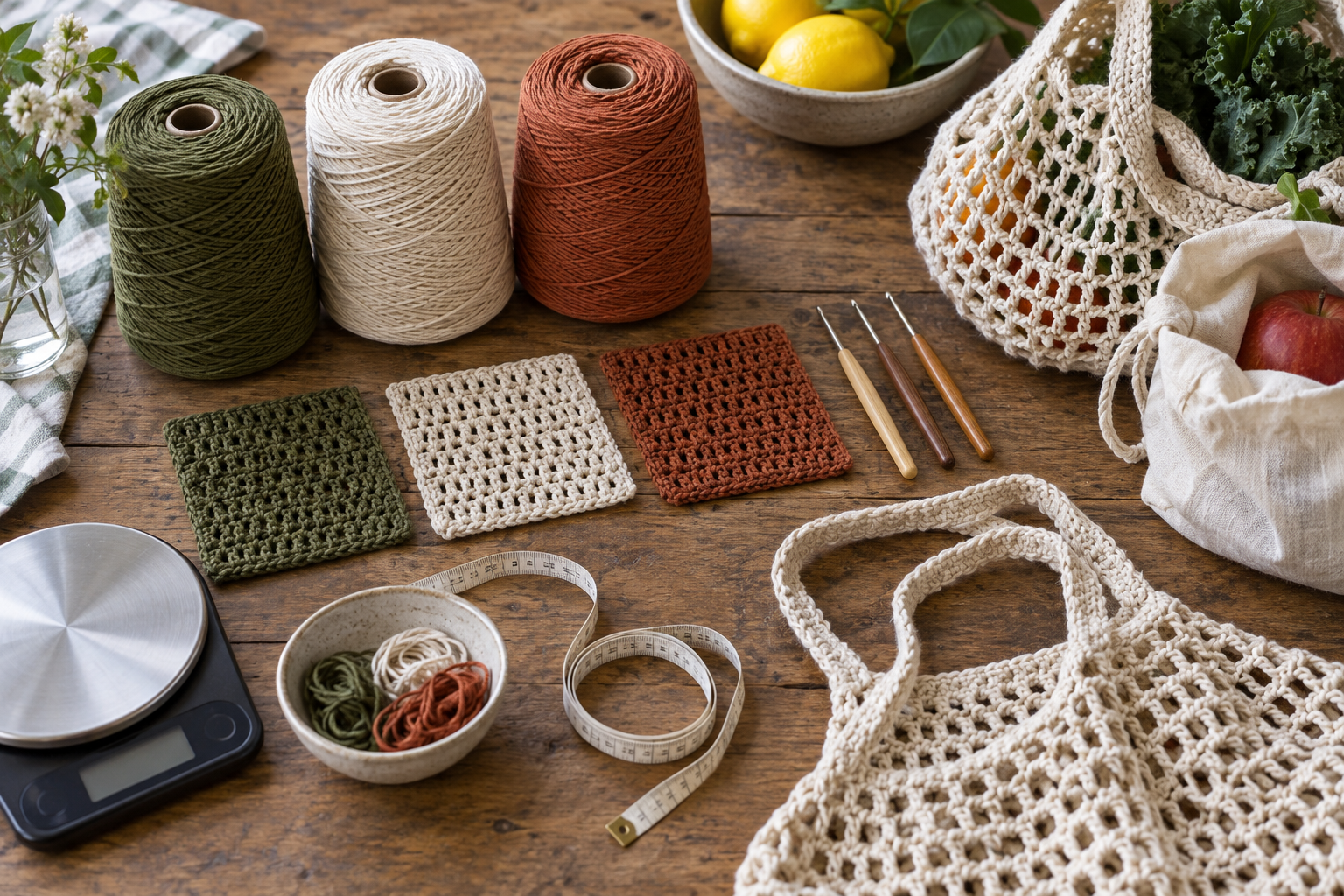
Choose smooth multi-ply cotton or a firm cotton blend that tolerates regular laundering. Make a swatch, wash it, record shrinkage and hang it with a small weight overnight. A yarn that becomes excessively long or limp will produce a bag that drags when filled. Buy enough from one dye lot for the complete project.
Keep the base flat, dense and proportional
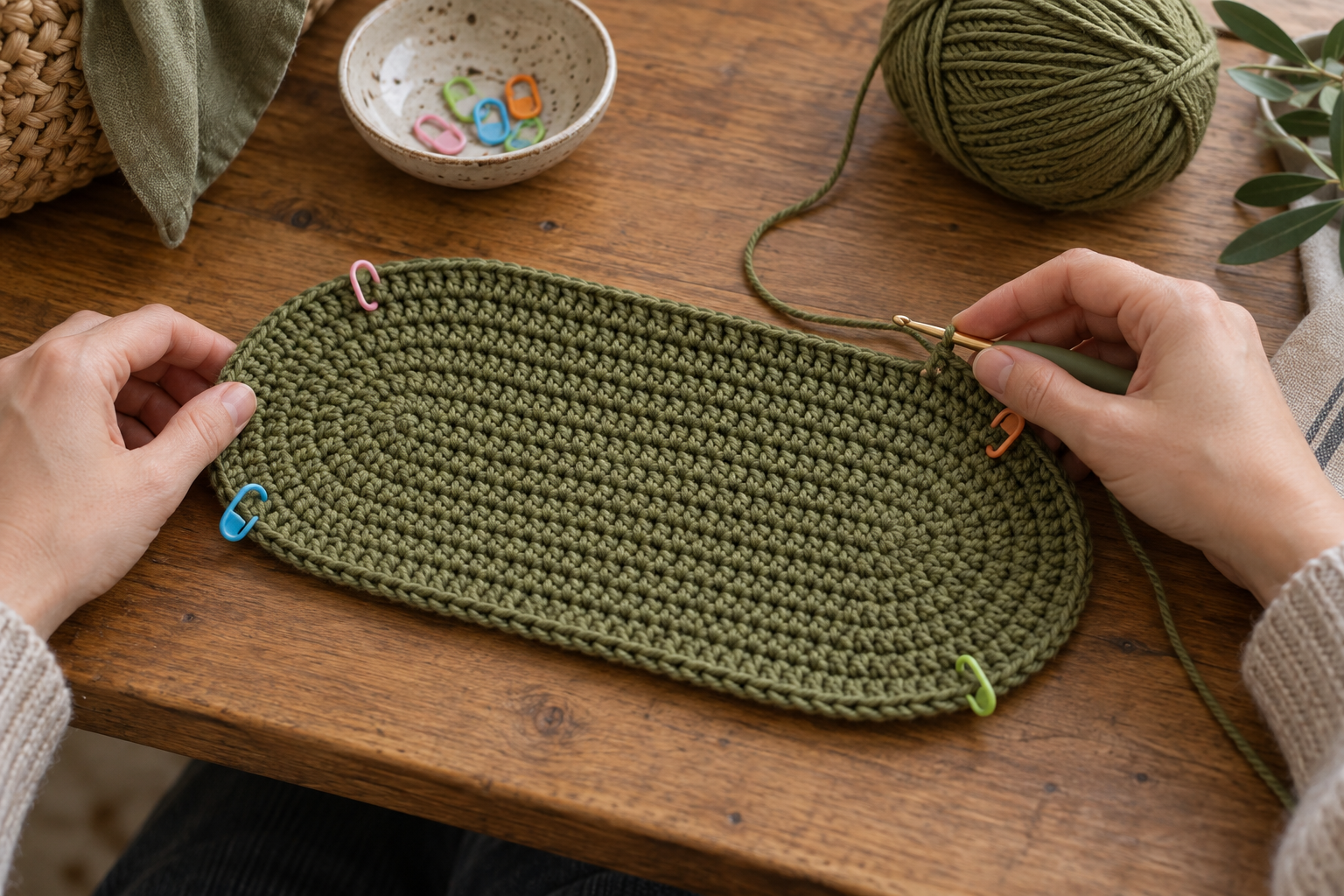
Use a hook that creates firm fabric without hurting your hands. Place the base on a table every few rounds: cupping usually needs more increases, while rippling usually needs fewer. Stop when the base matches the intended load rather than continuing to an oversized footprint that becomes awkward to carry.
Transition gradually from solid fabric to mesh
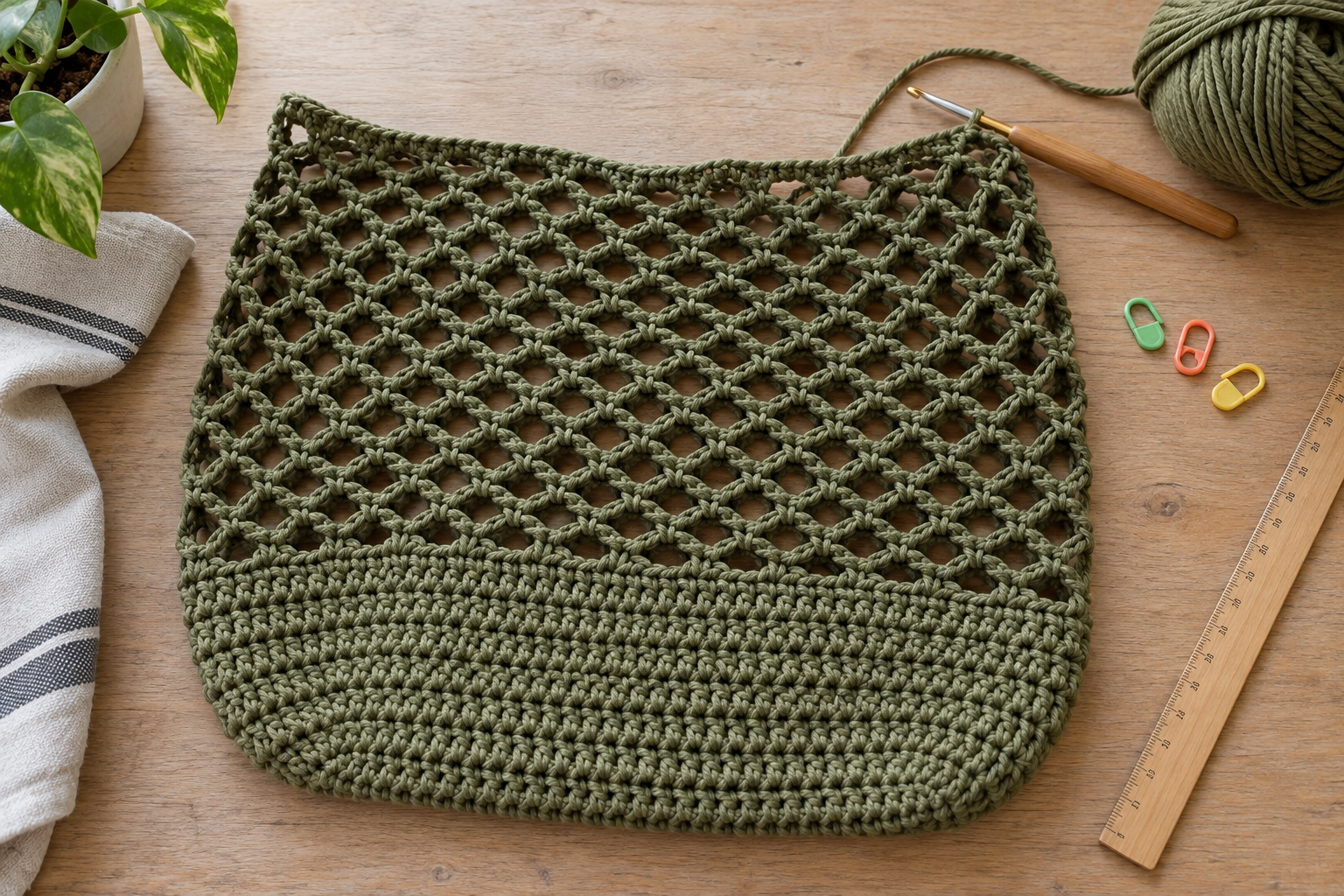
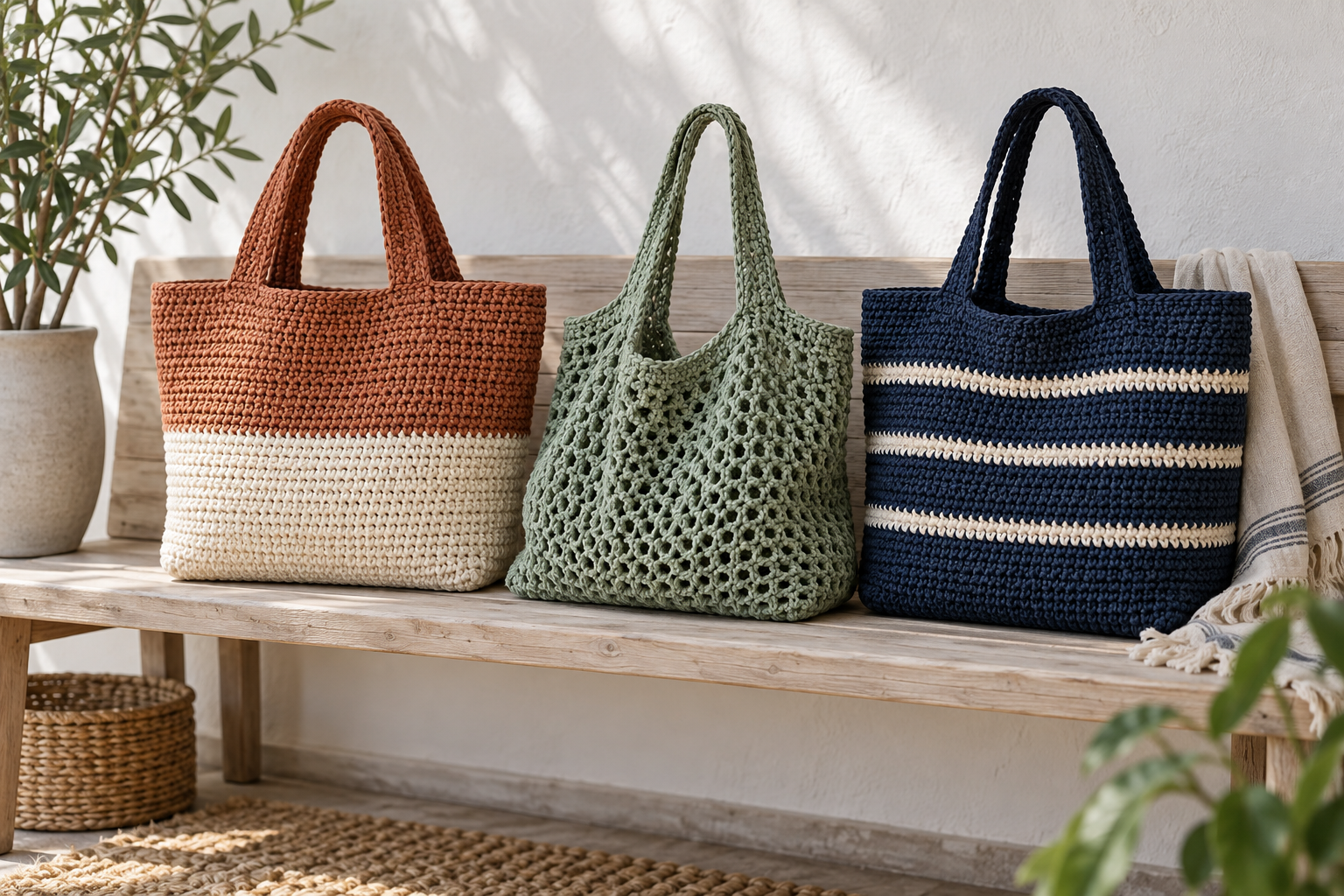
Work dense rounds before beginning chain spaces. Keep mesh openings small enough for the groceries you actually buy, and place a marker at the round start so accidental increases do not widen the bag. Remember that mesh expands dramatically under load; an unfilled bag should look smaller than its final carrying volume.
Spread handle stress across the upper edge
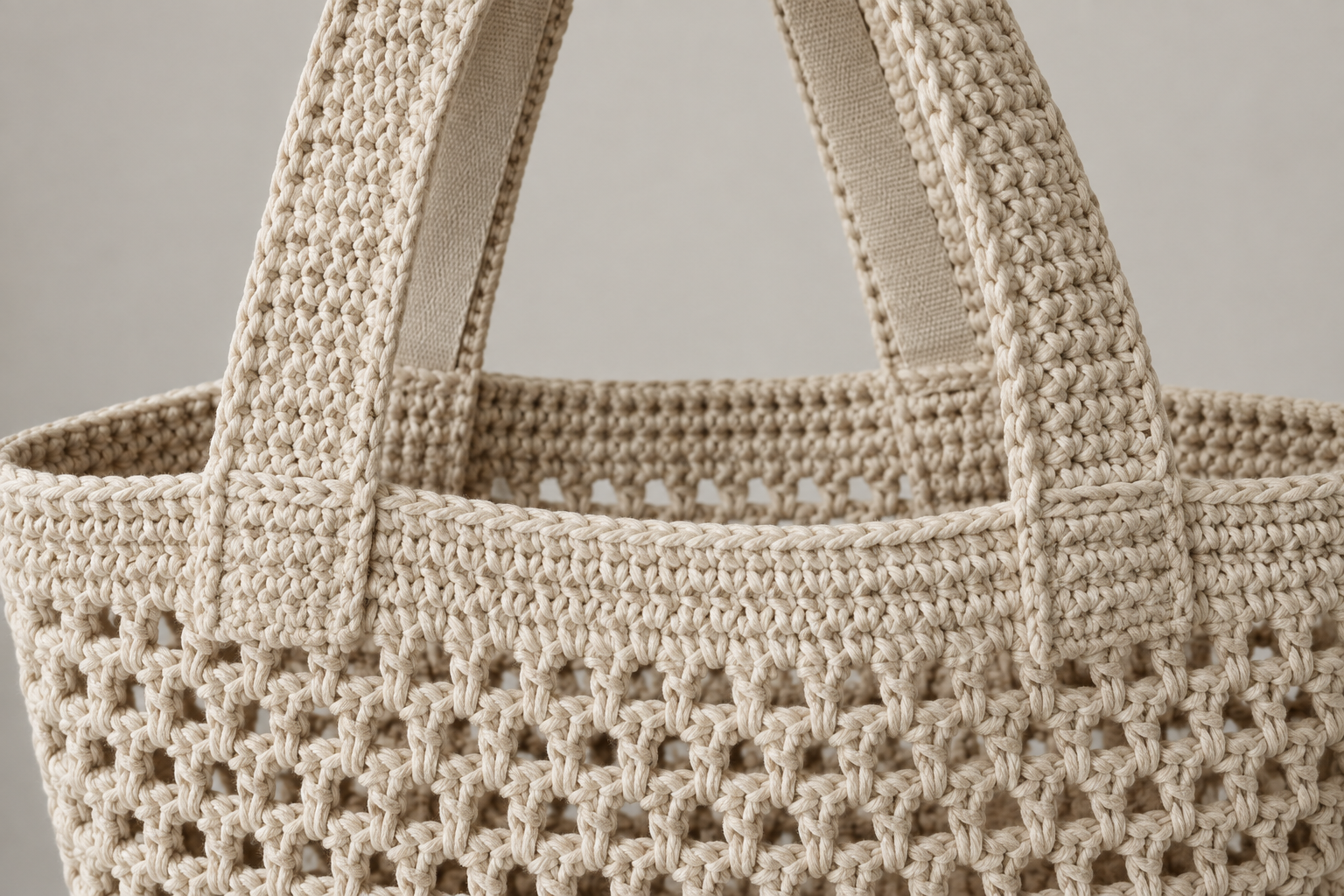
Work several dense rim rounds, mark symmetrical handle positions and attach each strap across a broad section. Low-stretch cotton tape inside the handle controls lengthening. Reinforce every join with yarn or strong thread that passes through multiple rows, not merely the final edge.
Load-test before the first shopping trip
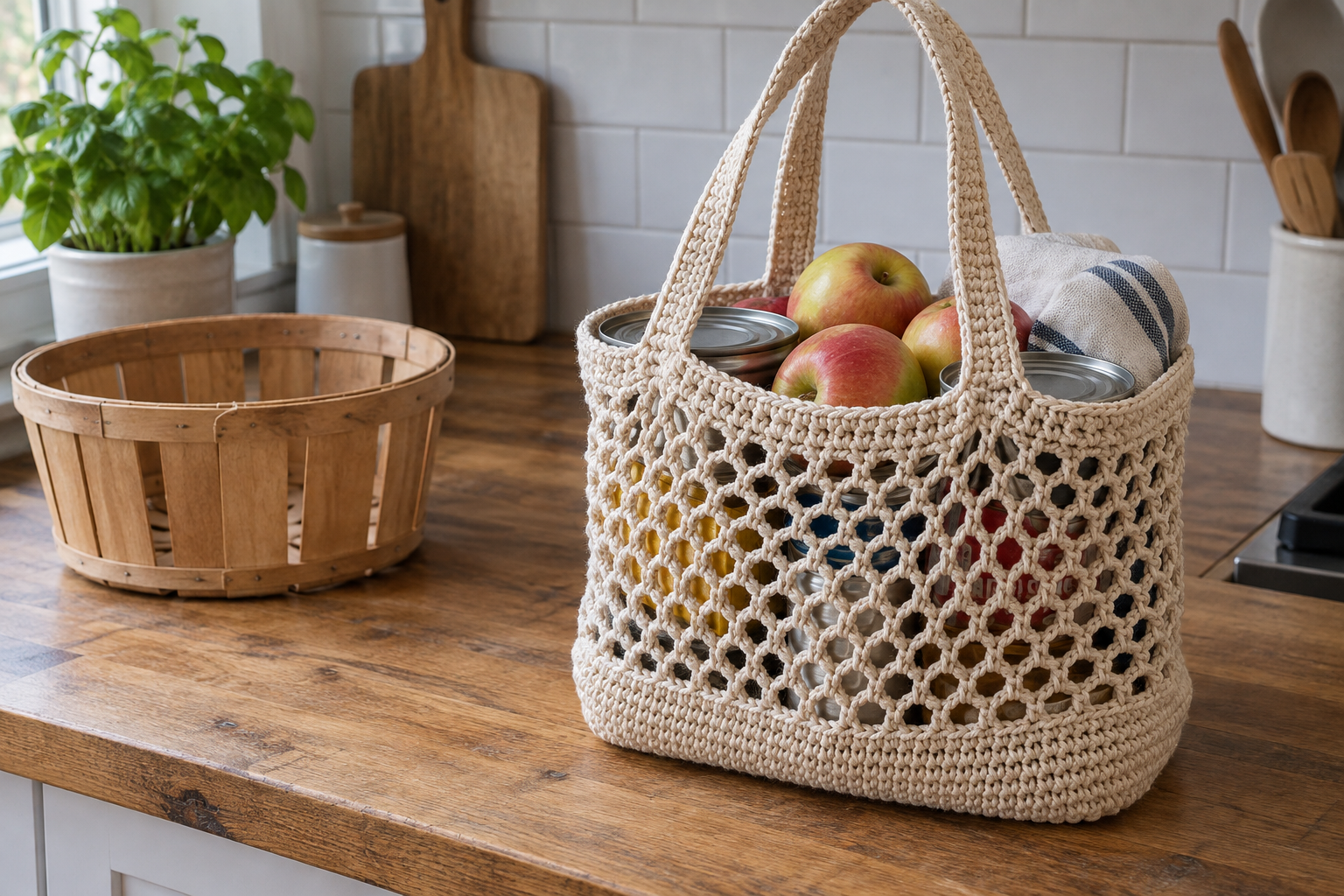
Place the bag over a padded surface and add weight in small stages. Lift briefly, set it down and inspect the base, transition rows, rim and handle joins. Stop immediately if stitches distort permanently or yarn shows damage. The test demonstrates how this handmade bag behaves; it does not establish a certified weight rating.
Make the bag easier to use
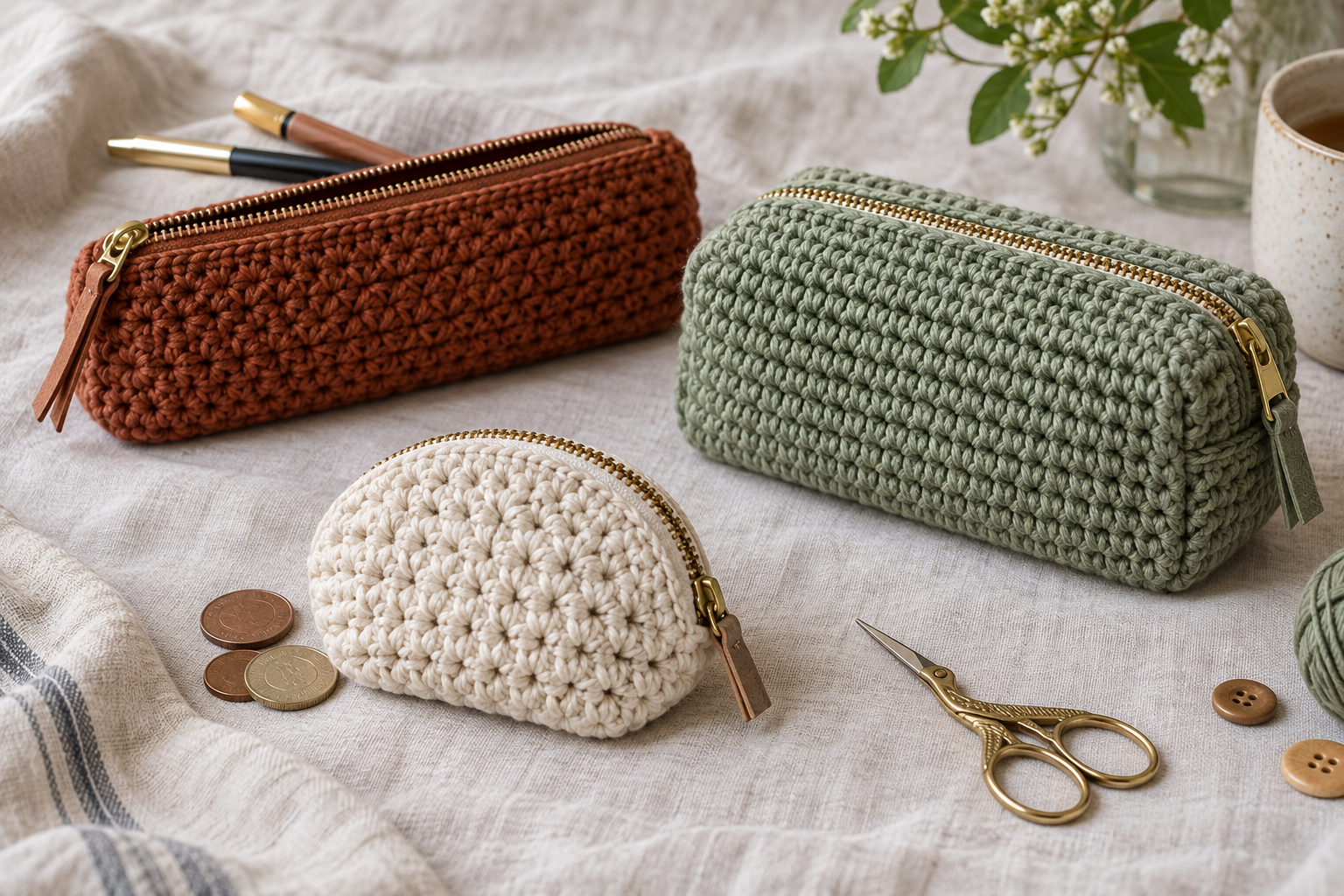
Add a removable zipper pouch for keys and payment cards. For a less expandable everyday design, follow the modern tote guide. A short removable loop based on these crochet keychain ideas can help locate lightweight accessories, but it should not carry the grocery load.