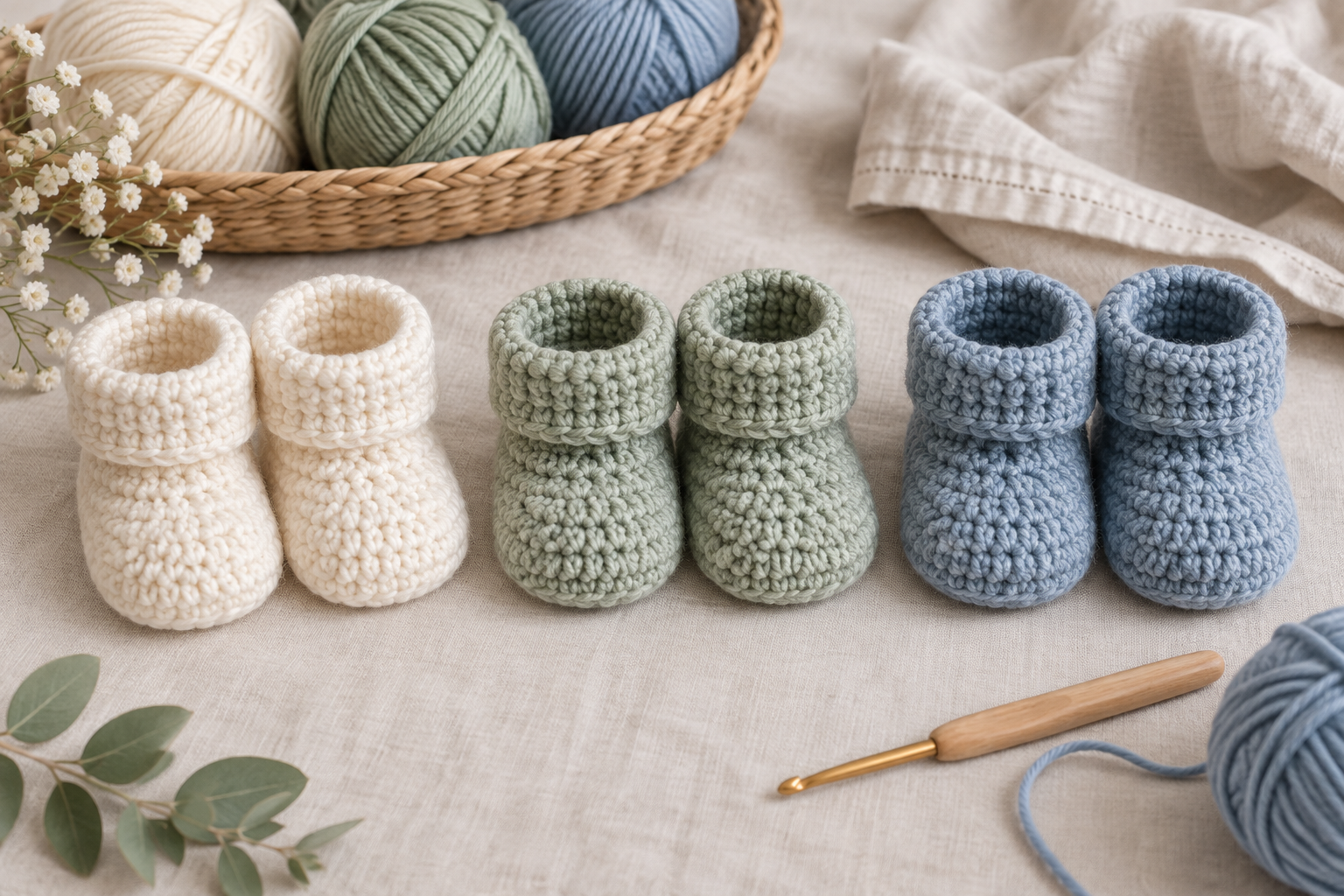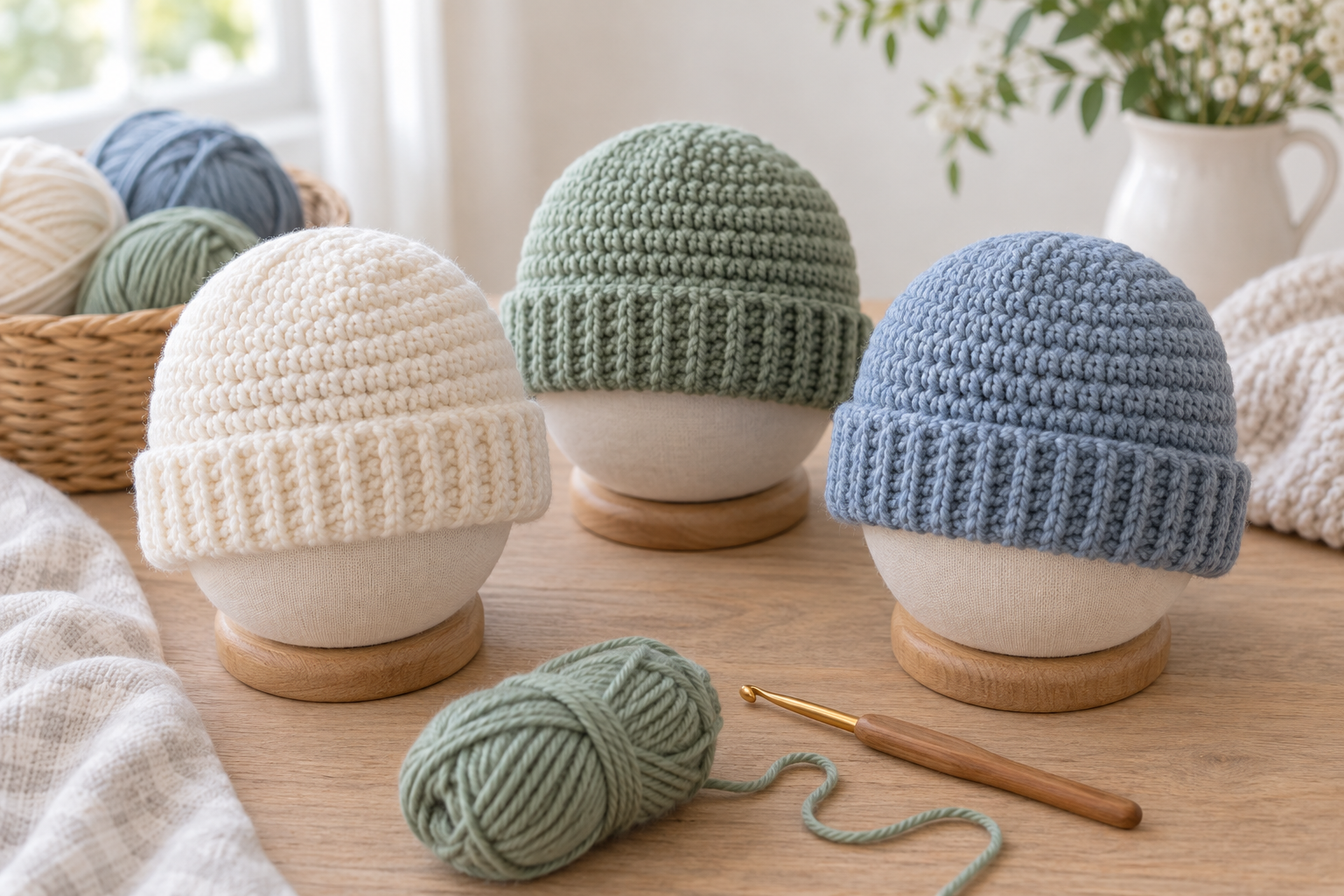
Easy Crochet Baby Blanket Color Ideas
A baby blanket palette should remain appealing after repeated washing and make the stitch pattern easy to see. This guide develops color combinations from the nursery, yarn-care needs and stripe proportion—without treating color as the only design decision.
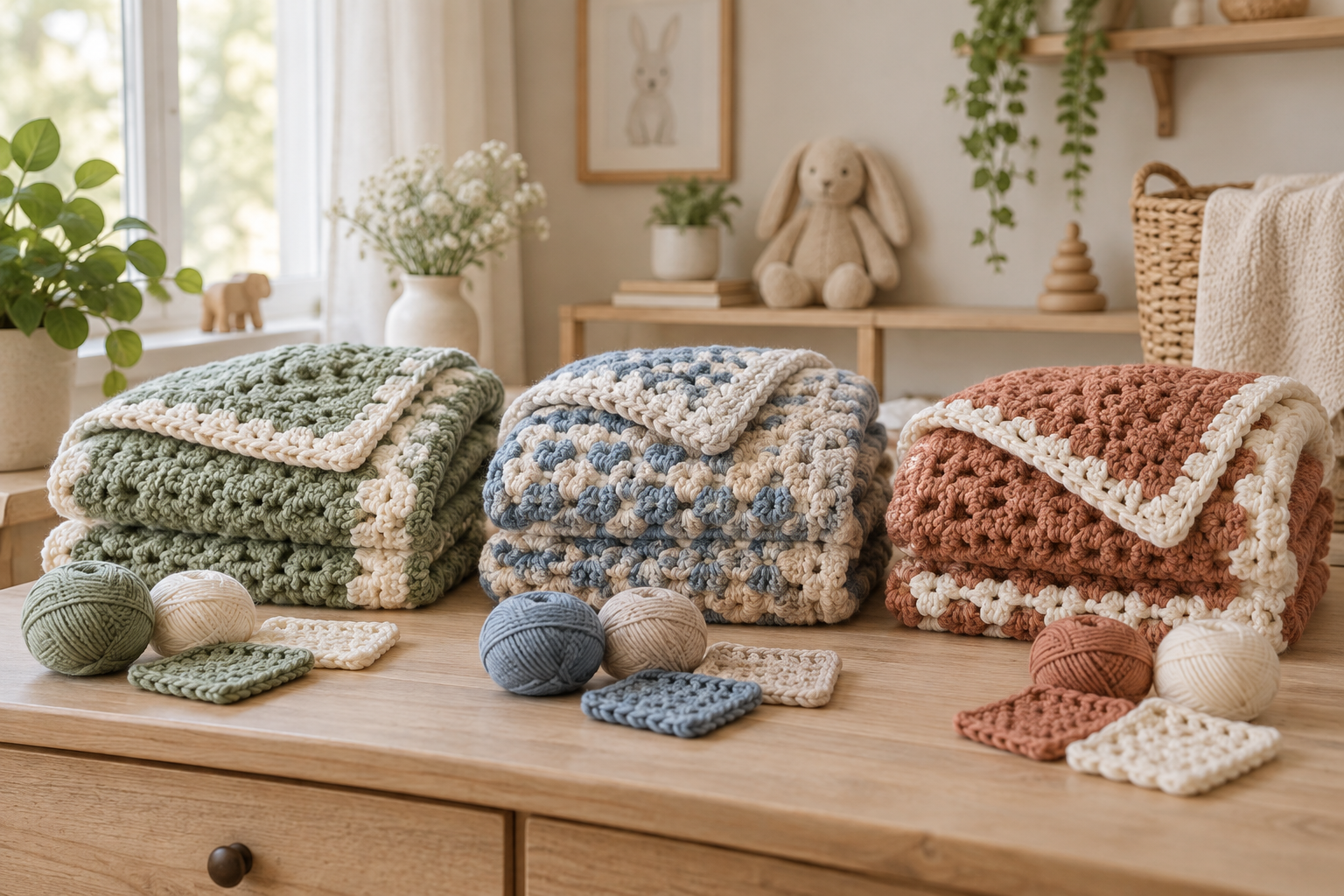
Level: beginner to confident beginner
Planning priority: washable yarn and secure construction
Palette size: two to four colors
Safety: follow current infant sleep guidance; blankets should not be placed in an infant sleep space
Build color from one anchor shade
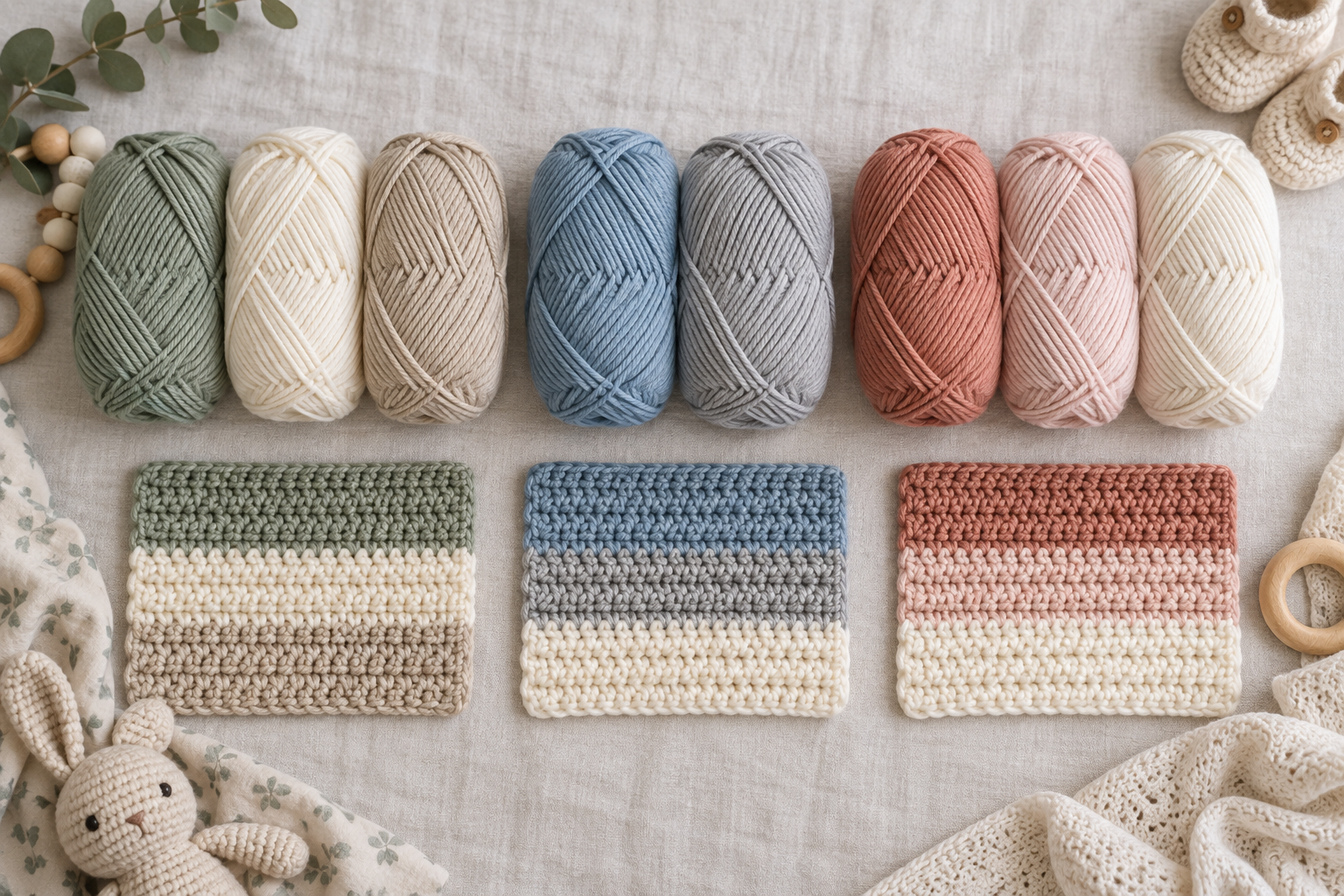
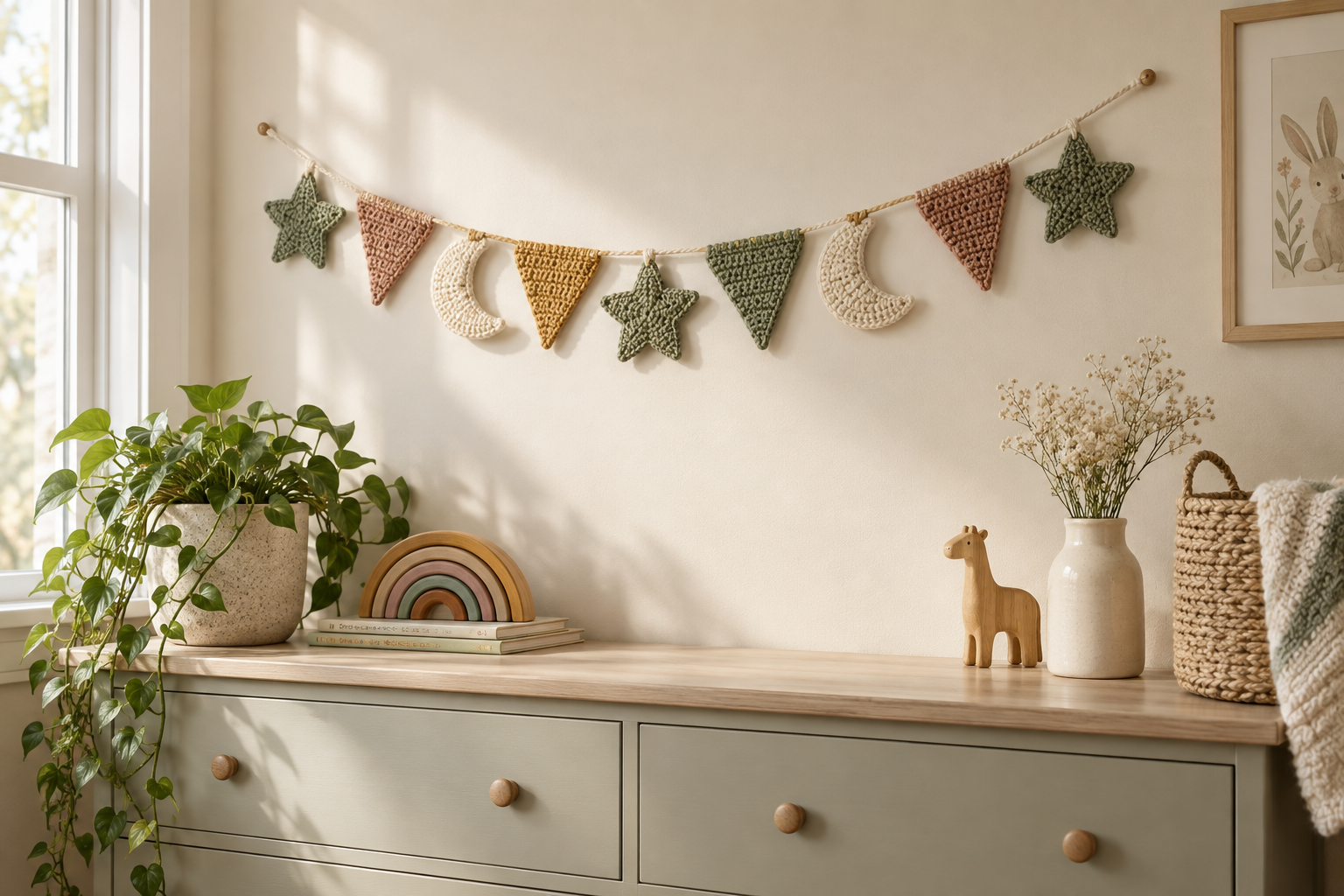
Start with a color already present in the intended room or stroller, then add a light neutral and optional accent. Sage with oatmeal feels botanical, dusty blue with warm gray is calm, and muted terracotta with cream offers warmth without relying on bright primaries. View skeins in daylight and evening light before buying the full quantity.
Wash-test every yarn and color
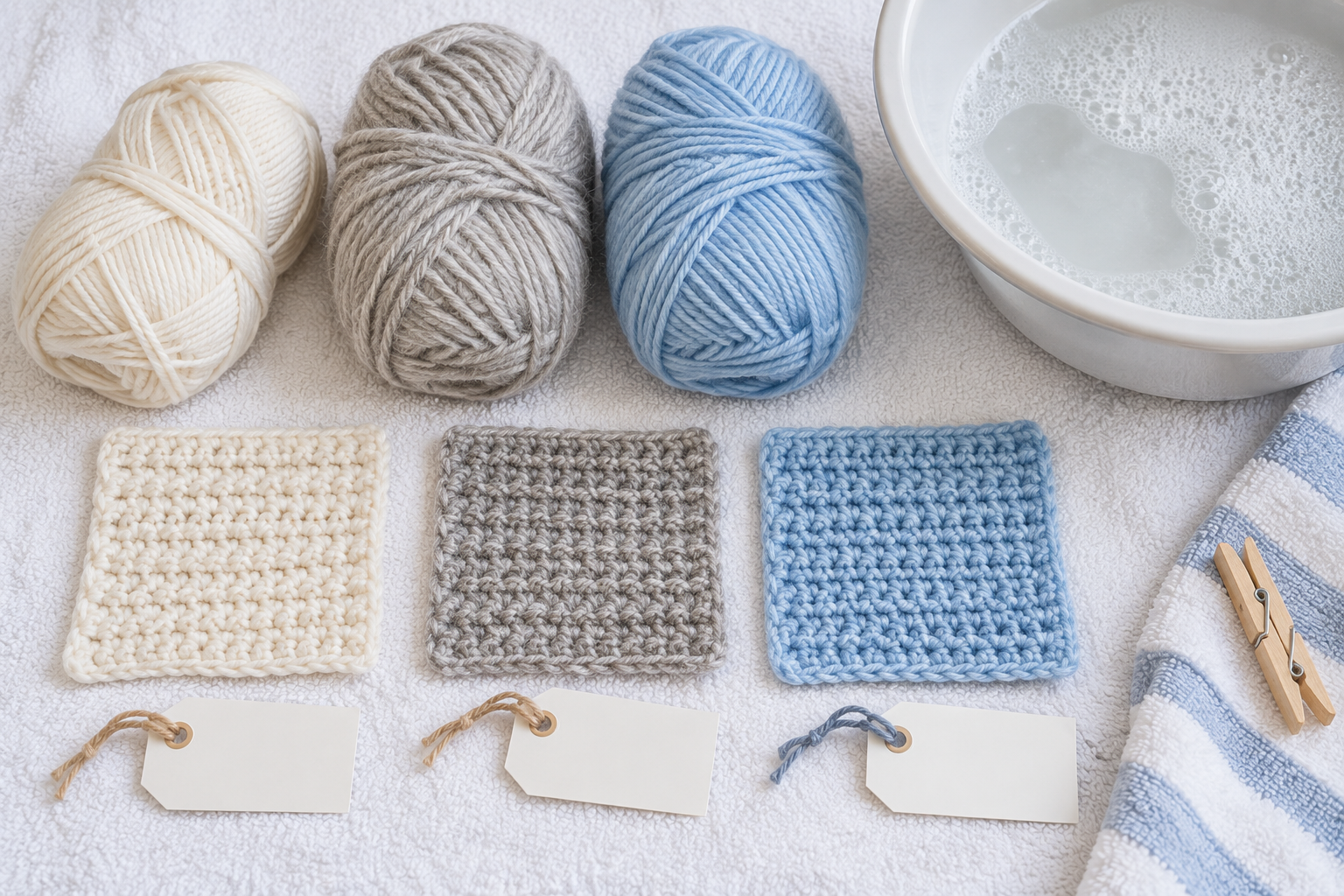
Choose yarn that is appropriate for the recipient and can be cleaned realistically. Make joined multi-color swatches and wash them together. Place a white cloth beside dark colors to detect dye transfer. Reject yarn that sheds heavily, becomes rough or develops loose fuzzy fibers. Record the exact washing and drying method for the gift recipient.
Plan stripe proportions, not random rows
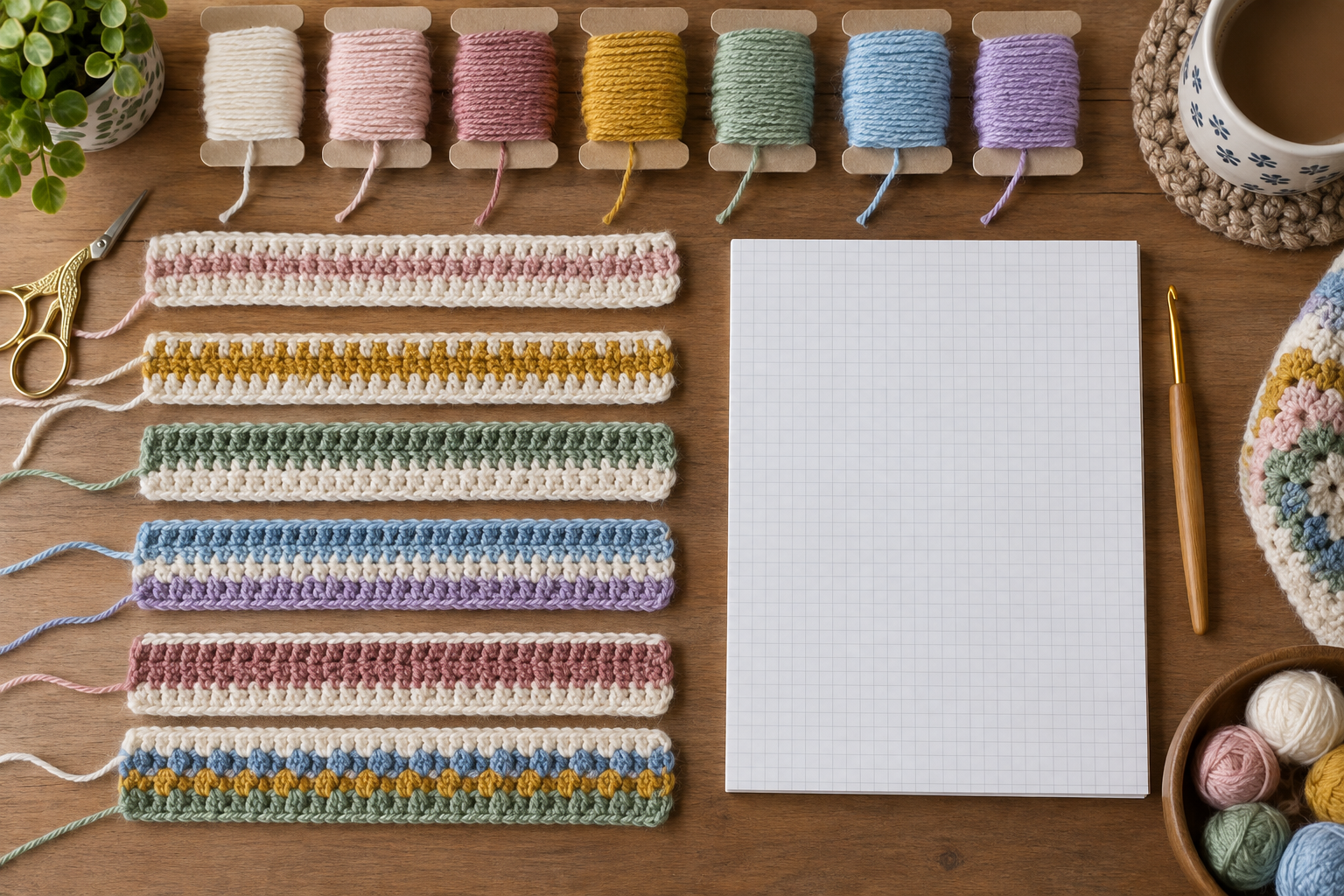
Use repeated proportions such as wide neutral sections separated by narrow accents. Calculate a complete stripe repeat, then determine how many repeats fit the target length. Place very dark yarn where lint and wear will not dominate the appearance. Solid blankets can still use a contrasting border for definition.
Maintain width and secure color changes
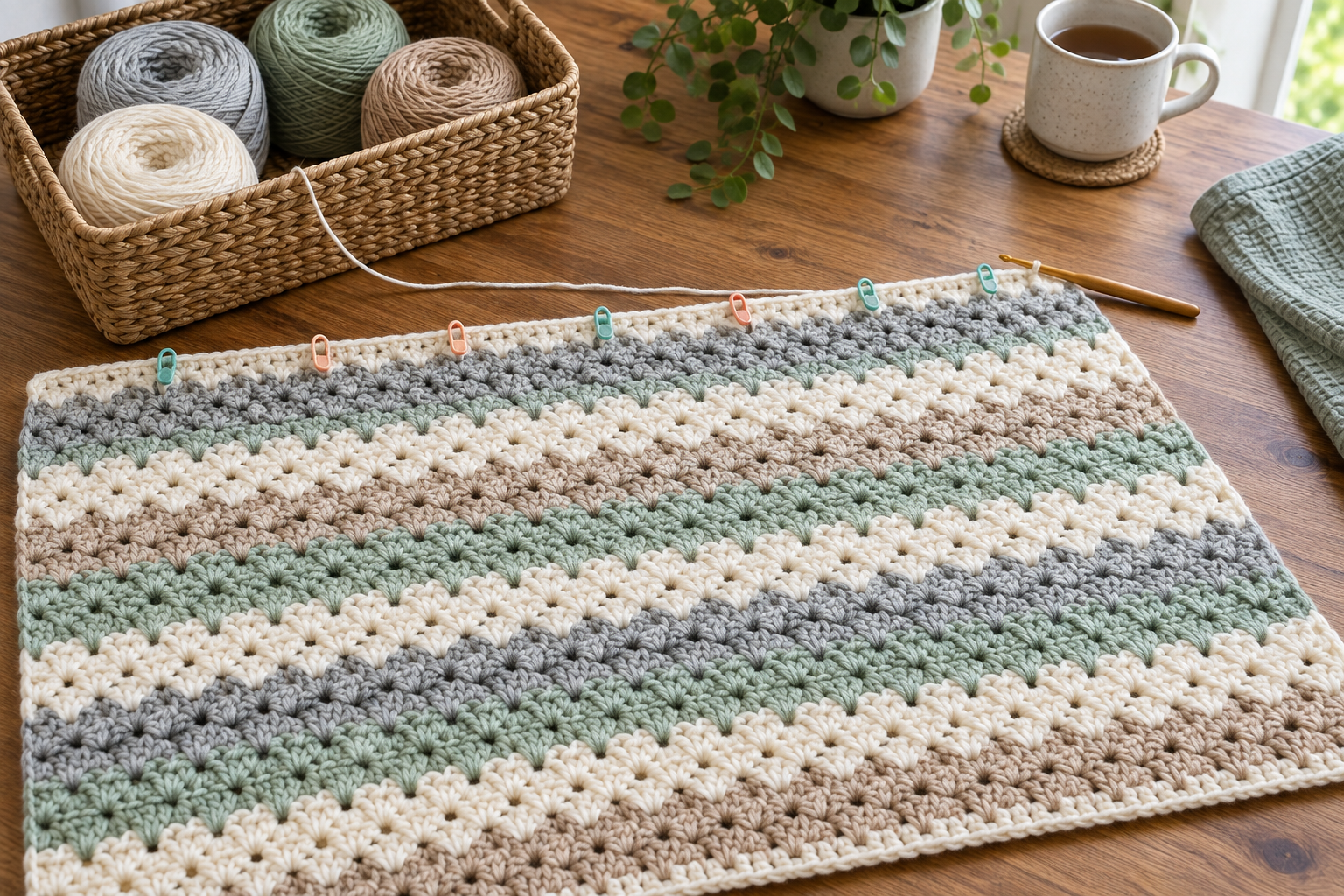
- Mark the first and last stitch of every row.
- Change color on the final yarn-over of the previous stitch.
- Leave generous tails and weave them through several dense stitches.
- Measure width after each stripe repeat.
- Avoid long carried floats or loose loops that small fingers could catch.
Choose a border that supports the edges
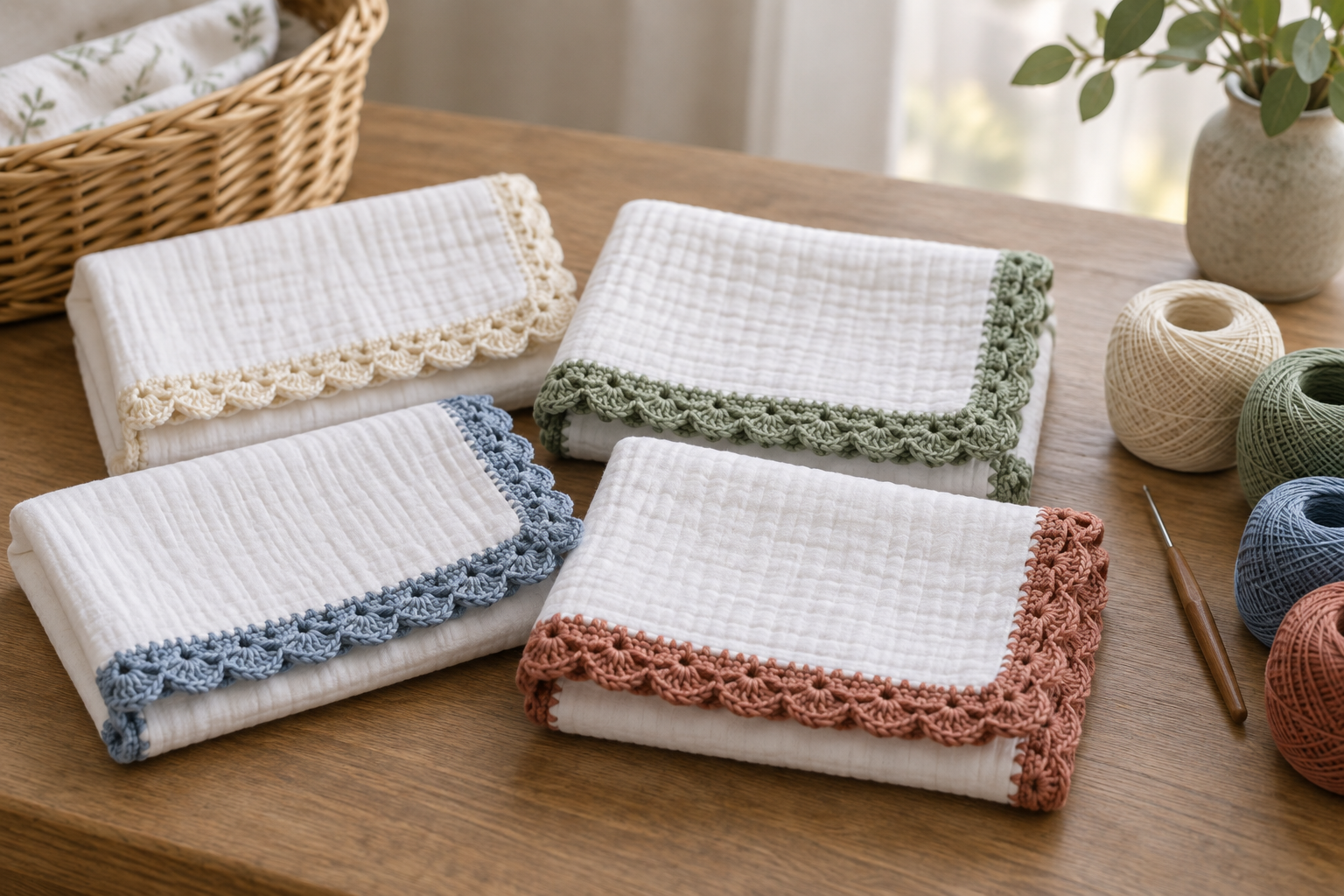
A compact single-crochet or moss-stitch border can stabilize the blanket and hide carried edge strands. Avoid long fringe, tassels, beads, buttons and loosely attached appliqués on items intended for babies. Inspect every join with a firm pull.
Wash before gifting and include care
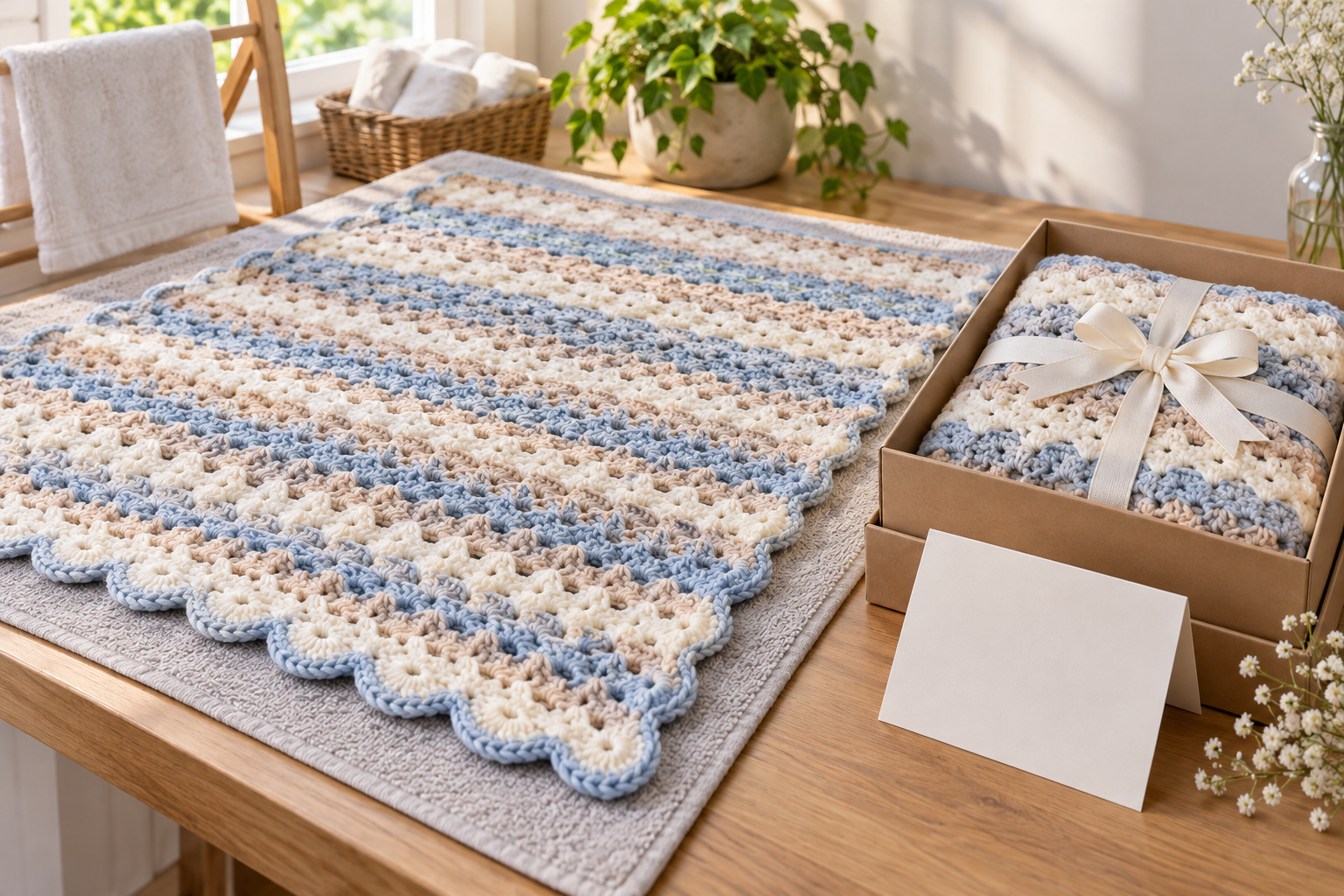
Wash with a fragrance-free product if appropriate, following the yarn label, and dry completely. Reshape while damp. Include fiber content and precise care directions on a separate card. Remind caregivers to follow current safe-sleep guidance and use blankets only in age-appropriate, supervised contexts.
Complete a coordinated baby gift
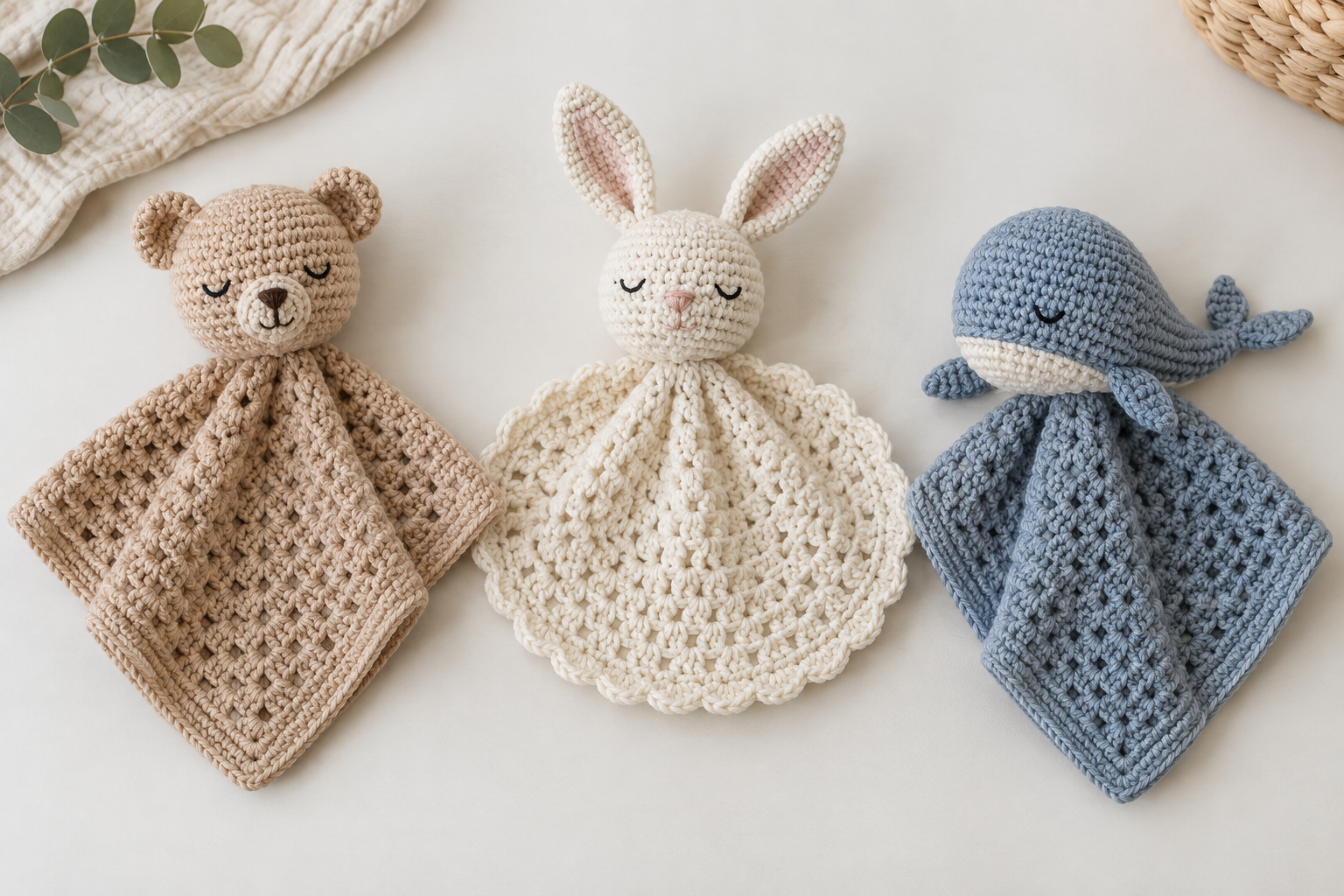
Use the same palette for a baby washcloth set, a carefully sized newborn hat, or a planned gender-neutral gift set.